



Sensory Books for Babies: Why Cloth & Crinkle Books Are the Perfect First Books
Share
A baby's first book shouldn't be read — it should be touched, grabbed, crinkled, and explored. Sensory books for babies (also called cloth books, fabric books, or crinkle books) are soft books designed exactly for how babies learn: through their senses. Here's why they work, what age they're for, and how to choose one your baby will love.
What is a sensory or cloth book?
A cloth book for babies is a soft book made of fabric instead of paper. Each page offers something to discover with the senses: crinkle material that makes an exciting sound when squeezed, different textures to feel, a baby-safe mirror to gaze into, cords and tabs to grab. Unlike paper or board books, cloth books are tear-proof, chewable, washable — and completely baby-proof from day one.
Why sensory books work: a quick look at how babies develop
In the first months, your baby's vision is still maturing — newborns see clearly only at about 8–12 inches and respond most to bold shapes and clear patterns. Hearing and touch, meanwhile, are already powerful learning channels. A good sensory book speaks to all three at once:
- Seeing: clear, friendly motifs and a small mirror — babies are fascinated by faces, including their own. Mirror play builds attention and, later, self-recognition.
- Hearing: crinkle pages give instant cause-and-effect feedback: I squeeze — it crackles. That's early learning in its purest form.
- Touching: ribbed fabric, velour, embroidered details, cords — every texture builds the tactile map your baby's brain is busy drawing.
From about 3–4 months, when babies start reaching and grasping on purpose, connecting what they see with what they feel becomes the big developmental task — and that's exactly the stage where a crinkle book earns its keep, at home and in the diaper bag.
What age are cloth books for?
- 0–3 months: you "read" for your baby — hold the book 8–12 inches away, let them study the shapes and hear the crinkle.
- 3–8 months: the golden age. Your baby grabs, squeezes, mouths, and explores every page independently.
- 8–18 months: page-turning, peek-a-boo details, and first "storytelling" — cloth books stay in rotation far longer than most baby toys.
Our personalized cloth books
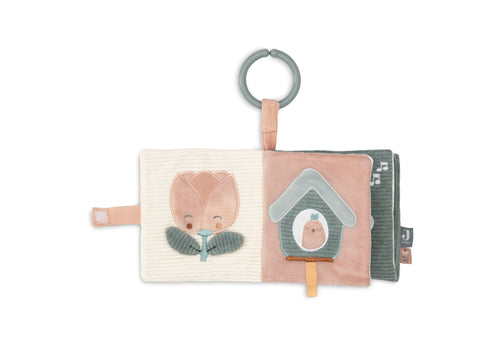
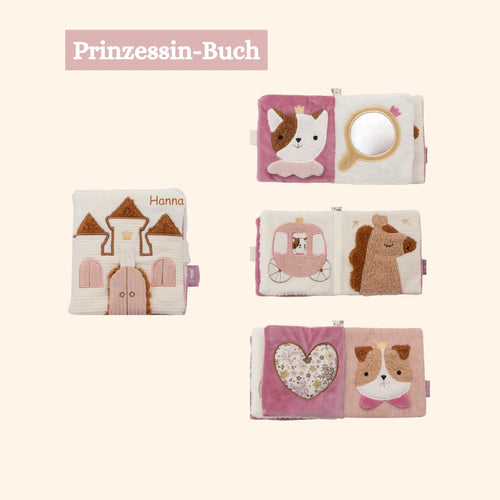
Each of our four baby cloth books has four super-soft crinkle pages with mirrors, textures, and lovingly embroidered details — and can be personalized with your baby's name on an engraved wooden ring:
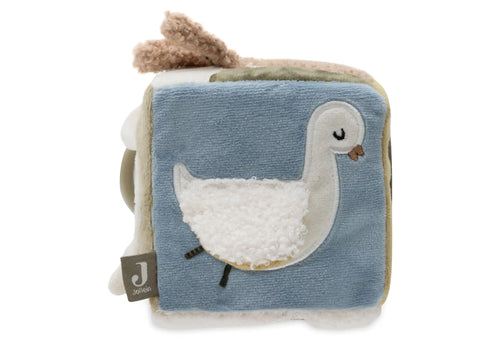
- Baby Cloth Book – Animals: bunny, bird, duck and swan motifs plus a small mirror.
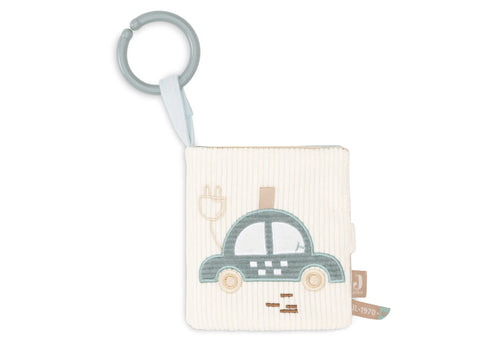
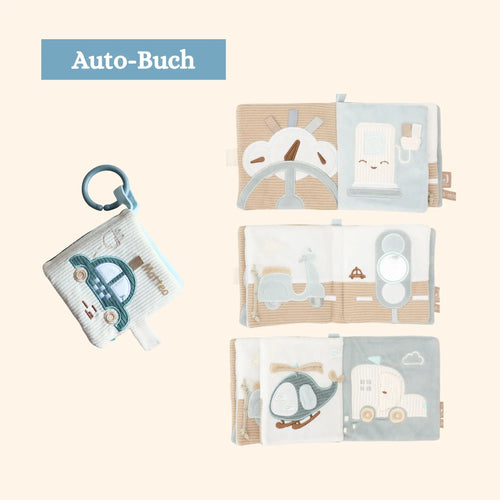
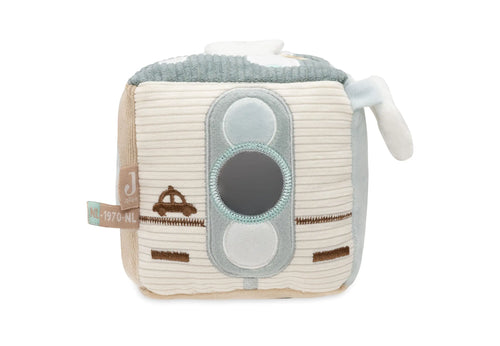
- Baby Cloth Book – Car: traffic-light mirrors and a crinkle key for little vehicle fans.
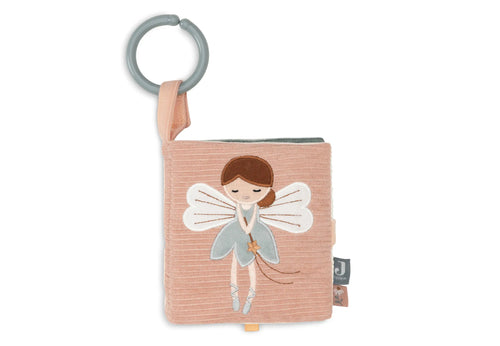
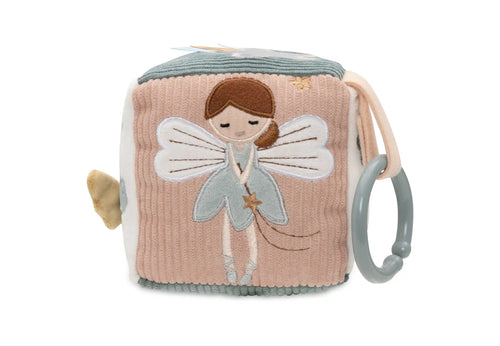
- Baby Cloth Book – Fairy: Amy the fairy, a star-shaped mirror, and crinkle pages.
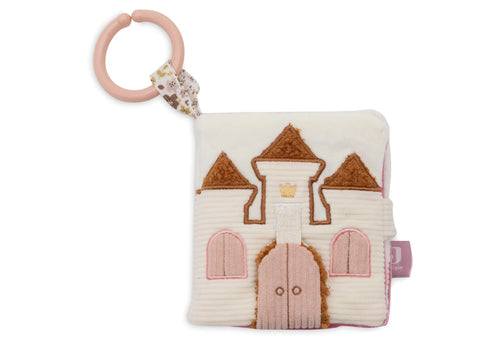
- Baby Cloth Book – Princess: delicate flower and princess motifs in cheerful colors.
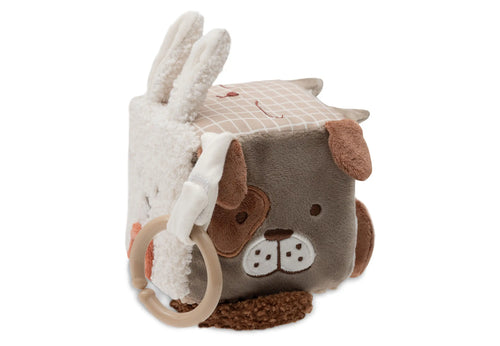
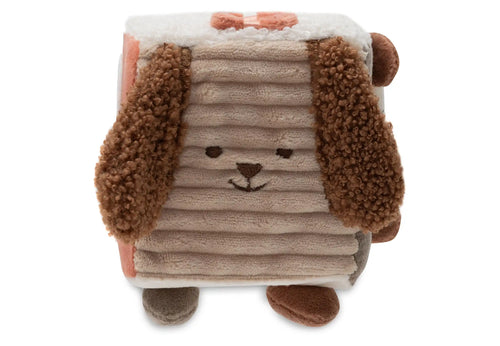
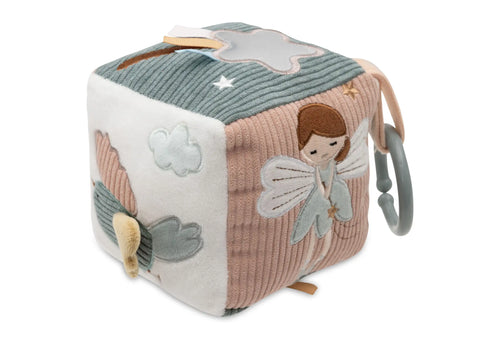
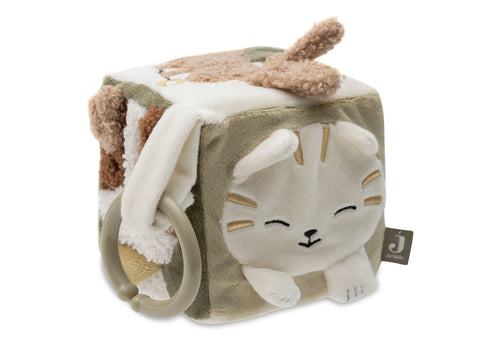
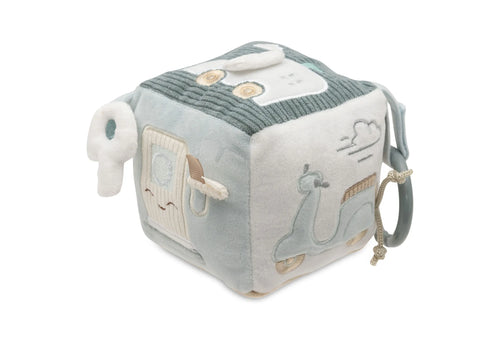
Looking for more sensory play? Our soft baby activity cube adds a rattle and crinkle ears on six sides, and our quiet books for babies 3–18 months grow with your child into the toddler years. Personalized with a name, any of them makes a keepsake baby shower or new baby gift.
How to choose a quality cloth book
- Real sensory variety: crinkle + mirror + textures beats a book that only looks cute.
- Sewn, not glued: stitched elements survive months of grabbing and chewing.
- Easy to clean: soft polyester fabric wipes clean and dries fast.
- Portable: a hanging ring or strap means it clips to the stroller and doesn't end up on the sidewalk.
- Personal: a name makes it the gift that doesn't get regifted.
FAQ: sensory books for babies
What's the difference between a cloth book, a crinkle book, and a sensory book?
Mostly naming: "cloth book" and "fabric book" describe the material, "crinkle book" the sound effect, "sensory book" the purpose. A good baby book is all three at once.
From what age can my baby use a cloth book?
From birth — first as something to look at and listen to, from about 3–4 months as something to grab and explore independently.
Are crinkle books safe for babies to chew?
Yes — that's what they're made for. Choose books with sewn (not glued) elements and no detachable small parts, and check them regularly like any baby toy.
What comes after a cloth book?
From about 18 months, toddlers graduate to activity pages with zippers, buttons and shapes — see our guide to busy books for toddlers and our explainer on what a quiet book is.
Bottom line: babies learn with their hands, ears, and eyes at once — a crinkle cloth book is the rare first "book" that serves all three. Soft, washable, personalized with their name: it's usually the toy that survives the whole first year in the diaper bag.