




When can babies see? Visual development in the first year
Share
New parents often ask: When can babies see? The short answer: Babies can see from birth – but it is very blurry and only at a short distance. Visual acuity develops step-by-step throughout the entire first year of life. In this article, you will learn how babies see each month, when they start to recognize colors, and how you can playfully support your baby's visual development.
How do newborns see?
Right after birth, the world is blurry for your baby. Newborns see most clearly at a distance of about 20 to 30 centimeters – roughly the distance between your face and the baby while breastfeeding or bottle-feeding. That is no coincidence: it is exactly at this distance that your baby gets to know your face.
A newborn can hardly distinguish colors yet. They best recognize strong light-dark contrasts – meaning clear edges, bold patterns, and simple shapes. This is why newborns look at high-contrast motifs much longer and more attentively than at soft pastel colors.
When do babies see? The development month by month
| Age | What your baby can see |
|---|---|
| 0–1 month | Sharp only at 20–30 cm; strong contrasts and faces are most interesting. |
| 2–3 months | Your baby begins to track objects with their eyes and coordinate both eyes. First colors (especially red) are perceived. |
| 4–5 months | Color vision improves significantly, and spatial perception (depth perception) begins. Your baby now reaches intentionally for things they see. |
| 6–8 months | Seeing and reaching work together better and better. Your baby recognizes familiar people even from a greater distance. |
| 9–12 months | Visual acuity approaches that of an adult step-by-step. Small details are discovered, and distances are better estimated. |
Note: Every child develops at their own pace – these figures are guidelines. If you are unsure or notice any abnormalities (e.g., persistent squinting after the 3rd–4th month), talk to your pediatrician.
When do babies see colors?
Your baby's retina must mature before it can reliably distinguish colors. As a rough rule of thumb: from about 2 to 3 months, babies recognize their first bold colors – usually red first. Between the 4th and 6th month, color vision is already well-developed. However, soft pastel tones remain harder to distinguish than strong, saturated colors and clear contrasts for a long time.
How to promote your baby's vision – without any special equipment
The good news: You don't need special cards or apps to promote vision. Your baby already has the most important things – your face, your time together, and an environment with clear, exciting stimuli:
- Your face at the right distance: When talking and playing, keep a distance of about 20–30 cm – the clearest "image" for your newborn.
- Tracking slow movements: From approx. 2–3 months, you can move a toy slowly back and forth so your baby learns to follow with their eyes.
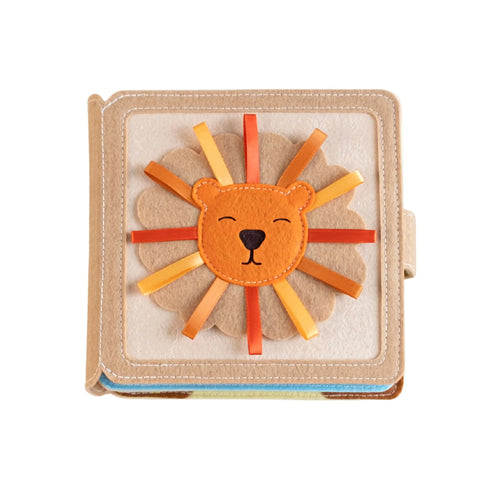
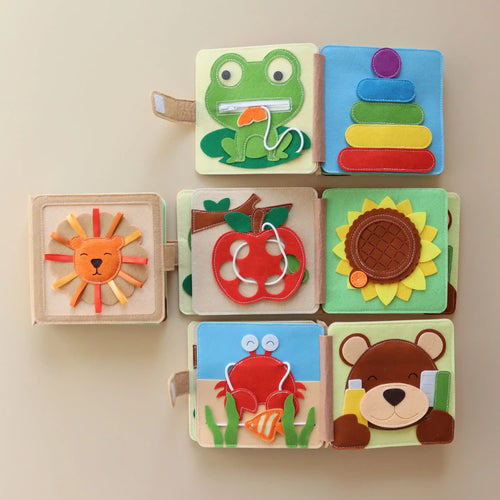
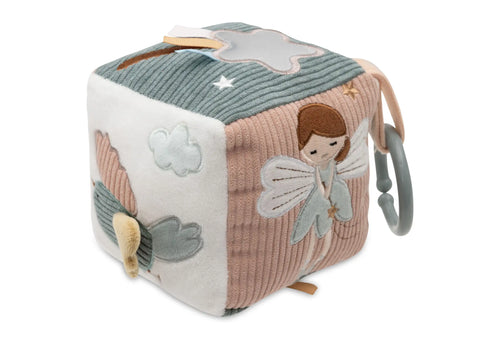
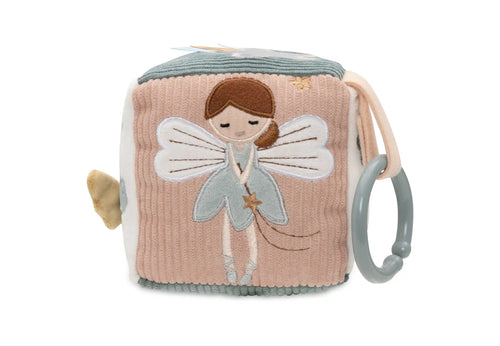
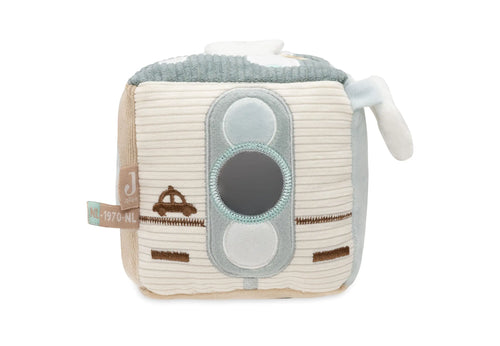
- Discovering mirrors: Baby-safe mirrors fascinate babies from a few months old – they train attention, focus, and later self-awareness. That is why our animal cloth book and our activity cubes have small, soft mirrors incorporated.
- Short and often: A few minutes per "viewing session" are enough – babies tire quickly.
- Letting them grow: From about 3–4 months, bold colors, patterns, and tangible materials can be added.
Promoting vision by combining feeling and grasping
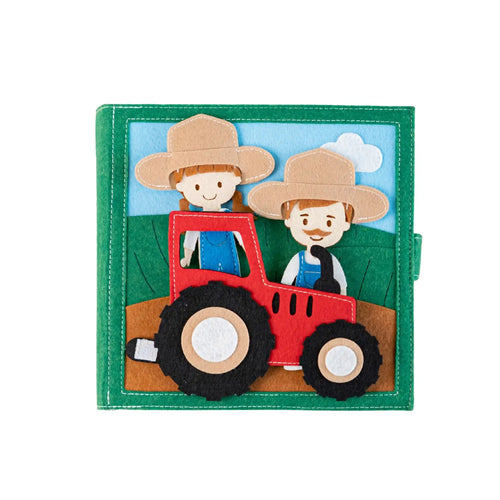
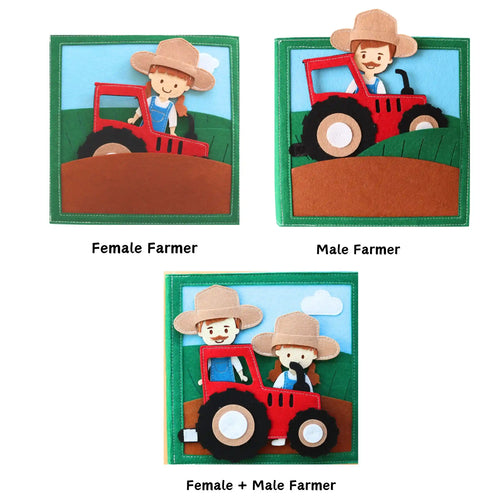
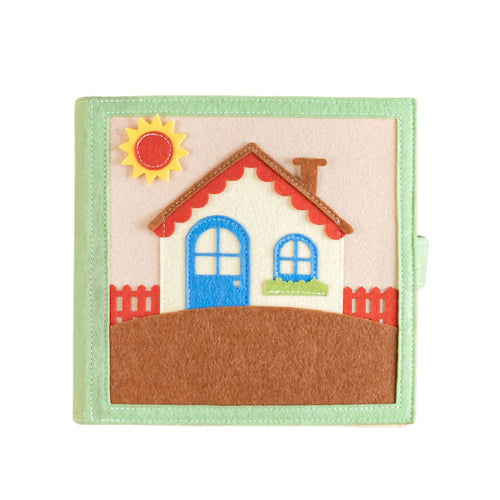
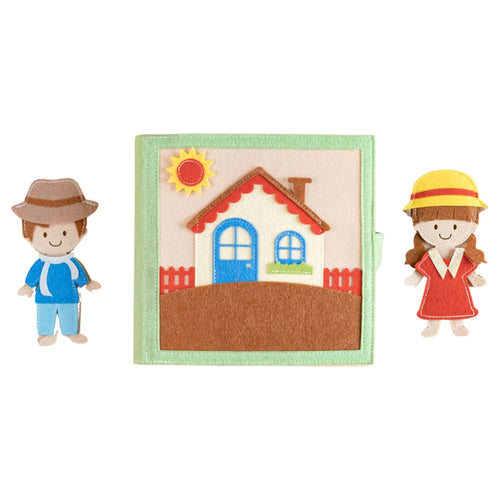
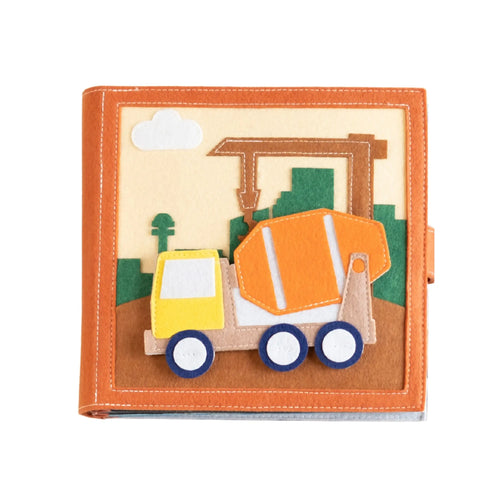
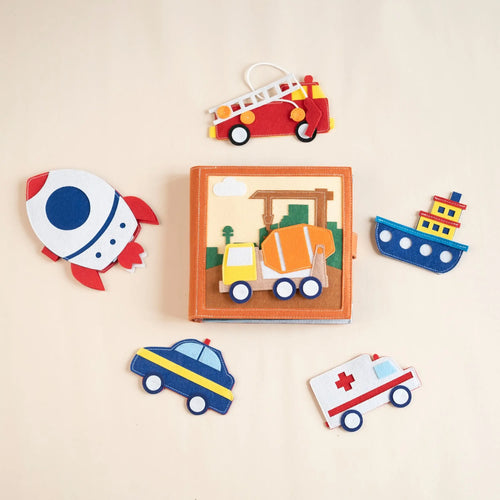
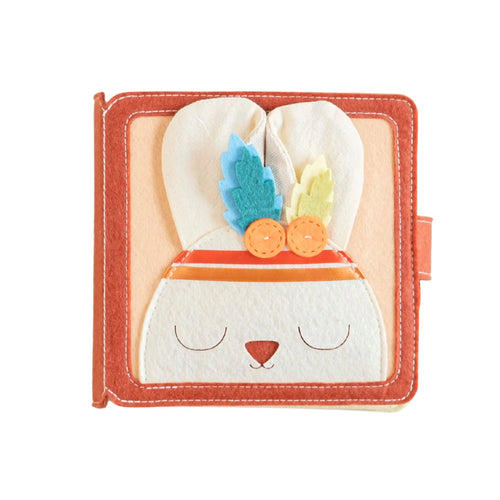
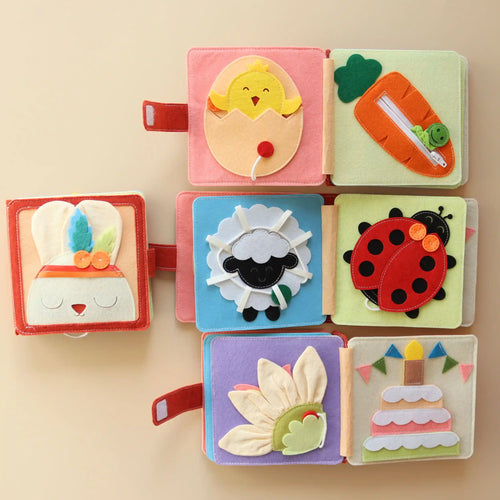
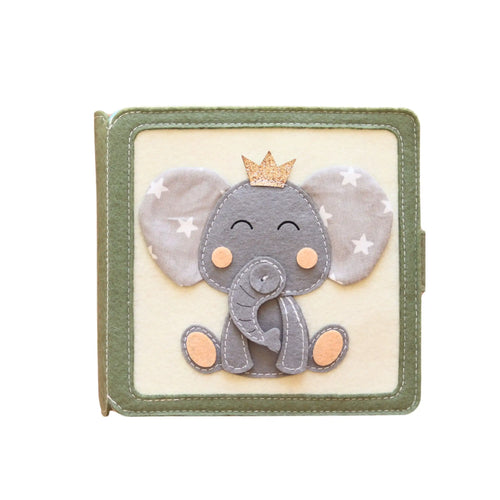
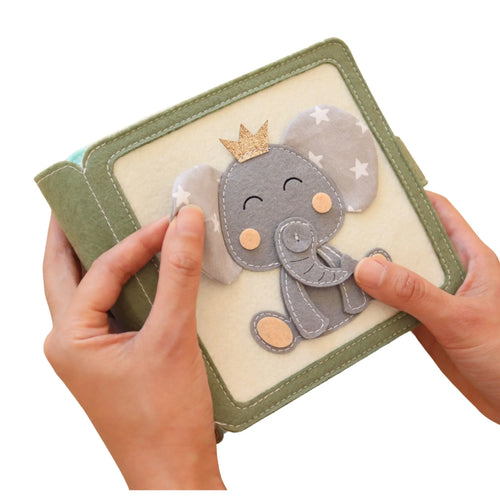
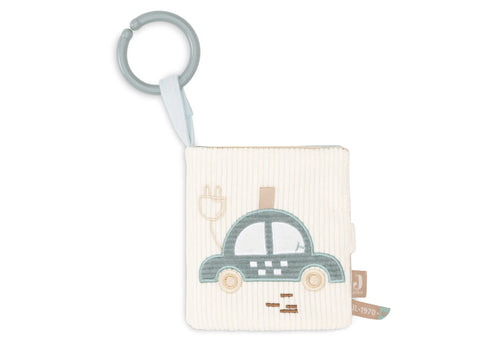
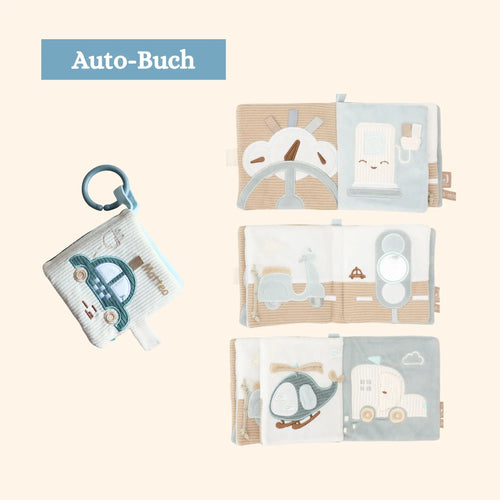
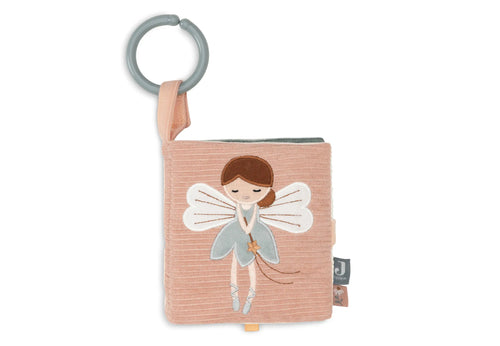
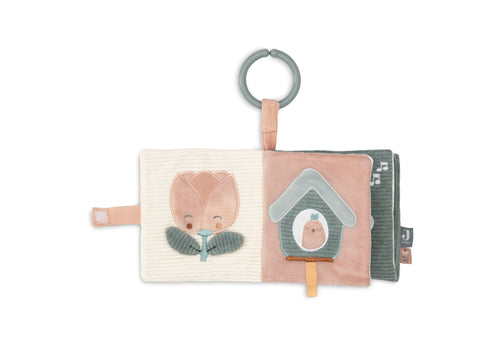
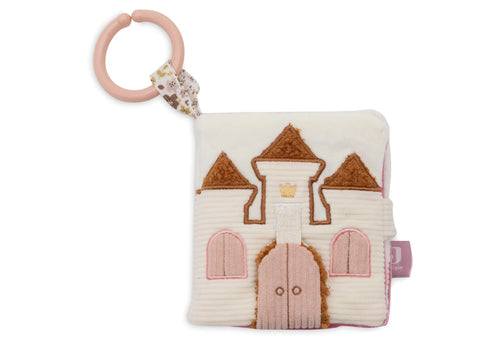
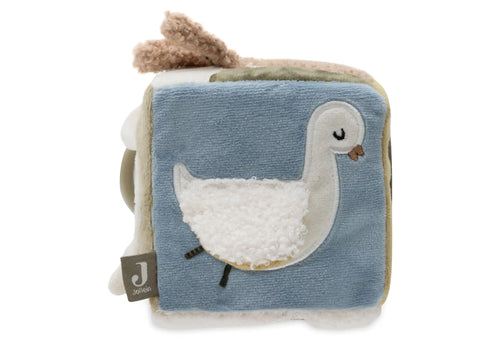
- Cloth books for babies: four soft crinkle pages with clear motifs to look at, mirrors to discover, and materials to feel – e.g., the animal cloth book or the car cloth book.
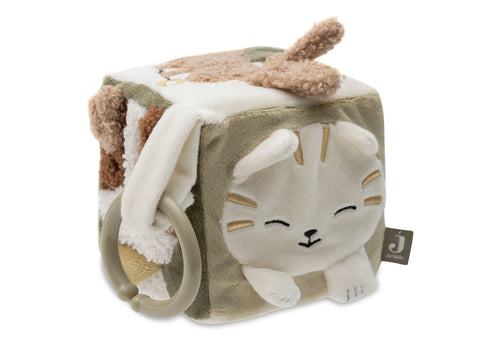
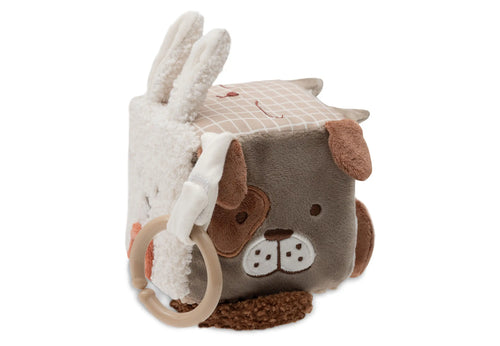
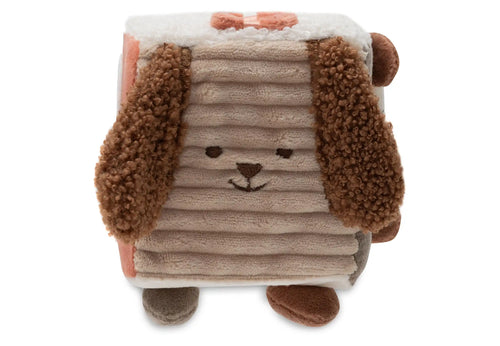
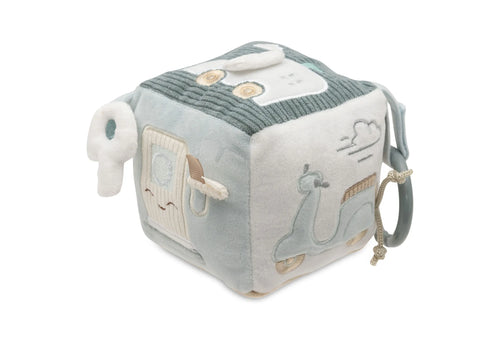
- Activity cubes: rattle, mirror, crinkle material, and embroidery on six sides – seeing, hearing, and grasping in one toy, e.g., the cat activity cube.
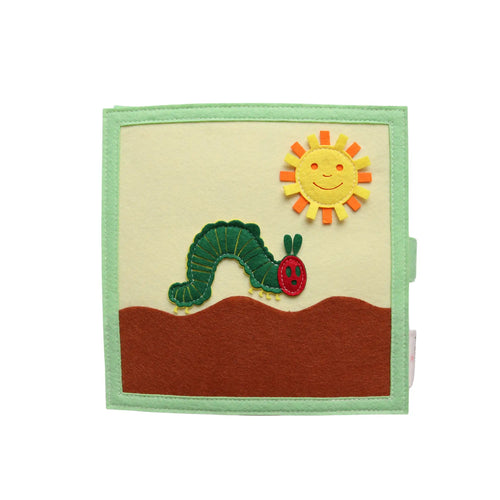
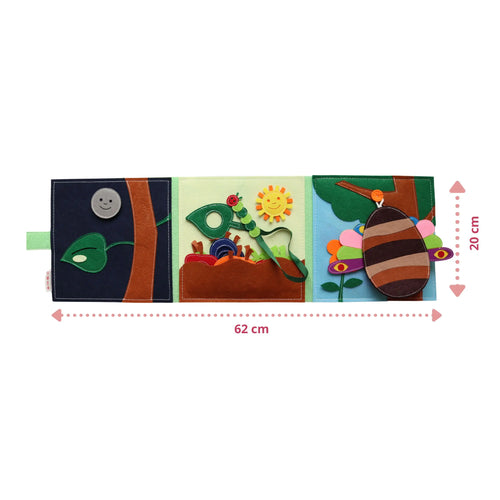
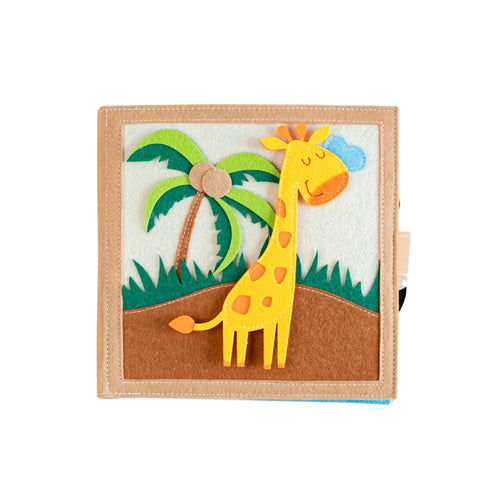
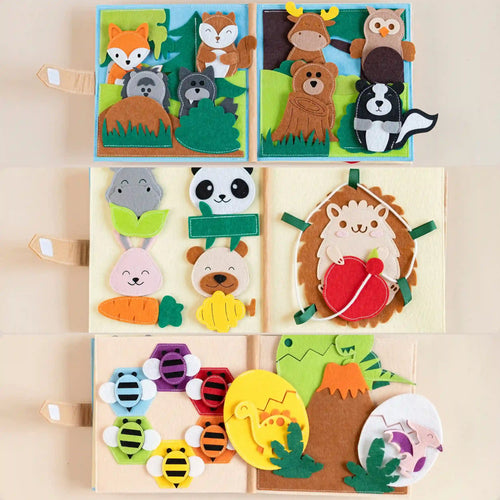
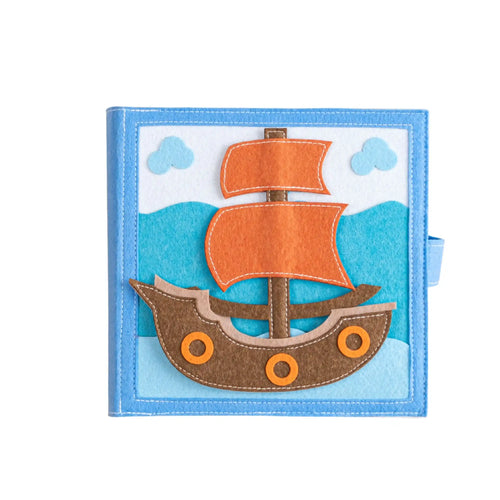
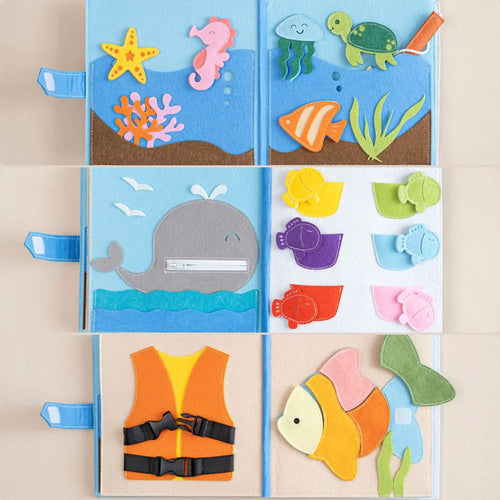
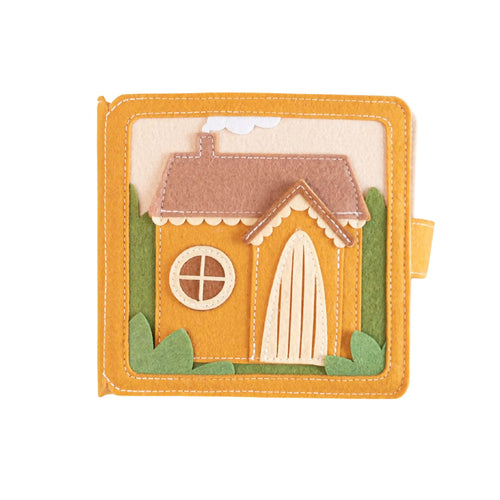
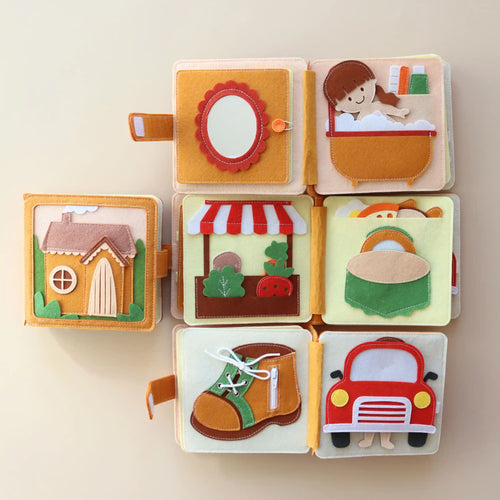
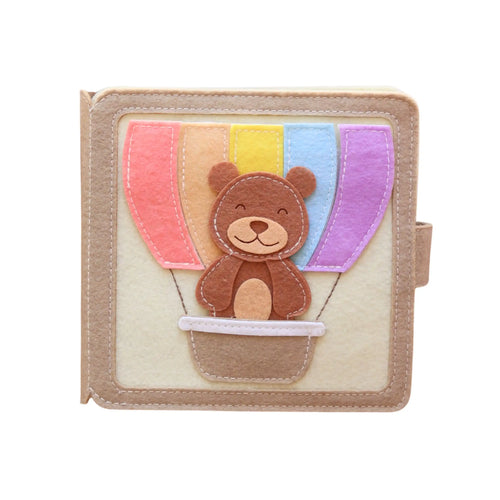
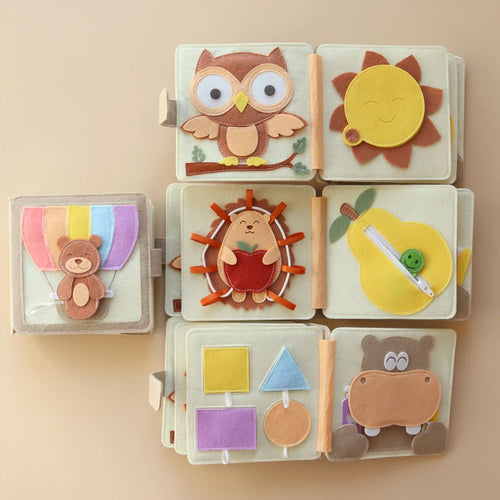
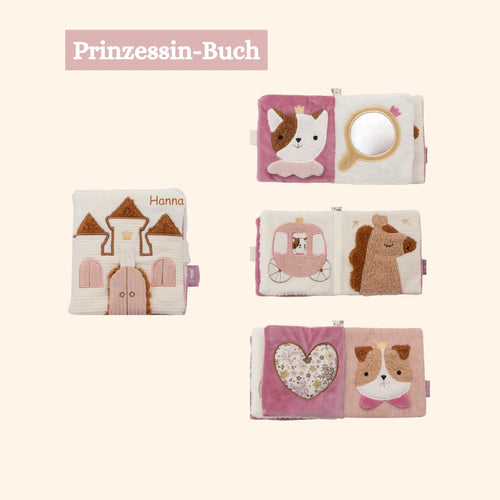
- Quiet books for babies from 3 to 18 months: clear motifs, different fabrics, and simple activities – completely without screens and sensory overload.
All products can be personalized with your child's name – making the toy a lasting gift for birth or baptism.
Frequently asked questions about visual development
When can babies see properly?
Babies see from birth, but initially only blurry and at 20–30 cm. Children only see "properly" – i.e., approximately like adults – towards the end of the first year of life; visual acuity continues to mature even beyond that.
When does my baby recognize me?
Your face is the most exciting "image" for your baby from the start. Babies prefer familiar faces within the first few weeks; from about 2–3 months, your baby will give you a conscious smile when they see you.
Do I need special contrast cards for my baby?
No – they are helpful, but not a must. Your baby also finds strong contrasts in your face, in everyday patterns, and in high-contrast toys. As soon as your baby starts grasping (from approx. 3–4 months), tactile materials are more valuable than simple picture cards – such as a soft cloth book with crinkle pages and a mirror.
Is a lot of screen time good for visual development?
No. For babies, professional associations recommend avoiding screen time as much as possible. Real objects, faces, and tangible materials promote the visual system much better than any app.
Conclusion: Your baby learns to see just as they learn to walk – step by step. With your face as their first "favorite image," clear contrasts in the first few months, and toys that combine seeing, feeling, and grasping, you provide them with the best support. By the way: when the right time for a first quiet book is, you can read in our article When is a quiet book useful?