




Choosing the right activity book for 2-year-olds
Share
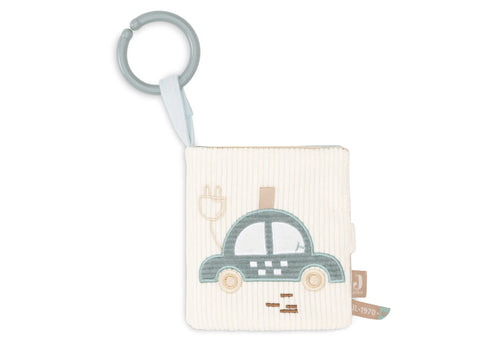
At two years old, curious fumbling suddenly turns into purposeful experimentation. A zipper has to open and close, a button has to fit through a loop, an animal has to find its place. That's why an activity book for 2-year-olds can be far more than just a nice pastime. If it's well-made, it accompanies a child through a phase where hands, mind, and independence make visible leaps every day.
Why an activity book for 2-year-olds is such a good fit
Two-year-olds learn not through long explanations, but through repetition, touch, and small successes. They want to try things themselves, often ten times in a row. What seems monotonous to adults is an important part of learning for children at this age. An activity book addresses precisely this need: It offers manageable tasks that a child can solve with their hands, without being overwhelmed by sounds, lights, or too many stimuli.
Especially in quiet moments, the value of such books becomes apparent. In a restaurant, while traveling, in a waiting room, or during a quiet play phase at home, a well-designed book helps to focus attention. The goal is not just to keep children busy. It's about meaningful, quiet, and tangible experiences that build concentration rather than scatter it.
Added to this is an emotional aspect that many parents know well: Two-year-olds want to do things "by themselves." A suitable activity book provides a safe framework for exactly that. They can open, sort, insert, pull, and match without things breaking or becoming too difficult.
What makes a good activity book for 2-year-olds
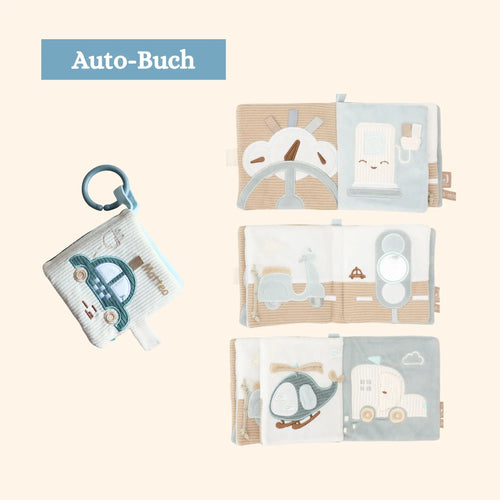
Not every book with flaps, colors, or figures is automatically suitable for this age. At two years old, what matters most is whether the tasks match the developmental stage. Content that is too simple quickly becomes boring. Pages that are too complex are frustrating. Good activity books strike a balance.
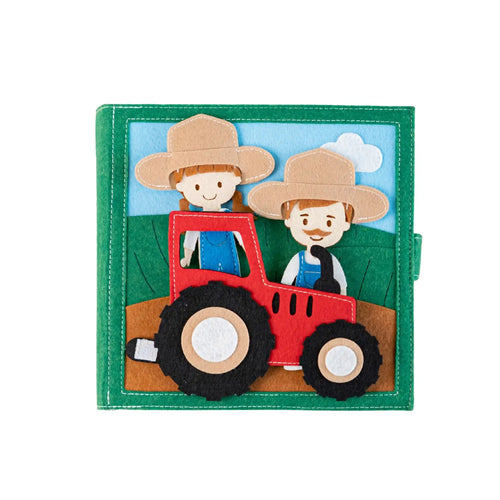
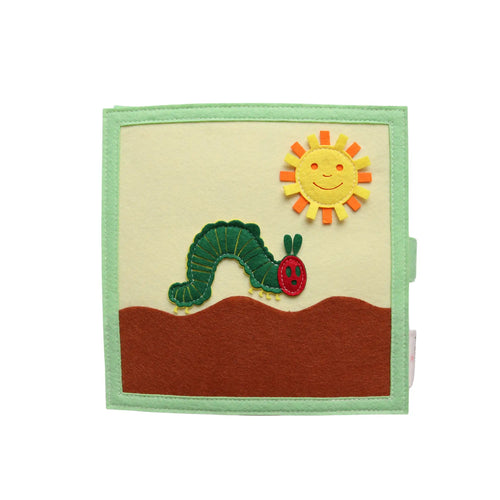
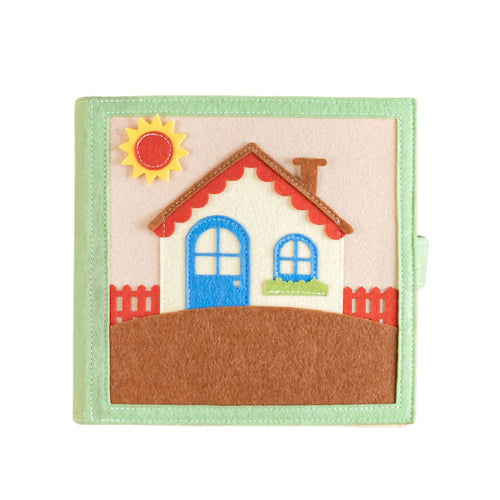
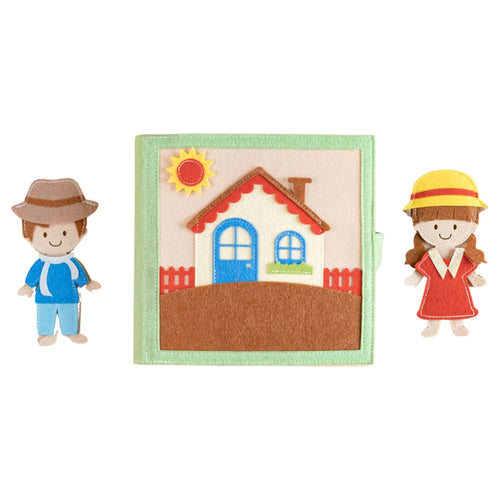
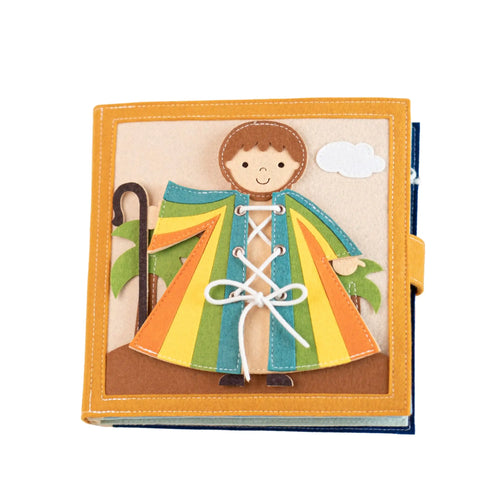
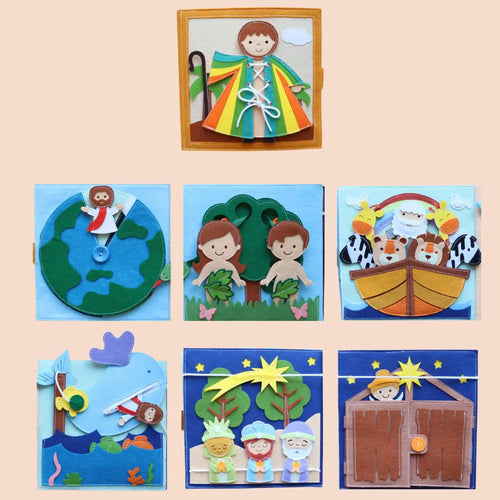
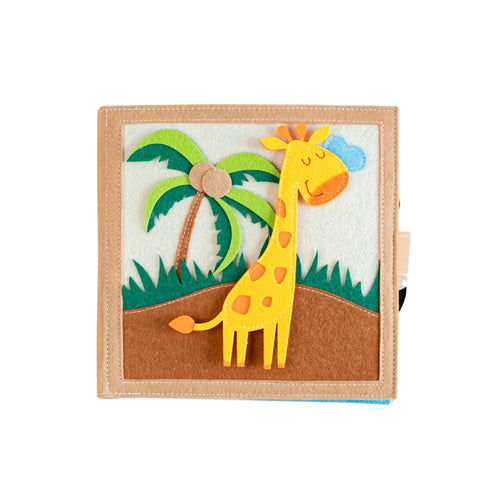
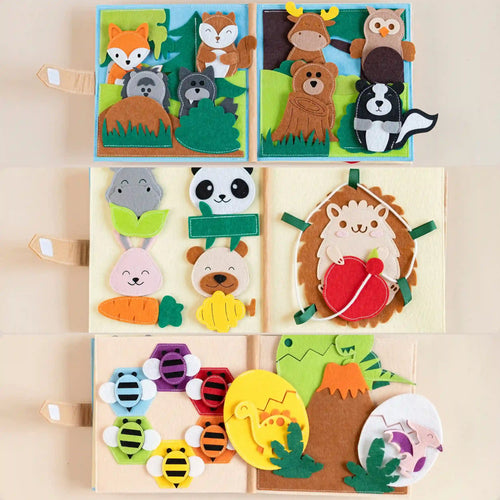
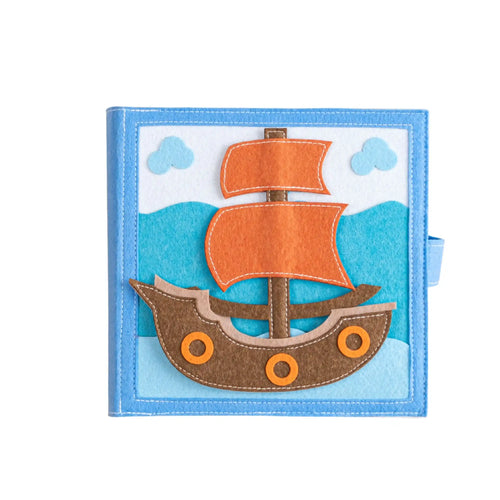
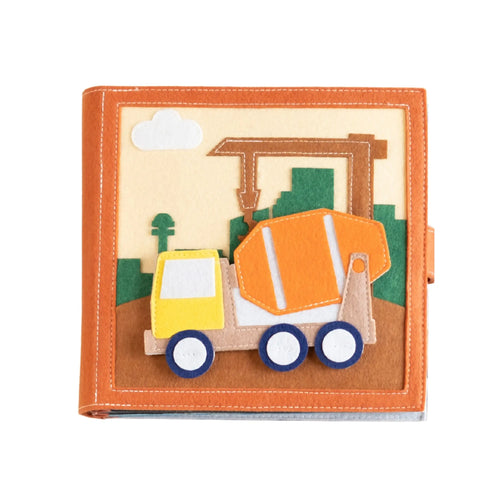
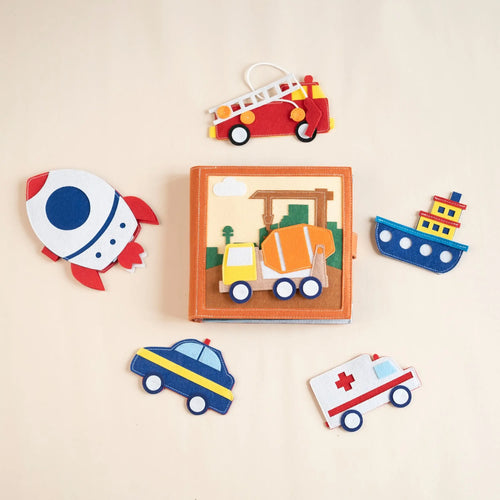
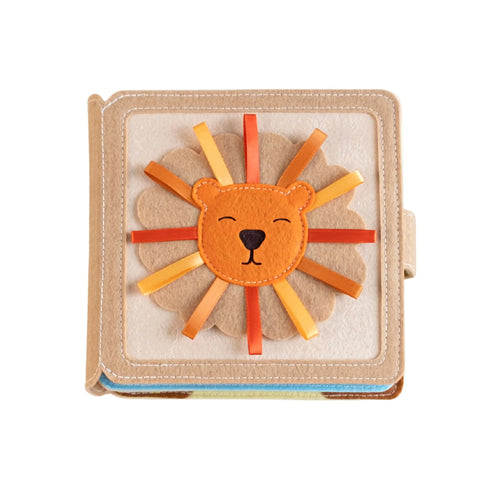
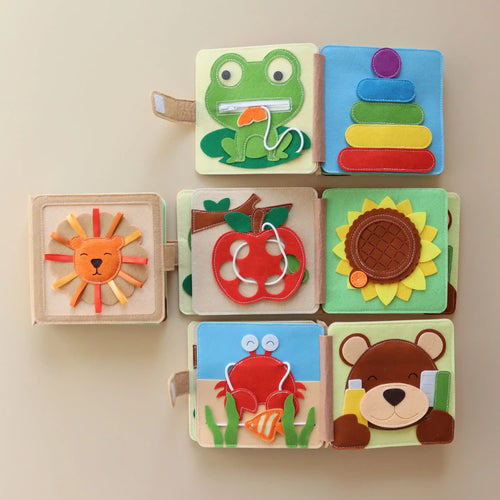
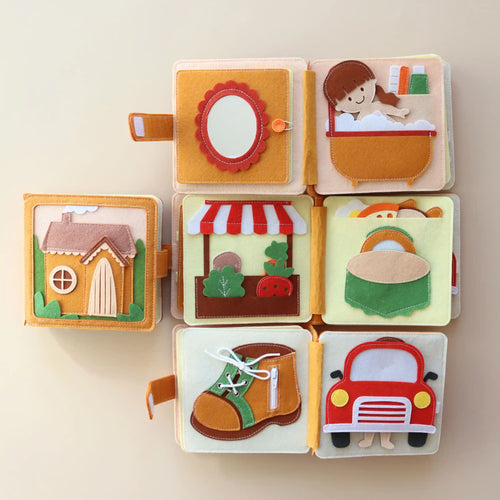
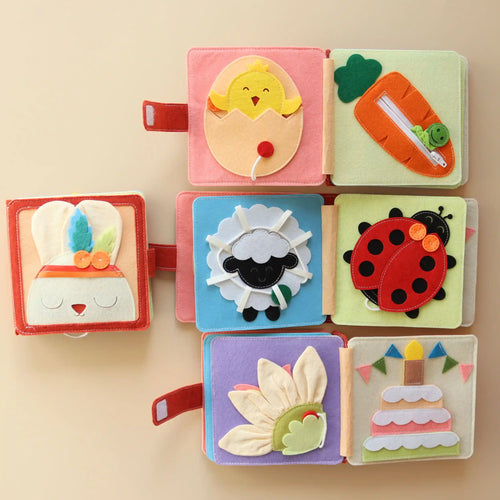
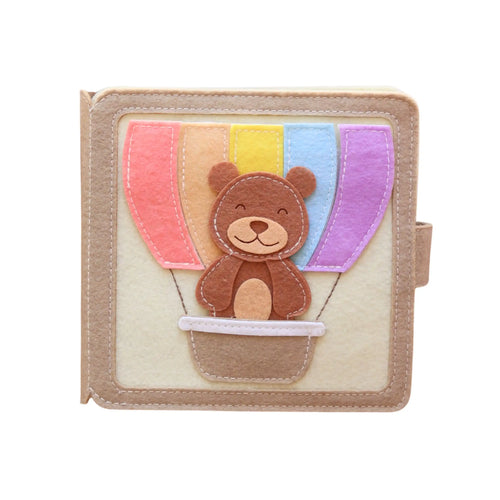
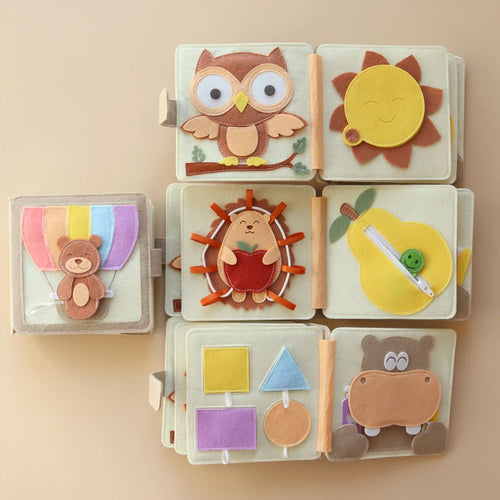
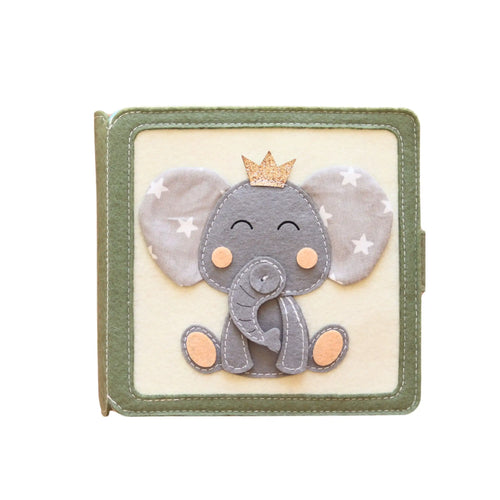
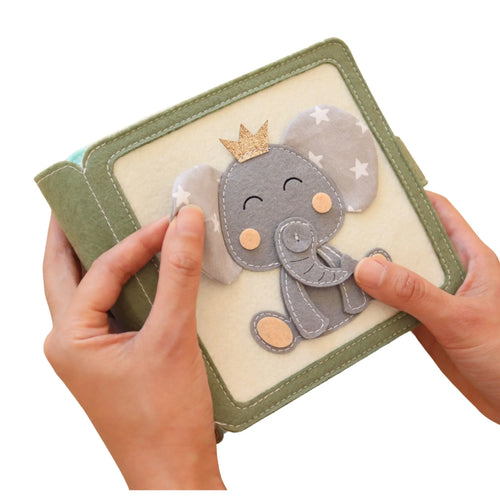
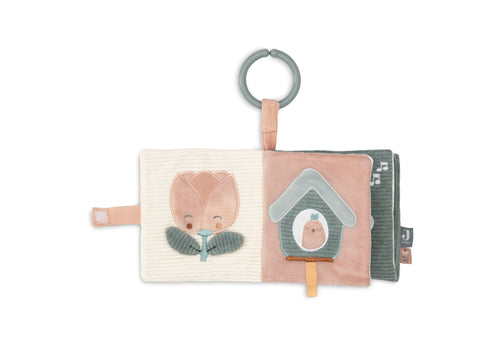
First, the haptics are important. Soft, stable materials feel better in small hands than thin elements that quickly bend or tear. Felt, neatly sewn parts, and grippy surfaces are particularly pleasant because children can work with them intuitively. The size of the elements also plays a role. They should be large enough to be gripped securely, but small enough so that fingers have to practice precisely.
Equally crucial is the clarity of each page. Two-year-olds benefit from tasks with a recognizable goal. A circle belongs on the circle, the buckle is closed, the animal is matched. If too many colors, details, or play ideas appear on one page at the same time, this focus is lost. Less is often more here - not out of frugality, but out of pedagogical sensitivity.
Another quality feature is repeatability. A good book is not "played through" after three minutes. It invites children to practice the same movement again and again, becoming more confident. This is often where the most valuable developmental steps arise.
What skills an activity book can foster
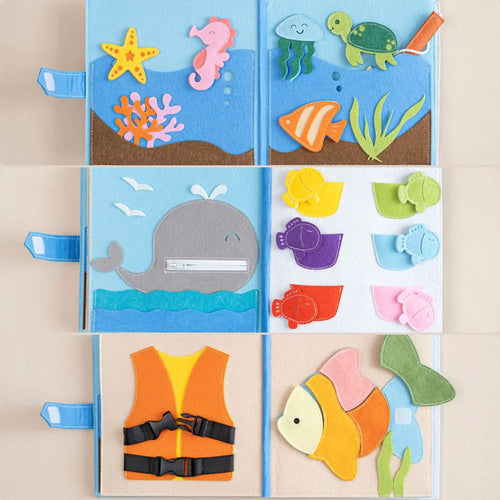
A high-quality activity book supports several developmental areas simultaneously. Fine motor skills are particularly visible. When a child releases velcro, moves buttons, pulls loops, or places shapes, they train finger strength, hand-eye coordination, and movement precision.
Concentration is also boosted. Two-year-olds naturally don't have a long attention span yet, but they can engage surprisingly intensely with a concrete, suitable task. Especially quiet, action-oriented materials help to strengthen this focus step by step.
Language is also often stimulated incidentally. Parents name colors, animals, clothes, or everyday objects while the child plays. This creates a learning moment without pressure, but rather a joint discovery. This is particularly valuable because language at this age is closely linked to action. What the hand does, the mind often remembers better.
Many activity books also promote early life skills. Opening a zipper, closing a bag, matching shoes, recognizing shapes, or understanding simple sequences - all these are small steps towards independence. For children, this is not only practical but also a moment of true pride.
What parents should look for when buying
When choosing an activity book for 2-year-olds, one should look less at buzzwords and more at the concrete design. The most beautiful appearance is of little use if the tasks are beyond the child's abilities.
A good first glance should be at the level of difficulty. Are there pages that a two-year-old can start independently? If a lot of explanation is needed on every double page, the book is probably intended for older children. Ideal are activities that are immediately understandable but still offer developmental potential.
Safety is, of course, indispensable. All parts should be firmly processed, neatly fitted, and designed for regular use. Especially with handmade books, quality often shows in the details: stable seams, carefully attached elements, and materials that remain beautiful even after frequent play.
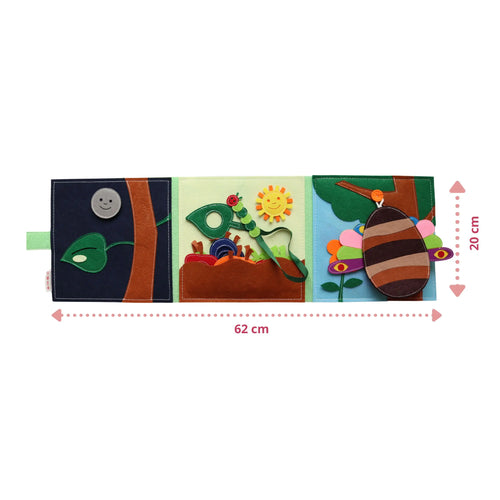
A format that is easy to take along is also practical. Many families are looking not only for a toy for the nursery but also a quiet activity for on the go. Then it matters whether the book fits into a bag, whether nothing is loud, and whether it works without many loose parts.
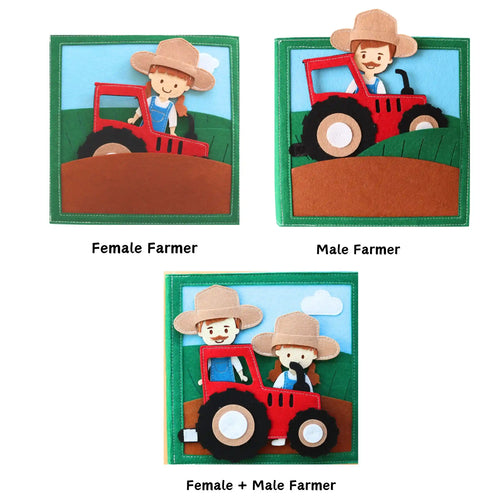
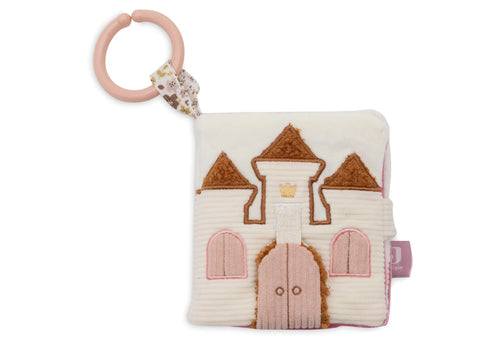
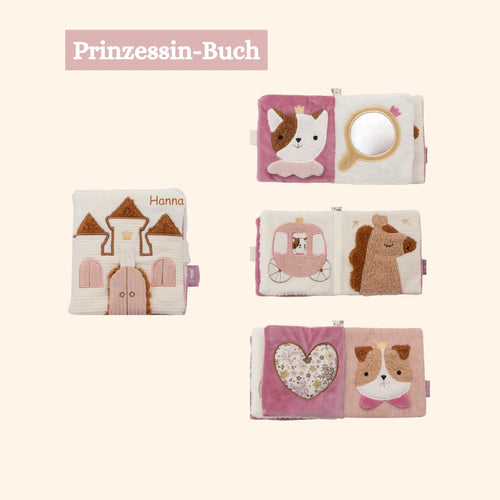
The design should also suit the family. Some children react particularly well to friendly animal motifs, others to everyday scenes or clear shapes. There is no universally right or wrong here. The crucial thing is that the book feels warm, inviting, and not overloaded.
Activity book or classic toy?
This question often arises because there are already many exciting play options for two-year-olds. Stacking games, shape sorters, wooden puzzles, or vehicles all have their place. An activity book doesn't completely replace them, but it serves a slightly different purpose.
Its big advantage lies in the combination of calm, structure, and versatility. Several small exercises are bundled in a compact format. This makes it particularly attractive for situations where open, expansive play is not suitable. At the same time, for children, it doesn't feel like a "task," but rather like free exploration.
The small disadvantage is that not every child immediately plays with it with the same intensity. Some two-year-olds need initial guidance. This is completely normal. A good book often grows into everyday life only through joint showing, naming, and demonstrating. After that, many pages are used independently little by little.
When an activity book is particularly useful
Some families use an activity book daily, while others appreciate it primarily for specific moments. Both can work well. It is often particularly helpful in transitional situations - in the morning before leaving, on long journeys, during a visit to a cafe, or when a younger sibling needs attention.
Such a book is also a nice choice as a gift, as it feels useful and personal. Unlike many short-lived toys, a carefully crafted activity book often remains interesting over a longer period. Especially when it is lovingly designed, looks high-quality, and feels pleasant, it has a special value.
For many gift-givers, this is precisely what matters: one does not want to bring just anything, but something that brings joy and is actually used in everyday life. A well-chosen activity book often bridges this gap between heart and purpose particularly well.
How to recognize true quality
With high-quality Quiet Books and Montessori-inspired activity books, the difference is rarely apparent only in the first photo. It shows after weeks and months. Do the pages keep their shape? Do fasteners remain easy to operate? Is the material pleasantly soft without appearing flimsy? Are the colors friendly and timeless instead of garish and hectic?
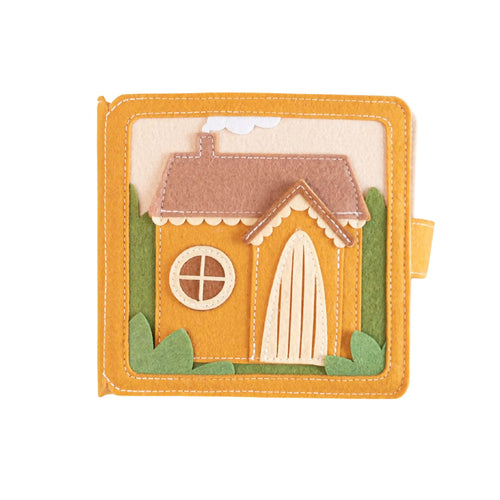
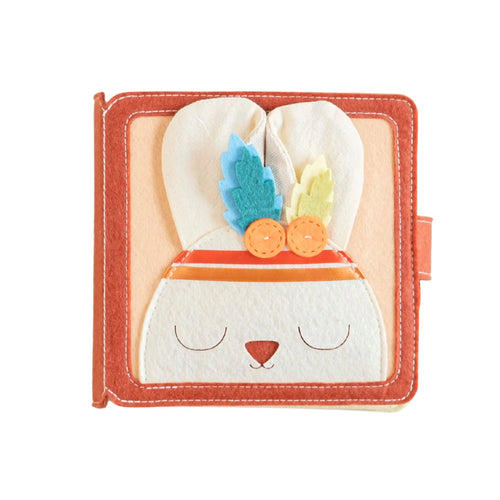
Handmade books, in particular, often have a special charm here. They seem thoughtful, careful, and child-oriented. When design, material, and developmental benefit come together, something is created that not only looks pretty but truly lasts in family life. With brands like Habi Kids, precisely this standard is palpable: calm, meaningful play that is beautifully designed and also trusts children to achieve something.
The best activity book for 2-year-olds is not the one with the most features
Many parents understandably look for the book that "can do everything." In practice, this is rarely the best solution. Two-year-olds don't need an abundance of stimuli, but rather clarity, good materials, and tasks that fit their moment. Sometimes a single page with a button, a shape, and a small matching exercise is more valuable than ten blinking ideas at once.
When a child with shining eyes closes the same buckle again and again, it looks unspectacular from the outside. In fact, development is happening right there - concentrated, calm, and with genuine pride. A good activity book creates space for these small, big moments, and that's why it often remains in everyday life longer than many louder toys.
In the end, it's worth taking your time rather than rushing into a purchase, and choosing the book that feels right: for small hands, for quiet play moments, and for the kind of childhood that doesn't constantly blink to be remembered.