







Promoting fine motor skills in toddlers: exercises, tips & play ideas by age
Buttoning up a button, holding a pen, threading beads – what adults take for granted is a real feat for small children's hands. Fine motor skills are among the most important abilities your child develops in the first few years of life. They form the basis for independence, creativity, and later academic skills such as writing.
The good news: You can specifically promote your child's fine motor skills – playfully, in everyday life, and completely without performance pressure. This guide will tell you which milestones your child reaches at which age, which exercises are particularly suitable, and why Montessori toys like Quiet Books play a special role.
What is fine motor skills – and why is it so important?
Fine motor skills refer to all small, precise movements performed primarily with the hands and fingers. These include grasping, turning, kneading, threading, drawing, and writing. In contrast, gross motor skills describe large body movements such as running, jumping, or climbing.

Both areas develop in parallel – but fine motor skills have a particularly significant impact on your child's independence . Whether eating with cutlery, getting dressed, or crafting: fine motor skills accompany your child throughout their everyday life.
Well-developed fine motor skills are also crucial for school readiness . Children who can hold a pencil securely, cut out shapes, and grasp small objects find learning to write significantly easier. Studies show that fine motor development in the first five years of life is closely linked to later academic performance.
Therefore, it is worthwhile to playfully promote fine motor skills from an early age – with exercises that are fun and correspond to your child's developmental stage.
Fine motor skills milestones: What your child can do and when
Every child develops at their own pace. Nevertheless, there are typical fine motor skills milestones that you can use as a guide. The following overview shows you which skills are common at which age – and how you can specifically support them.
3–6 months: First attempts at grasping
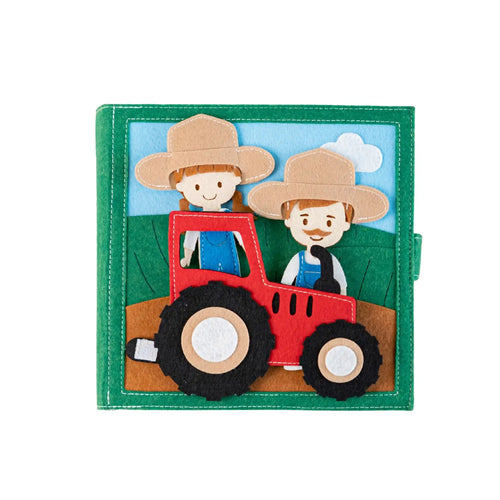
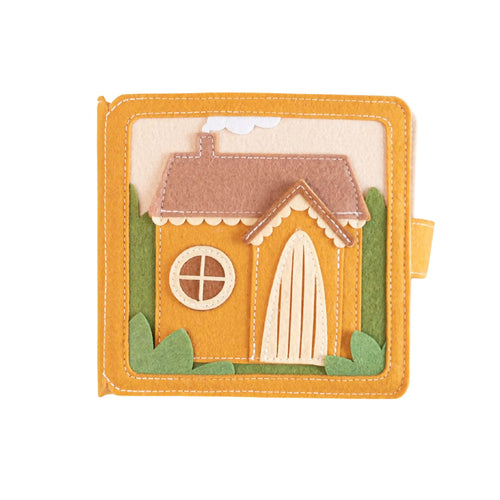
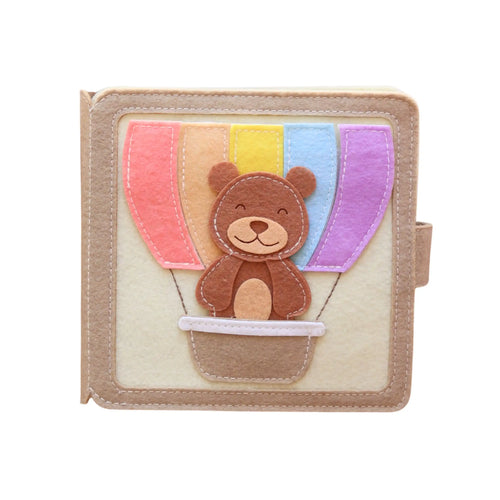
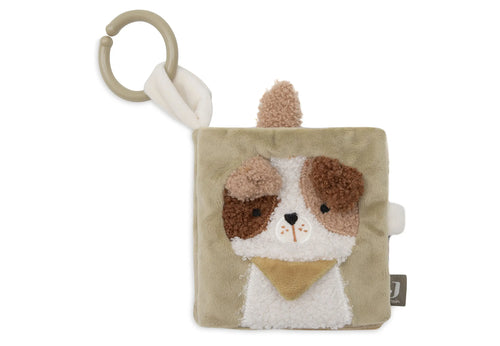
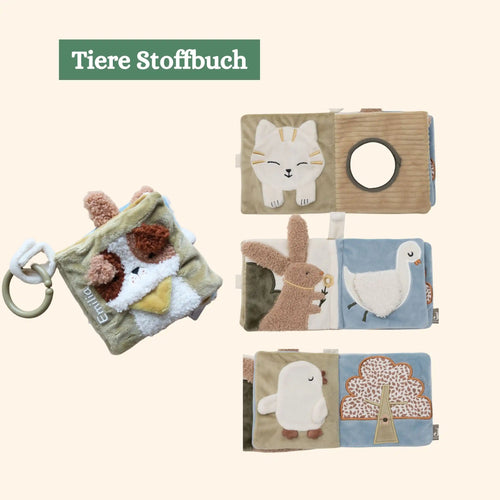
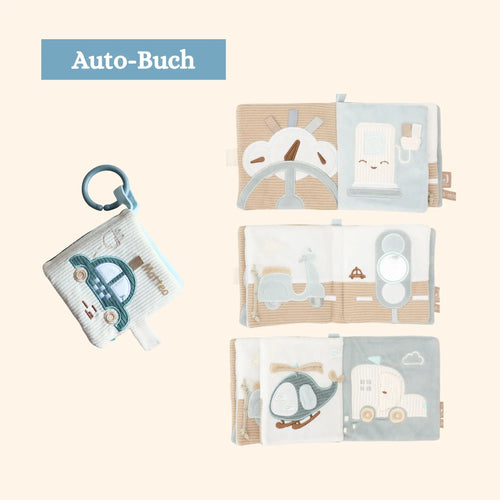
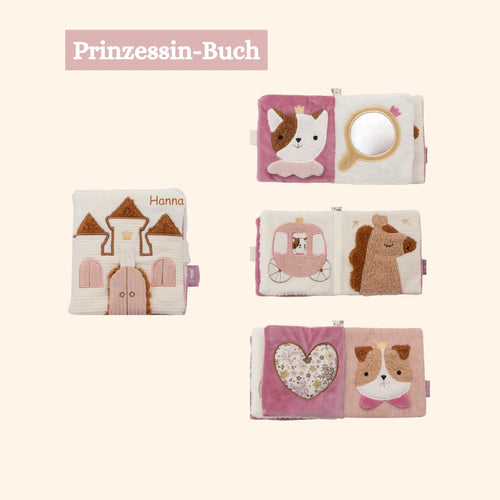
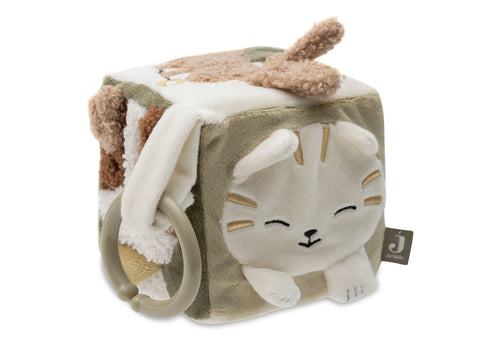
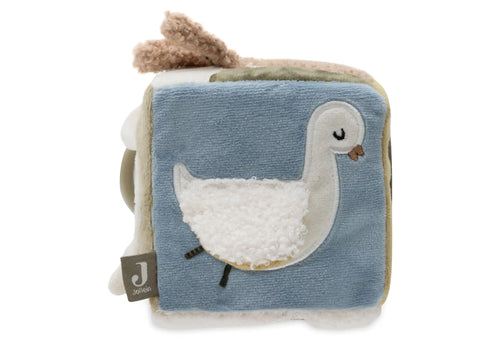
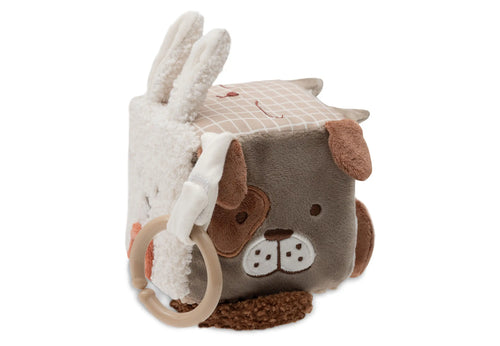
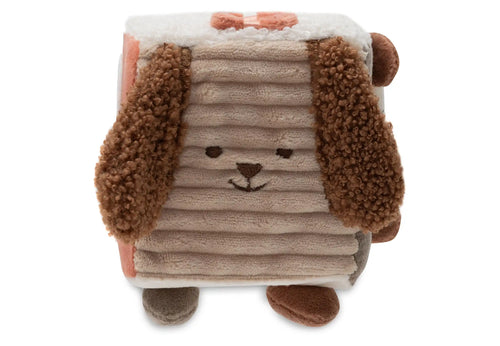
At this age, your baby begins to reach for objects intentionally. They discover their hands, bring objects to their mouth, and react to different textures. Sensory toys with various surfaces – soft, rough, smooth – stimulate the sense of touch and encourage early fine motor skills. Our Mini Quiet Books are specially designed for this age: the colorful felt pages invite your baby to grasp, feel, and explore.
6–12 months: The pincer grasp
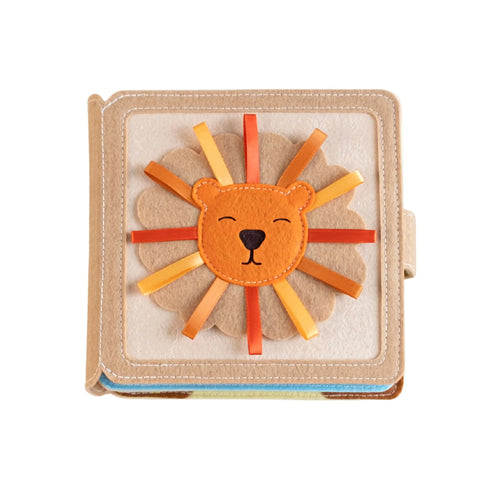
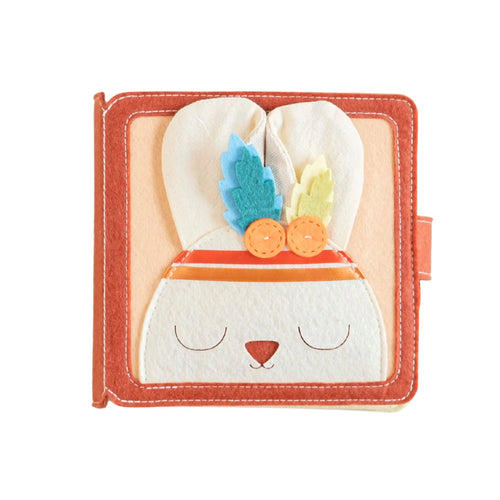
Between 6 and 12 months, your baby learns the pincer grasp – the precise grasping of small objects between thumb and forefinger. This is an important milestone! Your child begins to intentionally release objects, tap them, and transfer them from one hand to the other. Mini Quiet Books like the Lion or the Rabbit offer age-appropriate activities that train these very skills.

1–2 years: Stacking, painting, puzzling
Now things get really exciting: your toddler can stack building blocks , draw their first lines with thick crayons, and solve simple peg puzzles. Hand-eye coordination improves rapidly. Everyday activities like eating with a spoon or turning book pages become fine motor skills exercises. Toys that encourage sorting, stacking, and matching are ideal at this stage.
2–3 years: Buttons, threading, zippers
Between the ages of two and three, your child's movements become increasingly precise and controlled . They can thread beads, shape modeling clay, and try their first techniques with scissors and glue sticks. Dressing and undressing also becomes more independent. The Quiet Book "A Happy Day" addresses these everyday situations and allows your child to playfully practice buttons, zippers, and buckles – ideal for the next developmental step, as described in our article "When is a Quiet Book Right?"
3–5 years: Preparation for school
Now, their skills are further refined: your child learns to cut along a line with scissors , trace letters, and color in shapes. Their pencil grip becomes more secure, and they also master more complex tasks like tying shoelaces or building small structures with increasing ease. The "Dream Job" Quiet Book specifically encourages these skills – while dressing different job characters, your child practices buttons, Velcro fasteners, and fine motor skills.
Fine motor skills milestones at a glance
- 3–6 months: Targeted grasping, bringing objects to the mouth, exploring textures → Development: Sensory toys, mini quiet books, rattles
- 6–12 months: Pincer grasp, releasing objects, passing from hand to hand → Developmental activities: stacking cups, finger games, mini quiet books
- 1–2 years: Stacking building blocks, drawing first lines, solving peg puzzles → Developmental activities: Play-Doh, thick pencils, sorting and peg games
- 2–3 years: Threading beads, using scissors, practicing buttoning → Developmental activities: Quiet books, threading games, crafts
- 3–5 years: Cutting along lines, tracing letters, tying shoelaces → Enrichment: Quiet books, coloring books, writing exercises
10 everyday exercises that playfully promote fine motor skills
The best way to develop fine motor skills is through everyday activities – simple exercises that are fun and require no special equipment. Here are our ten favorite exercises, sorted by age:
For babies (3–12 months)
1. Texture Discovery Journey: Place different materials in front of your baby – a soft washcloth, a piece of aluminum foil, a wooden spoon. Let them feel, grasp, and explore. This will train their sense of touch and grasping skills.
- Finger games with rhymes: Classics like "Ten Little Wiggling Men" or "This is the Thumb" promote finger perception and bring joy to babies from 3 months onwards.
- Cheerios grip: From about 8 months, you can place small, age-appropriate snacks on the table and let your baby pick them up using the pincer grip – a delicious fine motor skills exercise!
For toddlers (1–3 years)
- Rolling and shaping playdough: Kneading is a true fine motor skills wonder. Your child presses, rolls, pulls, and shapes – strengthening all the hand muscles in the process. Homemade salt dough playdough is an inexpensive alternative.
- Pouring water: Give your child two small cups and some water. Pouring from one cup to the other trains hand-eye coordination and concentration – a classic Montessori exercise .
- Opening clothespins: Let your child clip colorful clothespins to a piece of cardboard or a plate. Opening the clothespins requires strength and dexterity in the fingers.
- Sticking and peeling stickers: Stickers are a simple and inexpensive way to train fine motor skills. Removing and precisely applying them requires a pincer grip and hand-eye coordination.
For kindergarten children (3–5 years)
- Stringing beads: Threading large wooden beads onto a string – a wonderful concentration exercise that simultaneously trains fine motor skills and patience.
- Cutting and pasting: Give your child child-safe scissors and simple templates to cut out. Cutting along a line is one of the most important preparatory exercises for writing.
- Practice buttons and zippers: Instead of doing everything yourself in the morning, let your child button their jacket or zip it up on their own. This takes patience – but it's incredibly beneficial.
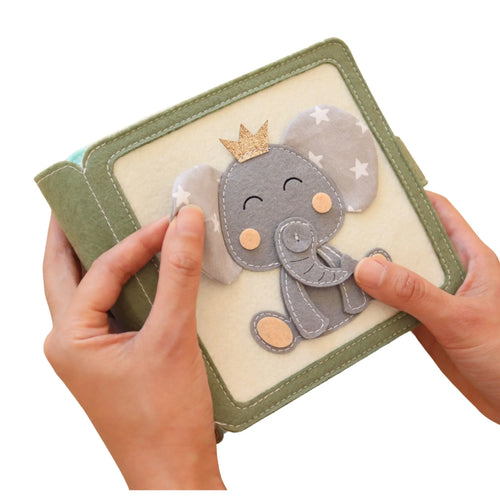
Many of these exercises – buttoning, threading, grasping, matching – are conveniently combined in a single toy : our Quiet Books . This allows your child to practice their fine motor skills anytime, anywhere – even on the go, while waiting, or traveling.
Why Montessori toys are particularly good at promoting fine motor skills
Montessori pedagogy is based on a simple yet effective principle: children learn best when they are actively involved. Instead of passively consuming, they grasp, feel, and discover the world with their own hands – at their own pace and without pressure to perform.
That is precisely why Montessori toys are particularly effective for developing fine motor skills:
- Tactile learning: Montessori toys stimulate multiple senses simultaneously. Different textures, shapes, and materials invite touching and exploration.
- Independence: The child decides for themselves what they want to practice, when, and for how long. There is no right or wrong – only discovery and learning.
- Screen-free: In an increasingly digital world, Montessori toys offer a valuable alternative. Real grasping and feeling cannot be replaced by a screen.
- Practical: Montessori materials are based on real life. Children practice skills they actually need in everyday life – from buttoning clothes to tying shoes.
These principles make Montessori toys the ideal complement for developing fine motor skills at home – and form the basis for our Quiet Books.
Quiet Books as fine motor skills training
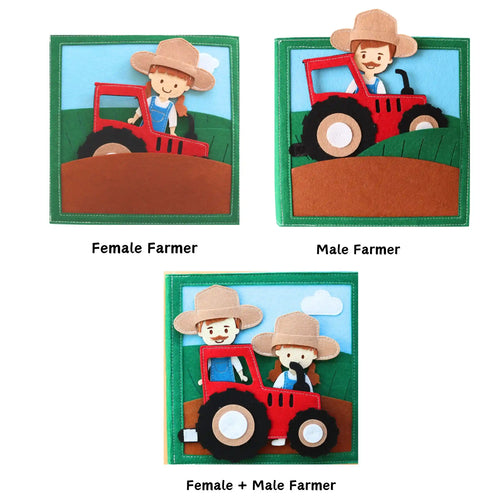
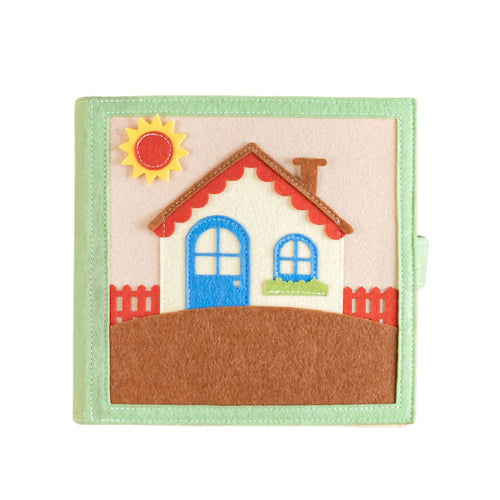
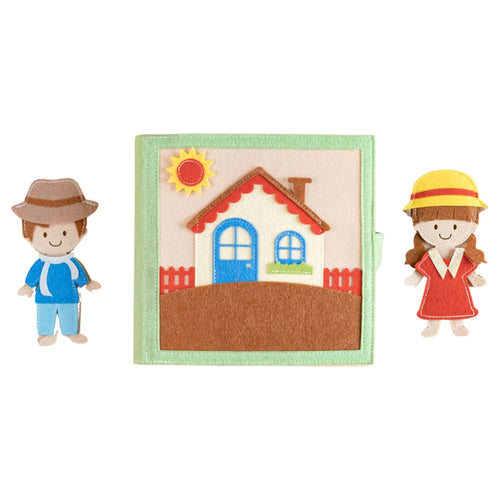
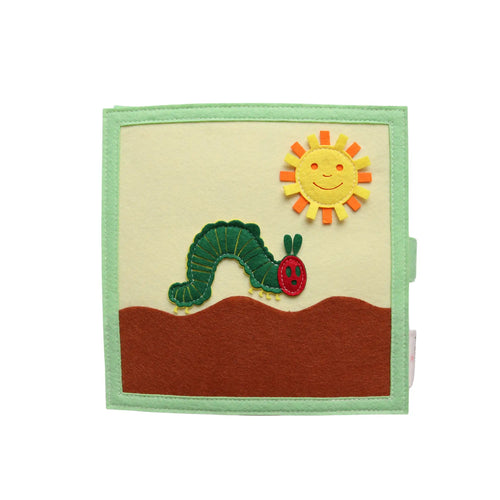
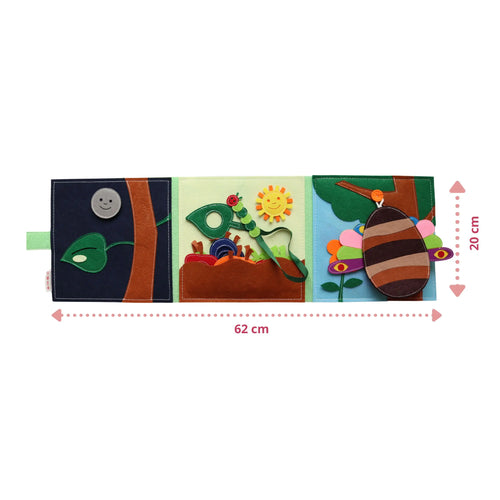
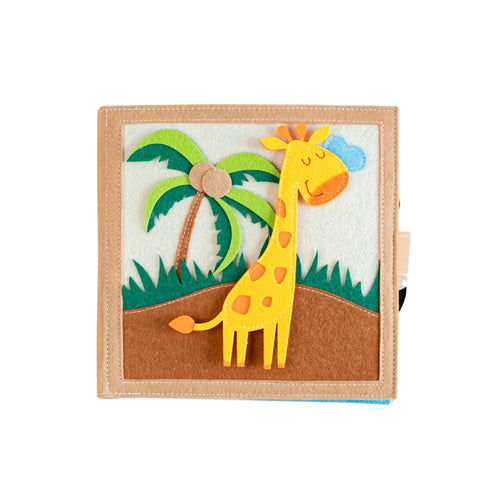
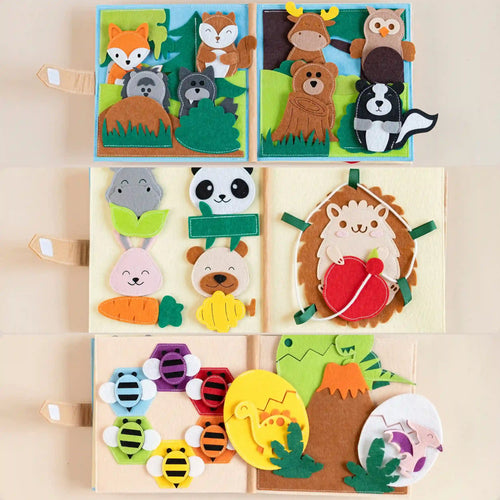
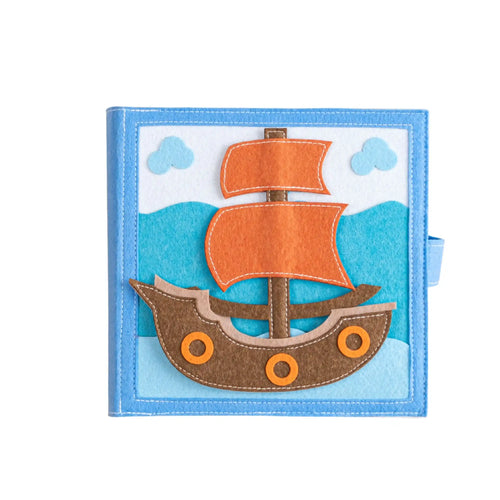
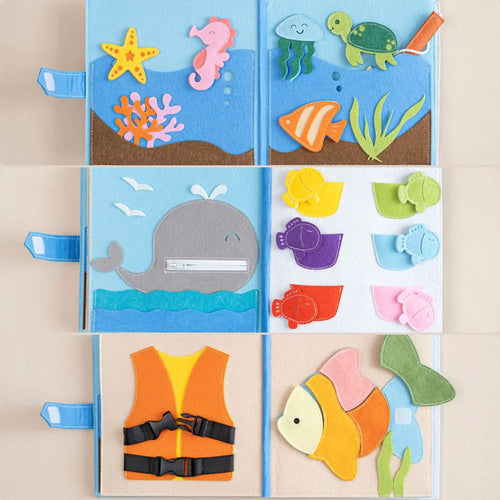
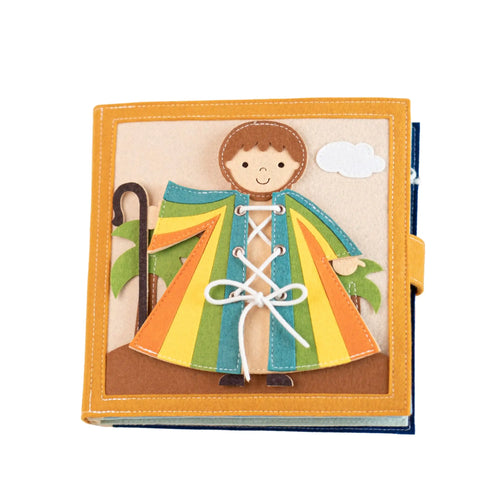
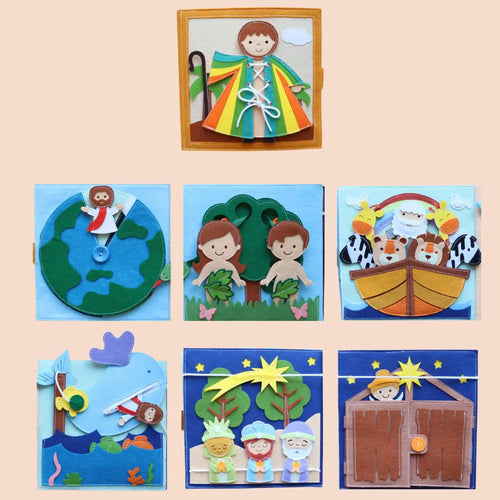
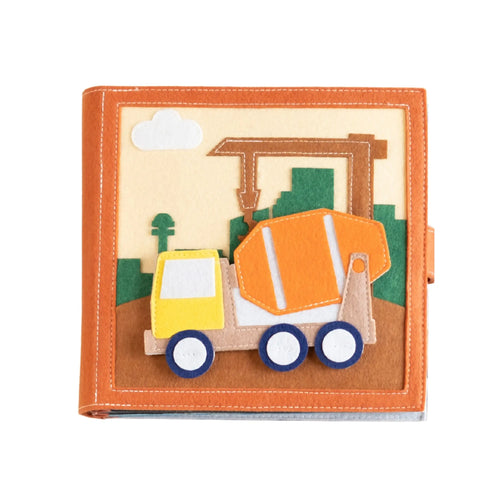
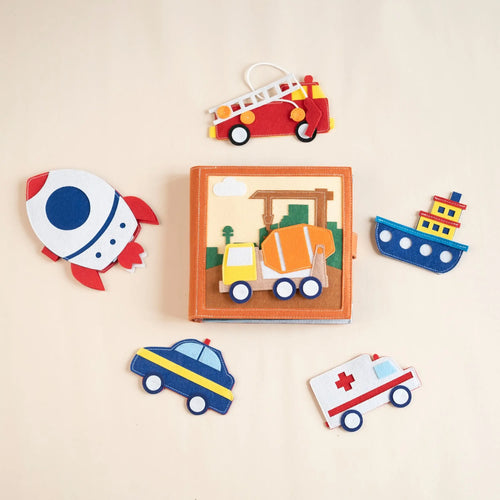
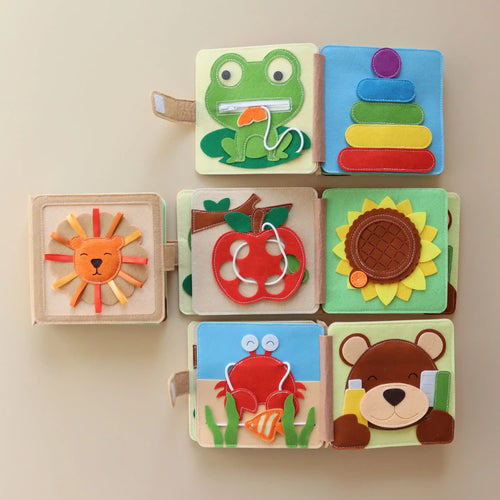
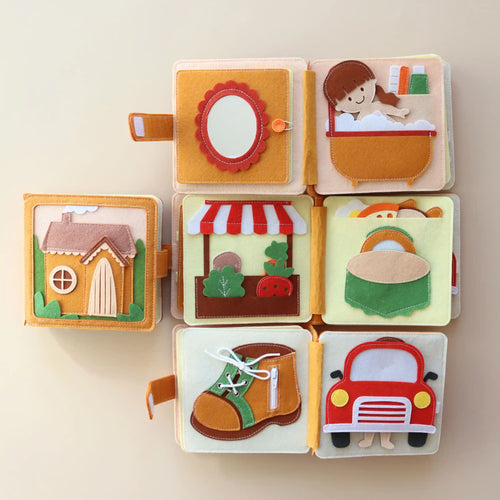
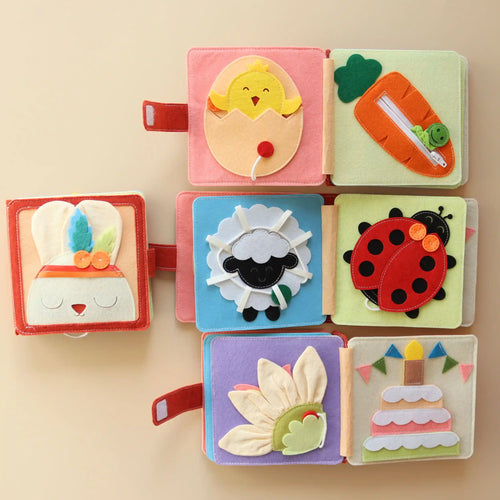
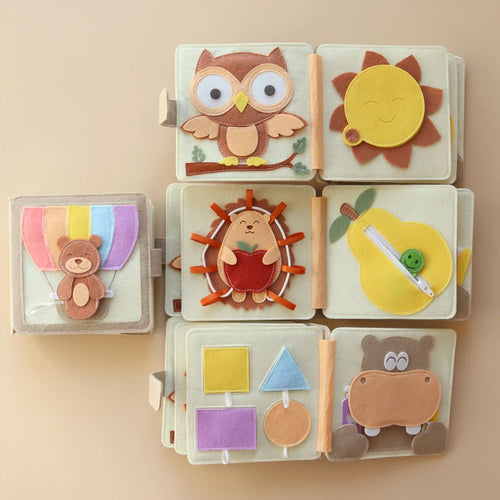
A quiet book is an interactive felt activity book that offers a different activity on each page. Children can button, thread, open zippers, match shapes, dress figures, and much more. Each activity specifically trains fine motor skills – and the best part: your child won't even realize they're "practicing" because it's so much fun.
Specific fine motor skills activities in our Quiet Books:
- Opening and closing zippers → Strengthens finger coordination
- Threading buttons → Trains the pincer grip and patience
- Tying shoelaces → Promotes ambidextrous hand coordination
- Matching and placing shapes → Develops spatial reasoning and precision
- Grasping and moving small elements → Improves dexterity
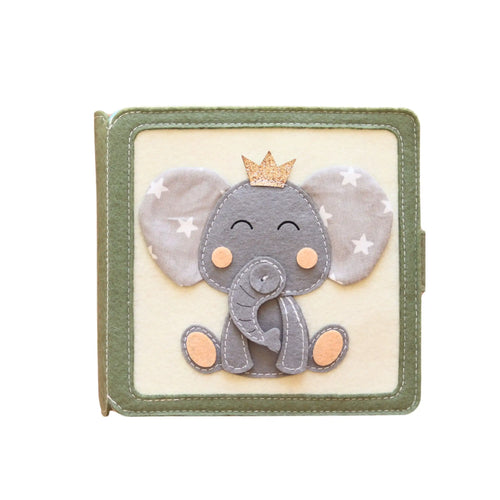
Our Mini Quiet Books (15 x 15 cm) are designed for babies and toddlers aged 3 to 18 months – with soft felt pages that invite grasping and sensory exploration. The larger Quiet Books (20 x 20 cm) are aimed at children aged 2 to 5 years and offer more complex activities such as buttoning, threading, and role-playing.
All Quiet Books are lovingly handcrafted from high-quality felt and meet the highest safety standards. Over 15,000 parents already trust HABI Kids – with an average rating of 4.9 out of 5 stars . Learn more about why Quiet Books are so valuable for children's development .
Every child develops at a different pace – and that's perfectly normal. Some children pick up a pencil early, others need a little more time. Slight deviations from the developmental milestones are no cause for concern.
However, there are signs that should make you pay attention:
- At 6 months: Your baby is not yet reaching for objects intentionally or showing little interest in toys.
- At 12 months: The pincer grasp is not yet successful; objects are not transferred from one hand to the other.
- At age 2: Your child shows no interest in painting, stacking or pegging and avoids activities that require dexterity.
- At 3-4 years old: Difficulties with dressing, buttoning, or cutting become noticeable. Pencils are held unusually.
If you are unsure, talk to your pediatrician . Early assessment can help initiate targeted support measures – such as occupational therapy or special exercise programs. The earlier fine motor difficulties are identified, the better they can be addressed.