










Playful ways to promote concentration in children
Share
When a child gets up after two minutes, discovers something else in the middle of a puzzle, or their mind wanders during story time, it's usually not a sign of a lack of ability. Playfully encouraging concentration in children primarily means creating conditions where focus can even develop - without pressure, without constant correction, and without overstimulation.
Especially young children cannot concentrate at the push of a button. Attention develops step by step, closely linked to age, daily form, sleep, environment, and whether a task truly suits their developmental stage. What parents often experience as "inability to concentrate" is, in reality, normal childhood learning in motion.
What concentration in children truly means
Concentration is not just sitting still. A child can be highly concentrated while opening a felt flap, sorting colors, closing buttons, or matching figures. The crucial thing is that they stay with one activity for a certain period, block out distractions, and remain mentally engaged.
For babies and toddlers, these time windows are naturally short. A two-year-old concentrates differently from a preschooler, and a lively child is not worse than a calm one. Therefore, it helps little to confuse concentration with obedience. The goal is not for children to be still for as long as possible. The goal is for them to become attentive with joy and from their own initiative.
Playfully encouraging concentration in children instead of demanding it
Play is not a pastime for children. It is their most natural form of learning. That's why playful approaches usually work better than commands like "Now concentrate." Such sentences tend to increase pressure. Pressure, in turn, often shortens the attention span even more.
Playful concentration promotion uses the child's curiosity. It relies on repetition, tangible materials, and tasks that are neither too easy nor too difficult. If a child experiences success, they are more likely to stick with it. If it becomes too difficult, they disengage. If it is too easy, they also lose interest. The appropriate level of difficulty is often the decisive difference.
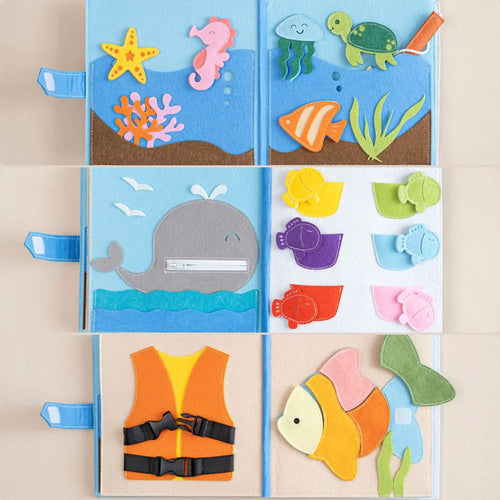
Activities where small hands can do something are particularly suitable. Opening, closing, plugging, threading, sorting, matching, or forming sequences - all of this engages attention because movement and thought work together. This is where the strengths of quiet, tactile play become particularly evident.
Which games truly strengthen attention
Not every game promotes concentration in the same way. Fast, loud, or rapidly changing stimuli can be captivating for a short time, but they don't always build the kind of endurance that is helpful in everyday life. Games that a child actively controls and can experience at their own pace are particularly valuable.
Classics like stacking games, simple puzzles, sorting games, or matching games are so effective for this reason. They provide a clear task without being overwhelming. Wimmelbooks (picture books with lots of hidden details), where something is searched for, also train focus. Quiet everyday materials work just as well: sorting colorful cloths, stacking wooden rings, finding card pairs, or arranging objects by size.
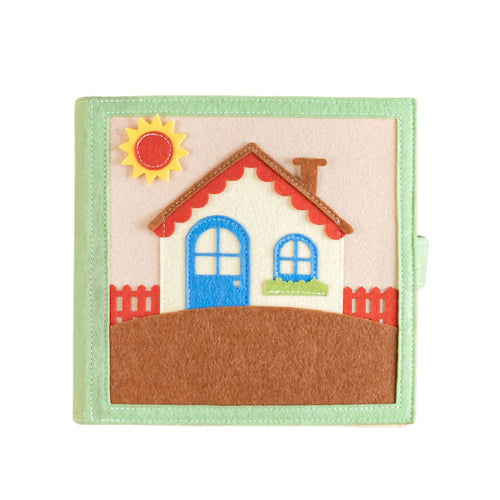
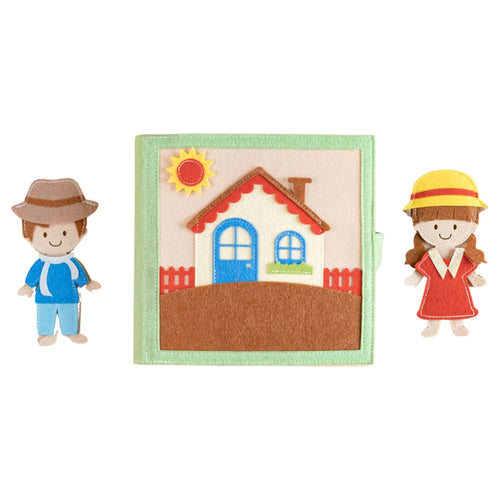
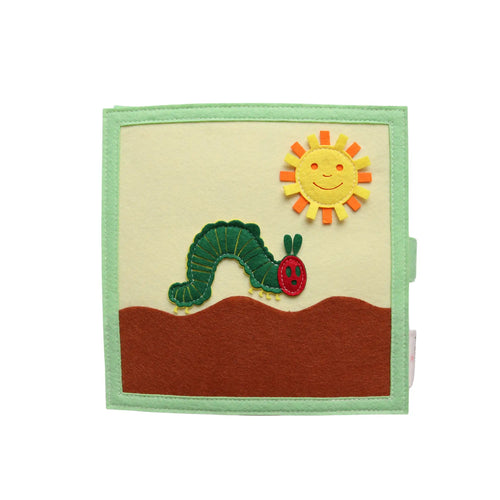
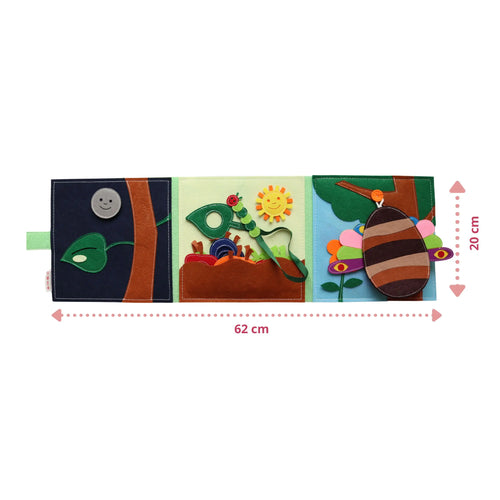
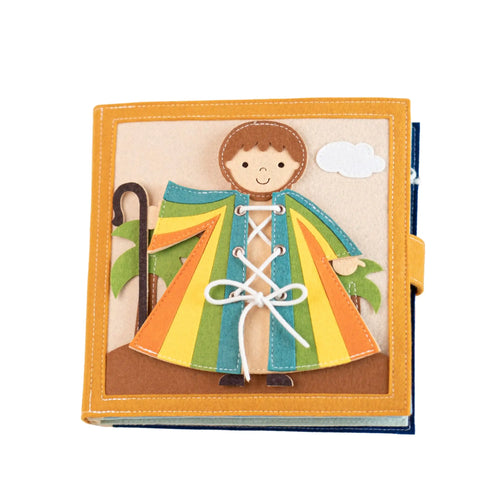
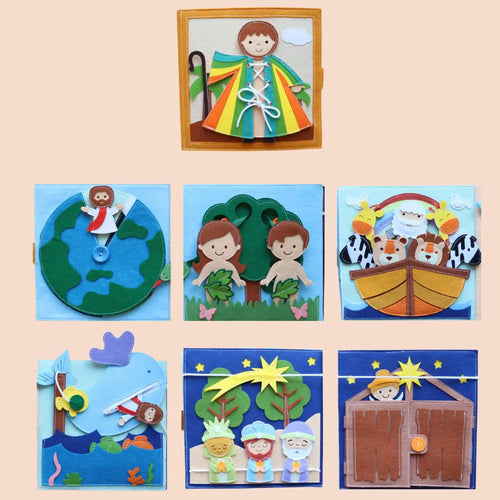
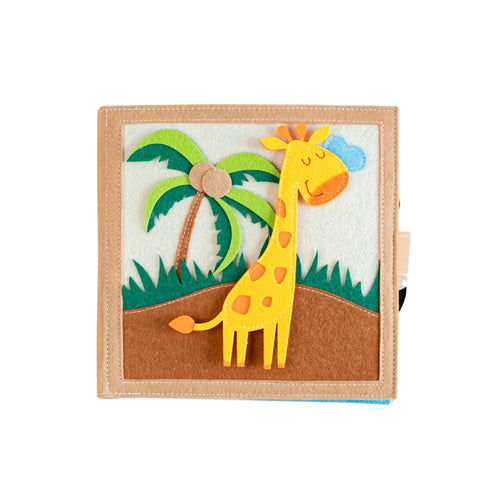
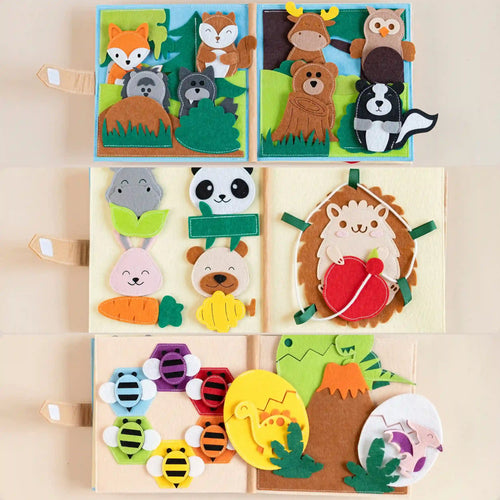
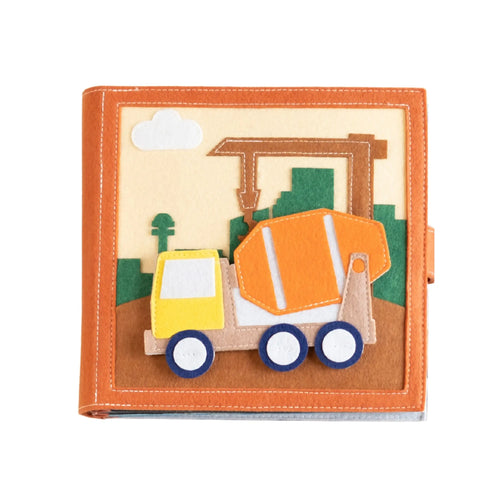
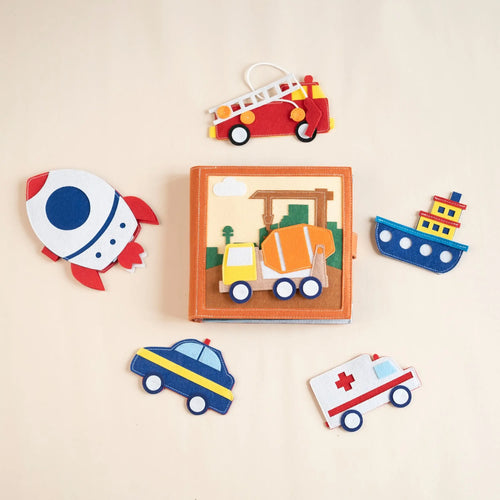
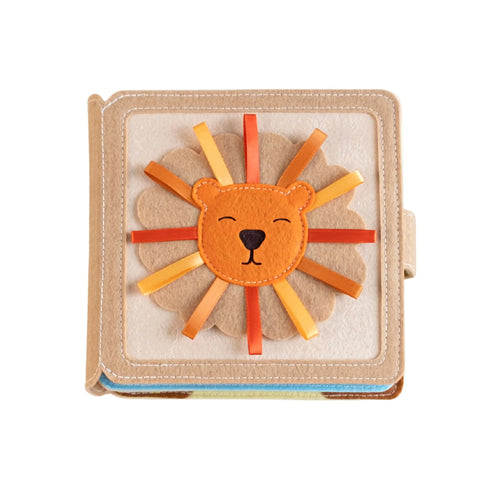
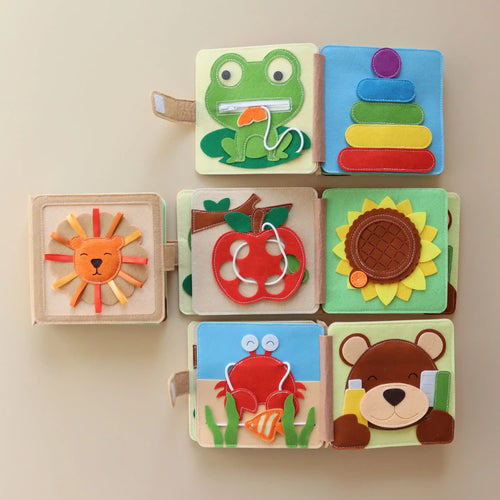
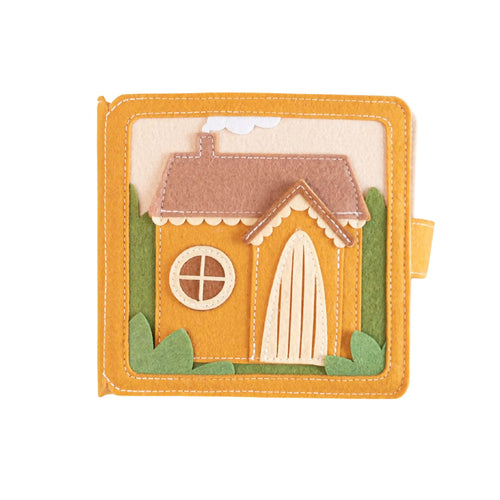
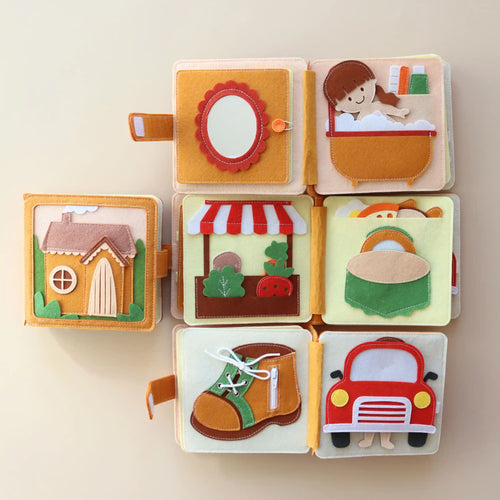
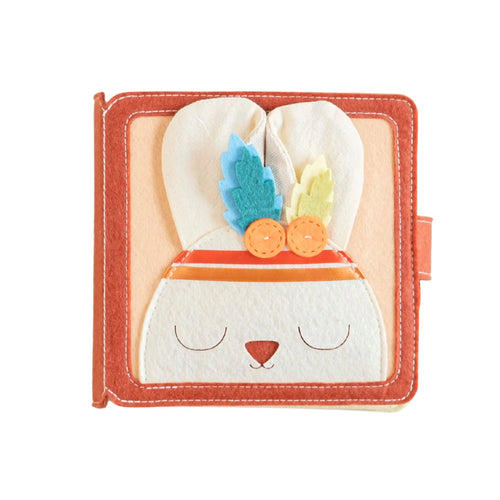
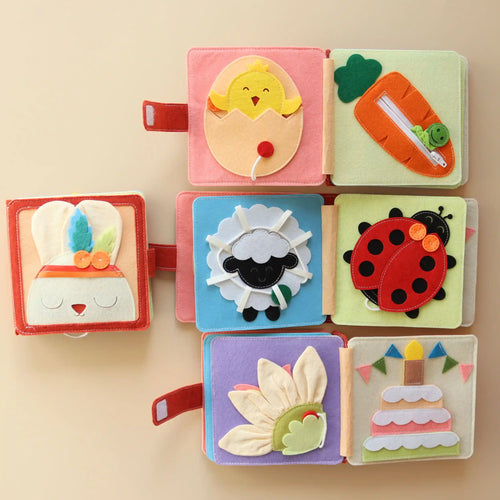
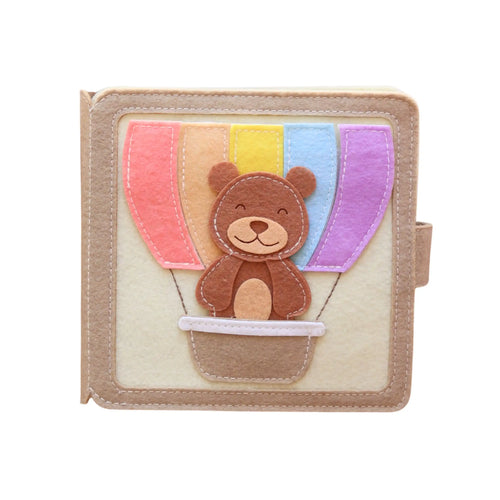
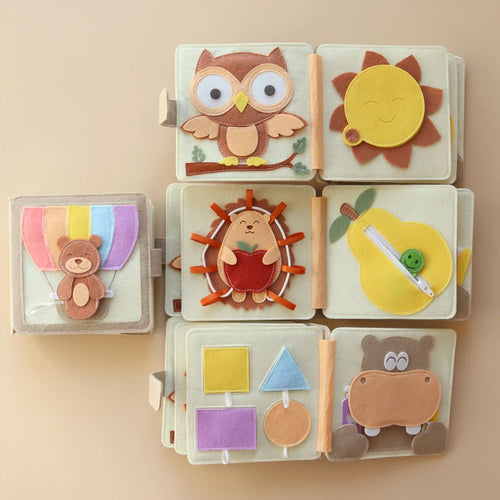
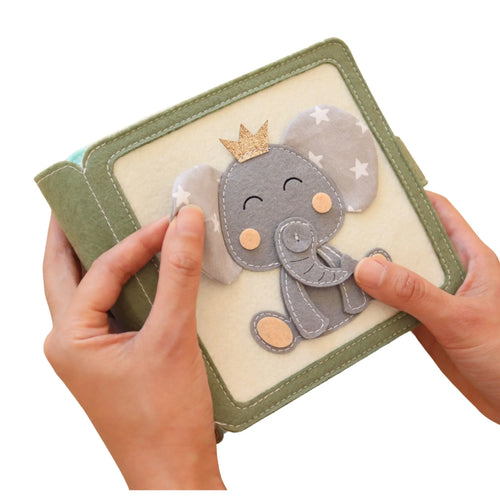
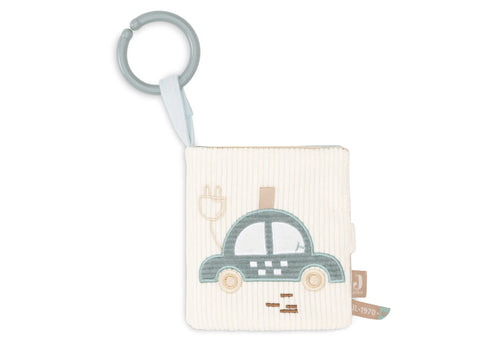
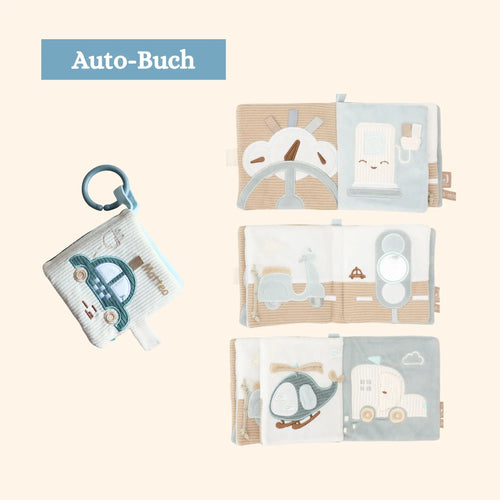
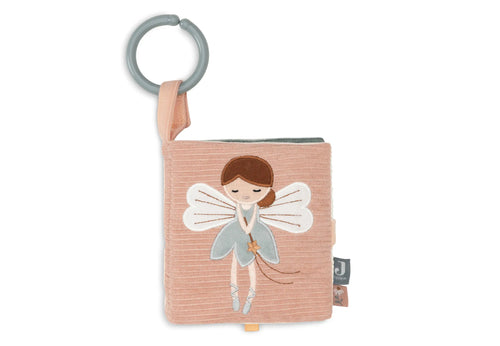
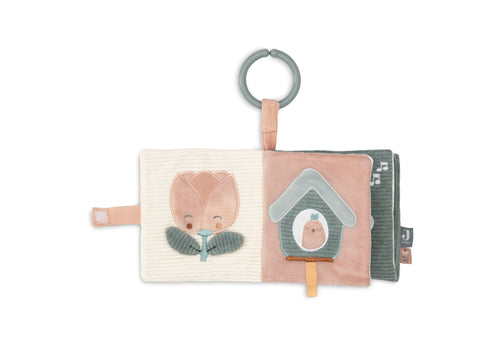
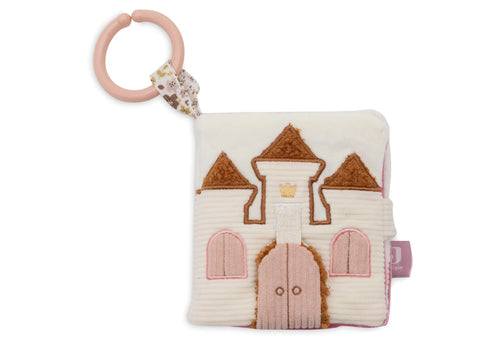
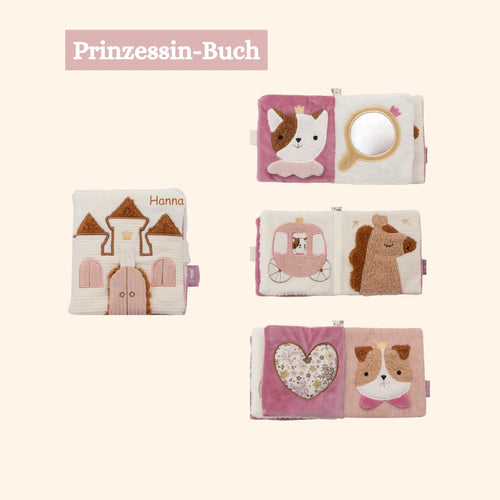
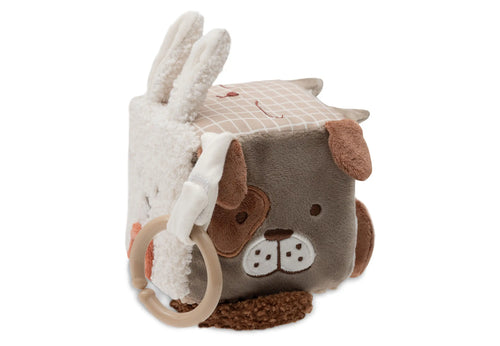
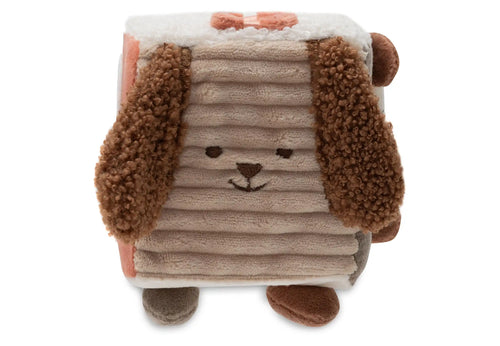
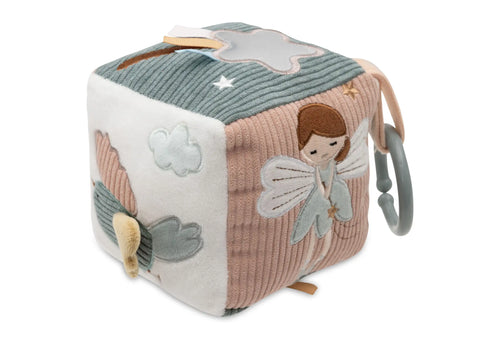
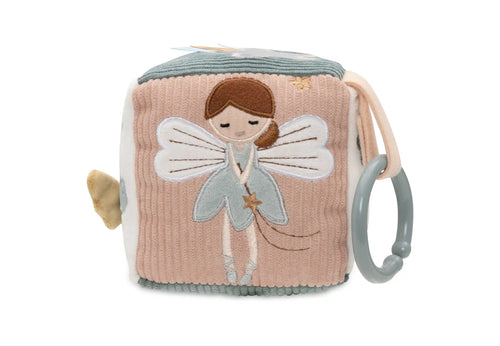
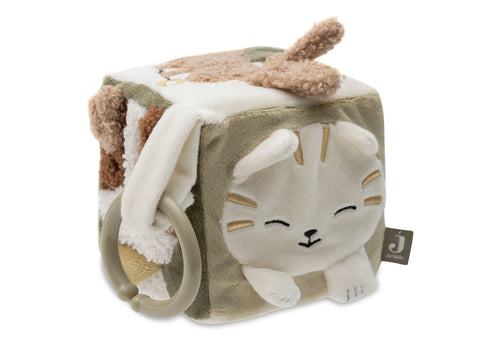
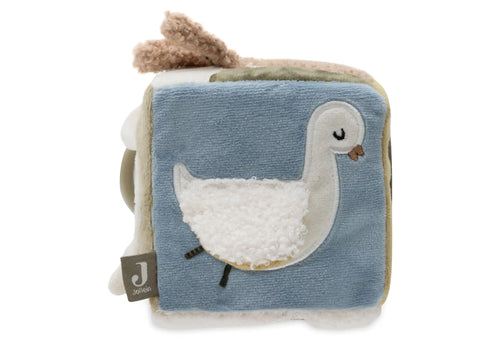
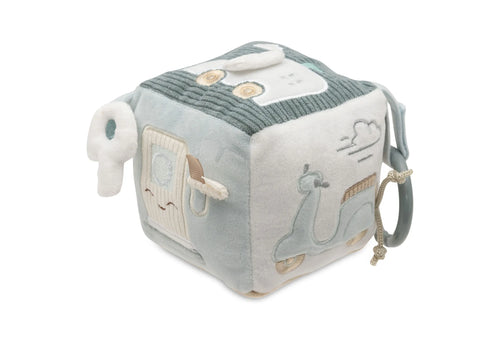
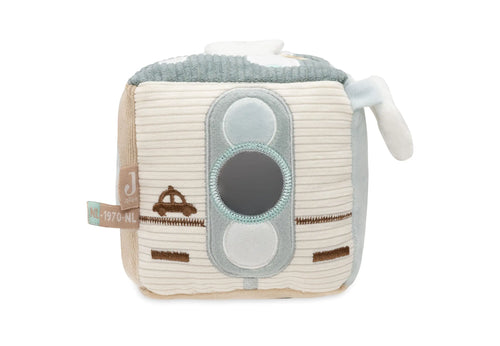
For many families, Quiet Books are a particularly nice solution because they combine several of these elements in a single, silent play material. Children can open buttons, match shapes, close zippers, or re-enact small scenes. This engages the hands without overstimulating the nervous system with light and sound. Especially on the go, in restaurants, or during quiet transition moments, this is a great advantage.
The environment also plays a role
Even the best game loses its value if too much is happening around it. Children concentrate more easily in an environment that is uncluttered. This doesn't mean sterile or strict, but calm enough so that attention is not constantly diverted.
A tidy play area, few visible materials, and a clear spot for quiet activities often help more than always new toys. If there are too many choices, children jump more quickly from one impulse to the next. Less can actually be more here.
Timing also plays a role. A tired, hungry, or overstimulated child will hardly engage in a game, even if it otherwise fits well. Many parents experience the best concentration phases in the morning or after a short break. Knowing these windows allows them to be used much more effectively than with fixed expectations at inconvenient times.
How concentration is built up incidentally in everyday life
Concentration does not have to be trained in an artificial learning situation. It often grows precisely where children are meaningfully involved. Distributing napkins when setting the table, pouring ingredients when baking, sorting laundry by color, or placing fruit in a bowl - all of this requires attention, sequence, and care.
Such tasks have a great advantage: they feel real. Children notice that what they do has meaning. This increases their willingness to stay with it. At the same time, they learn to complete a small sequence. This, too, is concentration.
Rituals also support this process. A fixed quiet play time after breakfast, a book before naptime, or a quiet activity in the afternoon provide orientation. Children then don't have to find their way into the mode anew each time. They know: now is the time to stay with one thing in peace.
How parents can accompany without interfering
Many well-intentioned aids interrupt rather than encourage. Those who constantly explain, correct, or praise divert the child's attention from the task to the adults' reaction. Of course, children need guidance. But often, less is more.
A calm presence is helpful. Observe instead of intervening immediately. Briefly name what the child is doing. Give a small encouragement when they falter. And then leave room again. This keeps the child in their own thought process.
Praise can also be specific. Instead of a general "Great job," "You looked very closely and found the right piece" often has a stronger effect. This directs the focus to the process, not just the result. Children then feel what they have accomplished and are more likely to develop perseverance.
What tends to hinder concentration
If children find it difficult to focus, it's not automatically due to the play material. Sometimes everyday life is simply too full. Too many appointments, too many impressions, too little free time. Frequent screen stimuli can also mean that slower, quiet play has to be re-learned. This is not a moral judgment, but a practical observation: the faster stimuli change, the more unfamiliar quiet attention feels.
In addition, some children need more movement before they can settle down. A concentrated game after a walk often works better than immediately after long periods of sitting. Others need withdrawal and few social stimuli. So it always depends on temperament.
If a child reacts with frustration to almost everything, cannot sustain tasks at all, or is clearly under stress, it is worth taking a closer look at sleep, daily structure, and demands. Not every concentration issue can be solved with a new game. Sometimes, what is needed most is relief.
Think age-appropriately instead of expecting too much
A common stumbling block is the expectation that children should concentrate longer than is appropriate for their age. A toddler who sorts something intently for five minutes often already shows remarkable performance. Preschoolers can do significantly more depending on their interest - but not always consistently.
That's why it's worth looking at quality rather than minutes. Is the child genuinely attentive? Does it repeat an action with interest? Does it try a small challenge again? Then valuable concentration training is already taking place.
High-quality, open-ended materials often accompany this development over a longer period because they grow with the child. What is initially only felt and opened can later be sorted, named, and integrated into small sequences. It is precisely this longevity that makes carefully designed, handmade play so valuable - not as a loud effect, but as a quiet companion through various developmental phases.
Why playful tranquility is so precious
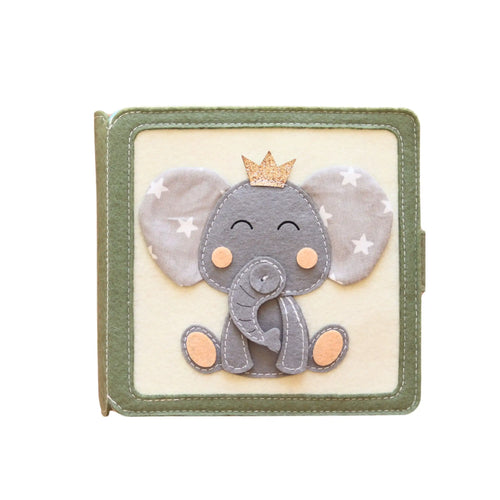
Many parents today are not just looking for something to keep their children busy. They are looking for something that captivates children without overstimulating them. Something beautiful, meaningful, and suitable for everyday life. Habi Kids addresses exactly this: with lovingly designed Quiet Books that combine calm, screen-free play with developmental support.
The special thing about it is not just the activity itself, but the quality of the moment. A child sits engrossed in a task, experimenting, repeating, discovering, and settling within themselves for a while. This kind of focus cannot be forced. But you can create space for it.
Therefore, those who want to playfully encourage concentration in children primarily do not need a complicated program. Often, quiet materials, a clear framework, and the confidence that small hands and curious minds will find their way to attention are enough - if you give them time.