




Choosing a Felt Activity Book for Children
Share
Anyone who has ever tried to keep a toddler constructively occupied in a restaurant, while traveling, or during a quiet afternoon knows how quickly toys become too loud, too short-lived, or too chaotic. This is exactly where a felt activity book shows what good children's play can achieve: It invites touching, trying out, and repeating - without a screen, without noise, and without overstimulation.
A good felt activity book is more than just a nice accessory for the diaper bag. It combines quiet play with real developmental support and thus fits astonishingly well into everyday family life. For parents, grandparents, and anyone looking for a meaningful gift, it is therefore worth taking a closer look.
What makes a felt activity book so special
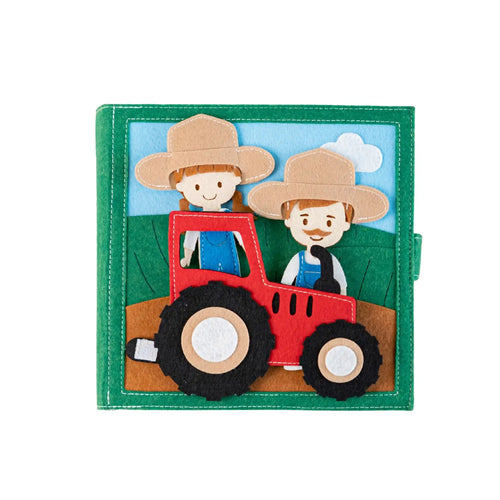
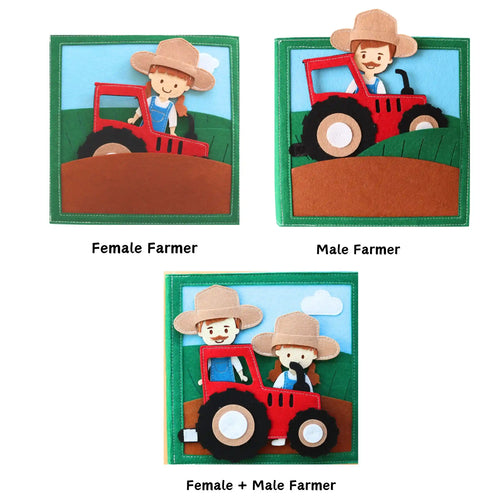
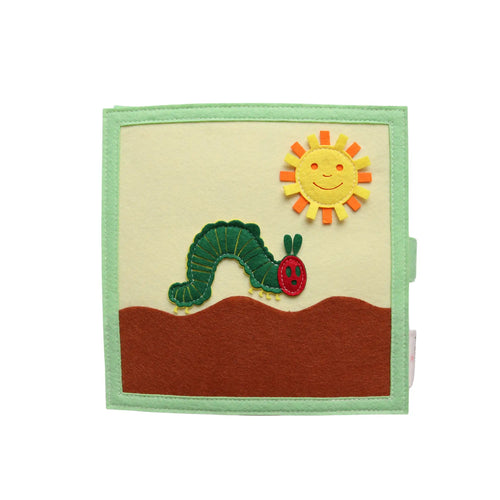
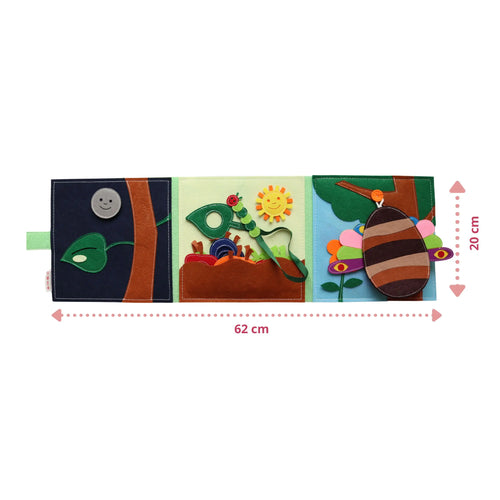
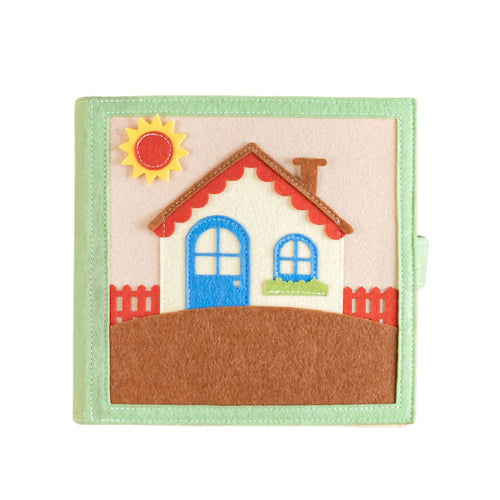
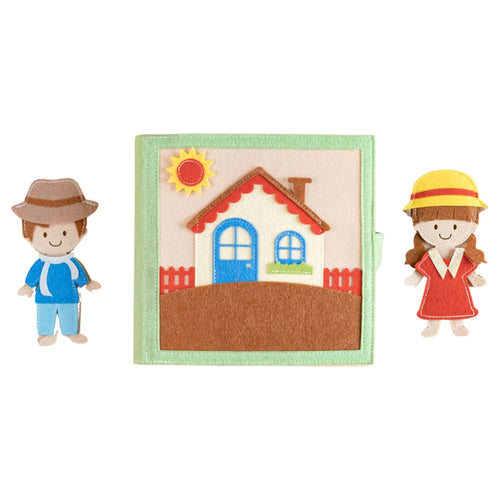
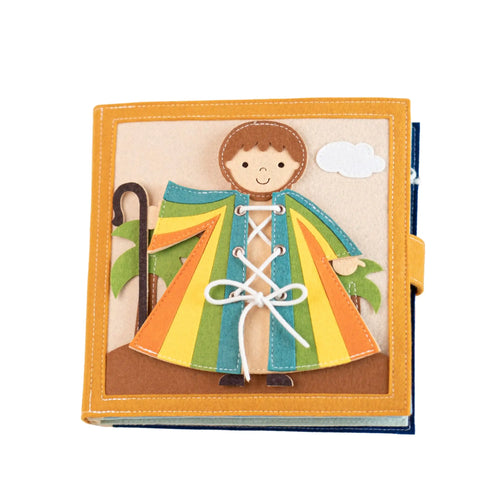
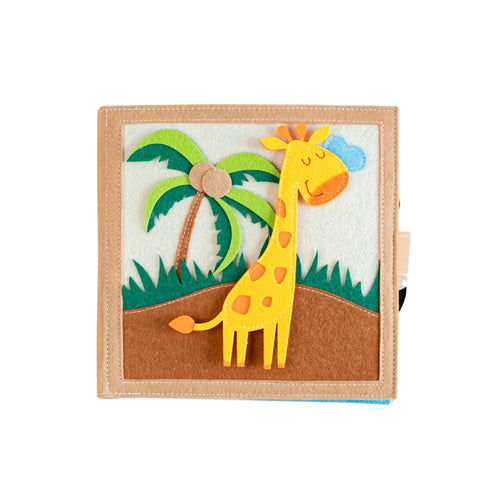
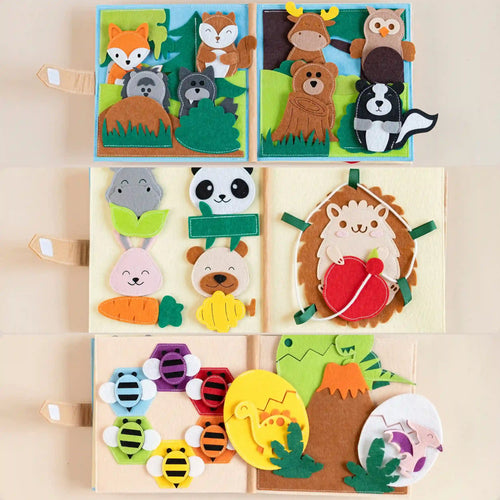
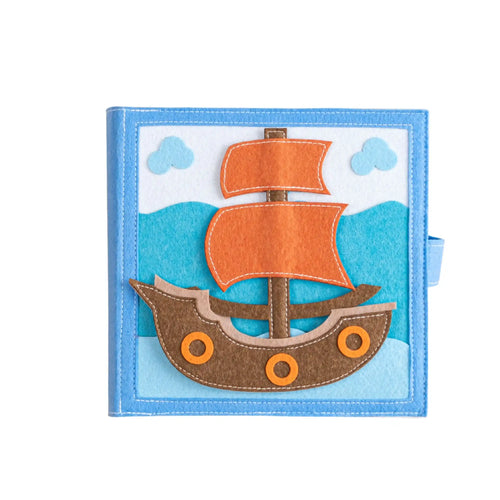
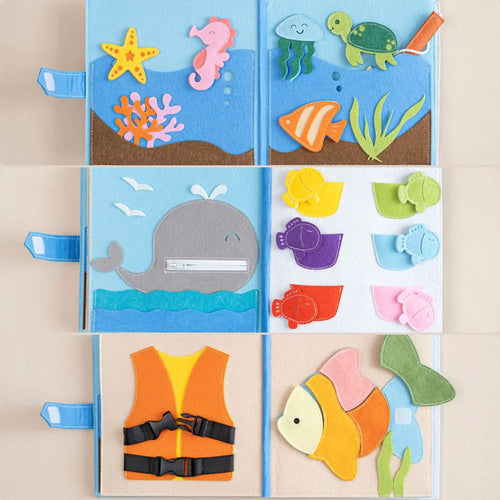
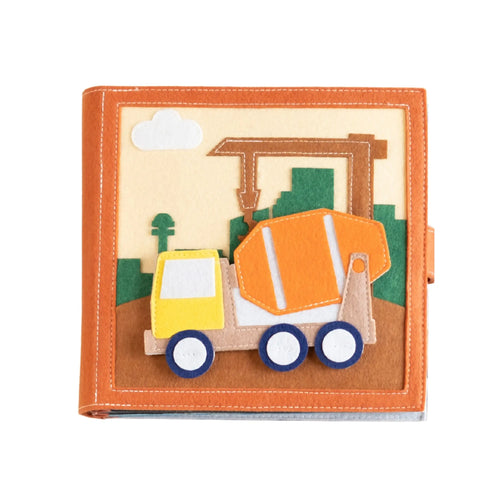
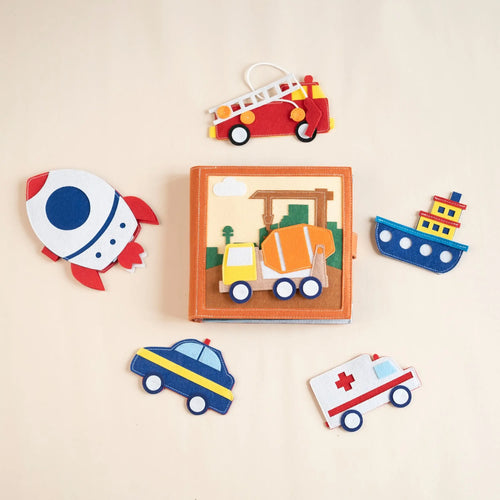
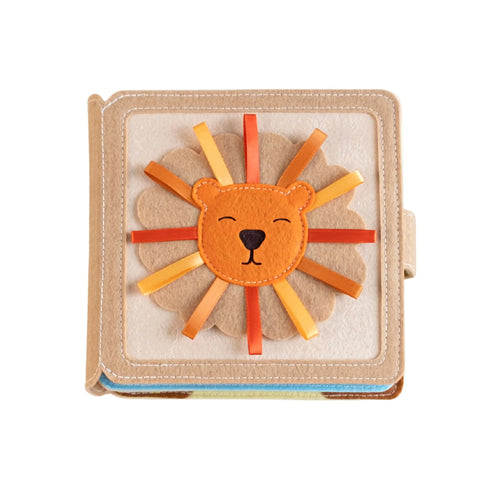
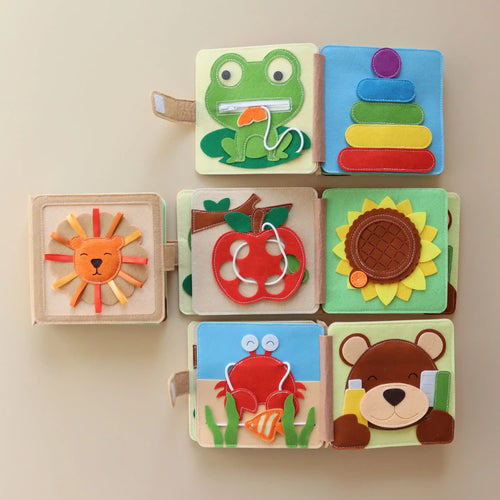
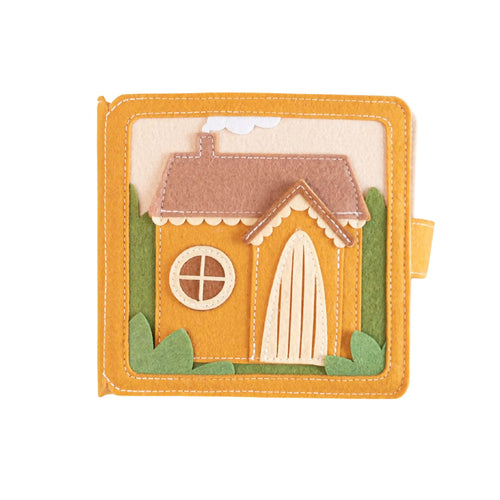
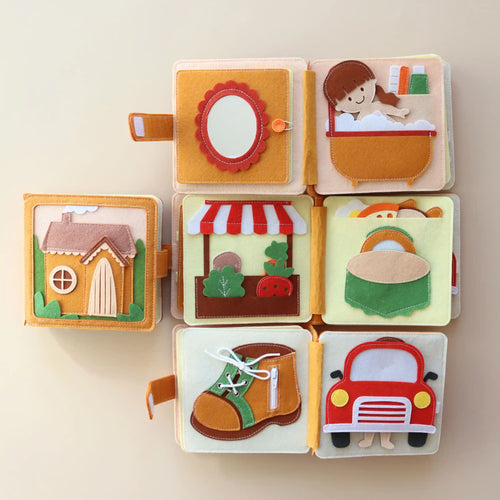
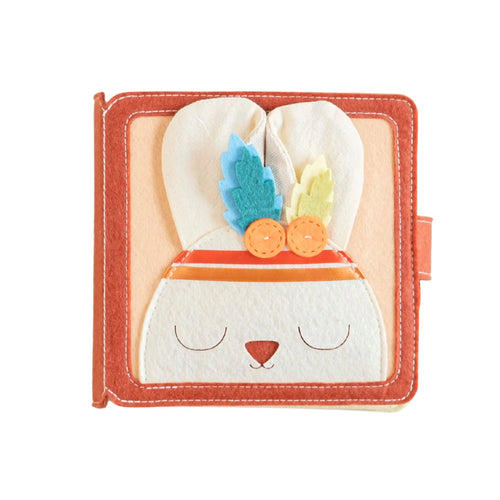
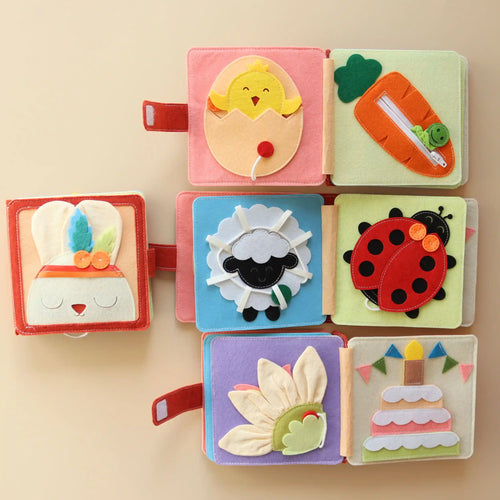
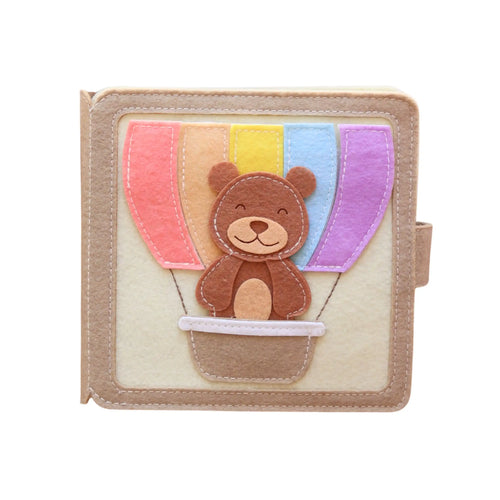
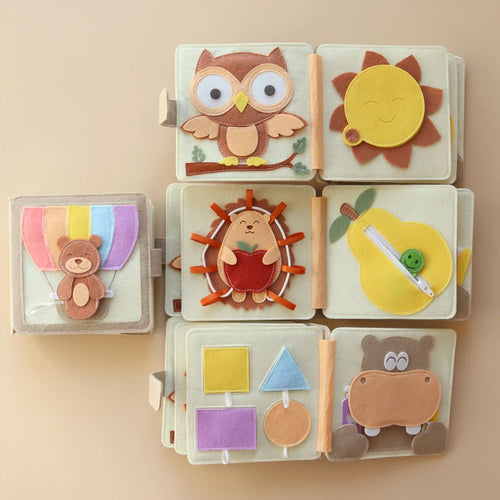
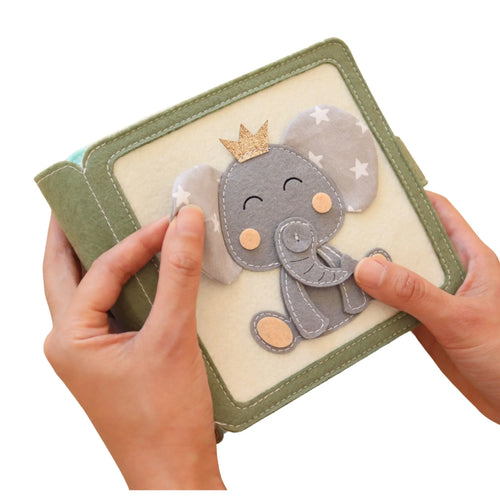
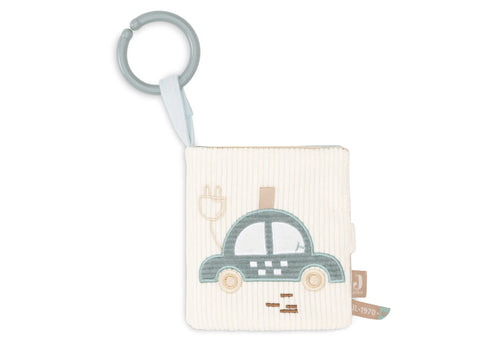
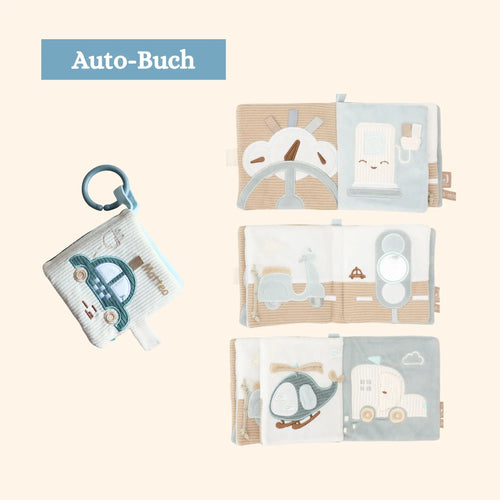
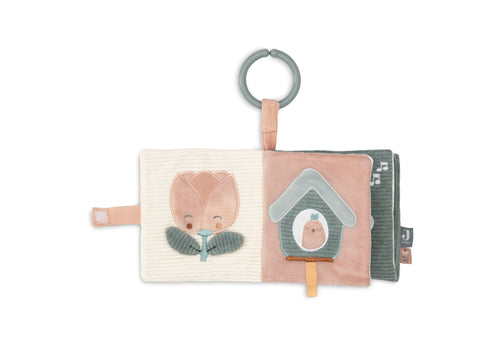
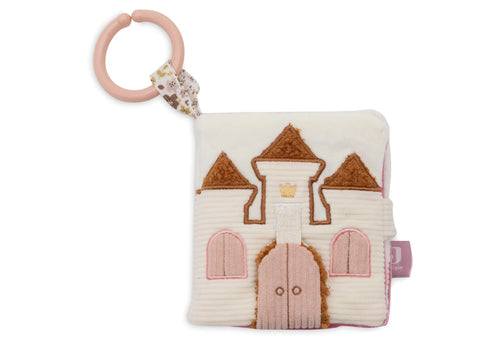
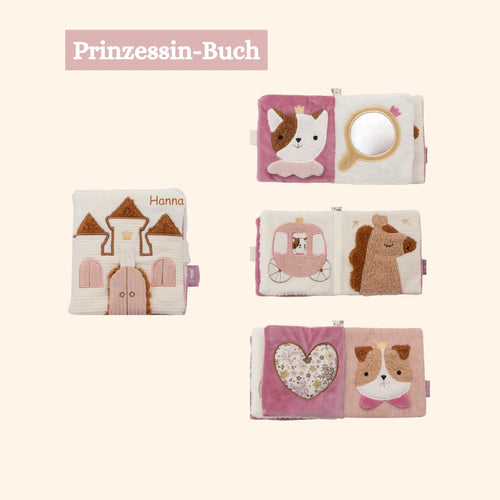
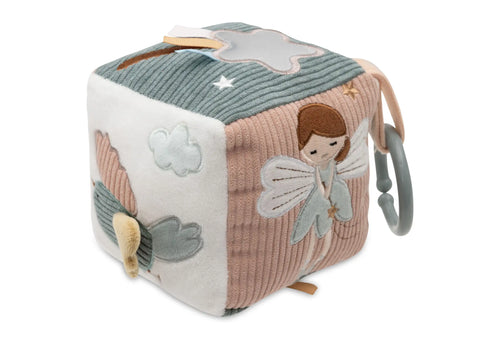
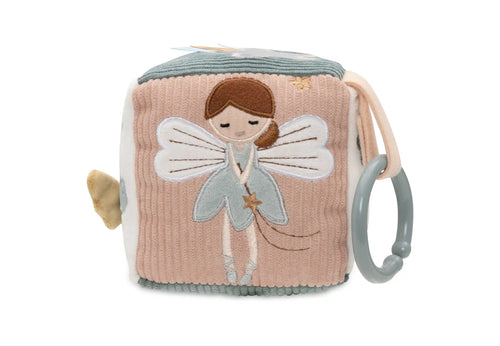
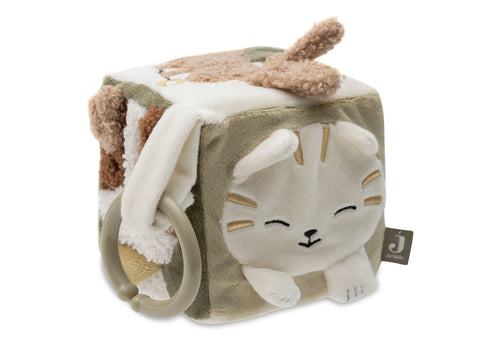
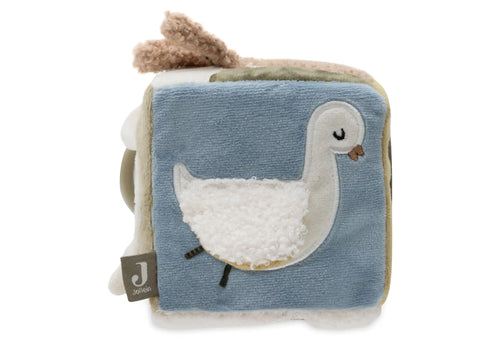
Felt feels soft, warm, and child-friendly. Young children, in particular, learn through their hands, through surfaces, through grasping and pulling. An activity book made of this material specifically addresses this natural way of learning. Instead of flashing buttons or loud noises, there are tabs, shapes, pockets, buttons, zippers, or small matching games.
The crucial factor is not the quantity of elements, but their quality. When a child pulls a figure out of a pocket, opens a fastener, or matches colors, they are incidentally training fine motor skills, hand-eye coordination, and concentration. Many children repeat these small actions again and again. This is precisely where the value lies - not in the quick effect, but in the quiet immersion.
For many families, the quiet nature is also important. A felt book provides occupation without dominating the room. It is suitable for quiet moments, for the waiting room, for car rides, or for times when a child wants to do something on their own while adults take a short break.
What age is a felt activity book suitable for?
The short answer is: It depends on how the book is constructed. Not every model suits every developmental stage, and this is exactly where a closer look is worthwhile.
For babies and young toddlers
For the youngest children, it's not yet about complex tasks. Here, simple sensory stimuli and safe, easily graspable elements are what count. Different textures, clear shapes, and soft colors are often more meaningful than many small details. Babies and young toddlers primarily benefit from feeling materials, turning pages, and performing first simple movements.
In this phase, an activity book should be light, soft, and clear. Too many loose parts can overwhelm rather than stimulate. Less is often more.
For children aged about 1.5 to 3 years
Now it gets exciting. Children of this age want to act more purposefully. They open, sort, insert, fasten with Velcro, compare, and try until something works. A felt activity book can wonderfully pick up on this curiosity. Typical activities such as buttoning, matching colors, recognizing simple shapes, or reenacting small everyday scenes fit particularly well here.
It is important that tasks challenge but do not frustrate. If everything is too easy, the child quickly loses interest. If everything is too difficult, the book ends up in the corner after a short time. Good books strike precisely this fine balance.
For older toddlers and preschoolers
As children get older, the content can become more complex. Children understand processes better, solve small tasks more independently, and enjoy role-playing, numbers, first routines, or thematic pages. A high-quality felt book ideally grows with the child to some extent or offers several difficulty levels within one book.
Preschoolers, in particular, appreciate it when they can spend a longer time with a page. Then, activity quickly becomes focused, self-directed learning.
What parents should look for when buying
A beautiful design is, of course, important, especially when looking for a gift. But with a felt activity book, it's not just the appearance that matters. Much more important is how well thought out the book actually is in everyday life.
Workmanship comes first. Seams should be clean and sturdy, felt parts should be securely attached, and movable elements should be designed to withstand repeated play well. Especially with products that are often packed, carried around, and used daily, quality is evident not after unpacking, but after weeks and months.
Equally important is age-appropriateness. A high-quality book is not just colorful, but meaningfully constructed. It is oriented towards what children can truly do and want to practice at a certain developmental stage. Small hands need different formats and different challenges than preschoolers.
The haptics also deserve attention. Soft, pleasant felt, easily graspable details, and a harmonious overall impression make a big difference. Children quickly sense whether a product is lovingly designed. Adults do too, by the way.
Developmental support without pressure
Many parents want toys that not only entertain but also offer real added value. At the same time, no one wants to constantly push their child into learning programs. This is precisely why a felt activity book is so appealing to many families.
It creates learning moments without feeling like instruction. When a child opens a zipper, they train hand strength and coordination. When they sort colors or match figures, they strengthen perception and logical thinking. When they reenact small everyday scenes, they develop language, imagination, and understanding of processes.
The great advantage lies in voluntary repetition. Children spontaneously pick it up again because the play feels pleasant and successes are directly palpable. This type of learning is quiet, concrete, and relevant to everyday life.
A quiet companion for on the go and at home
In family life, it is often the unspectacular moments in which good toys become particularly valuable. The ten minutes before dinner. The waiting time in a café. The train ride. The afternoon when a child seeks closeness but doesn't want to romp wildly.
A felt book fits exactly into these gaps. It is easy to take along, takes up little space, and works without preparation. Many parents appreciate that it helps children focus without winding them up. This makes it a rare combination of meaningful, practical, and pleasantly quiet.
At home, it can have a permanent place in the cozy corner, in the children's room, or in the diaper bag. On the go, it quickly becomes a familiar object that provides security and prevents boredom. Especially sensitive children often benefit from this quiet, recognizable activity.
When a high-quality model is really worth it
There are toys that excite for a short moment and then are forgotten. And there are toys that are picked up again and again because they are child-friendly, beautiful, and meaningful at the same time. A good felt activity book usually belongs to the second category.
The higher price of some handmade models may seem large at first glance. In everyday life, this often quickly relativizes. If a book is durable, addresses several developmental areas, and is used over a longer period, it is not only pretty but actually valuable. In addition, there is the emotional aspect: such books are often given as gifts, kept, and even passed on to siblings.
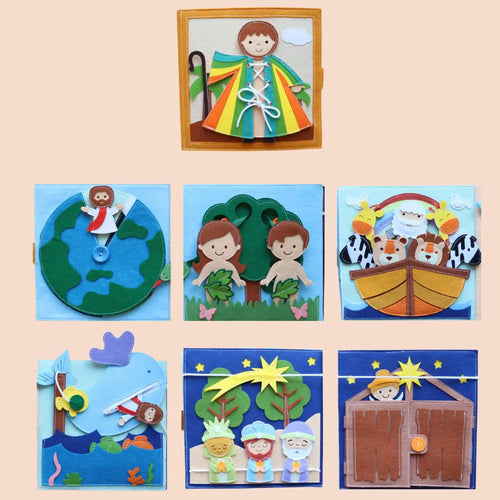
With a brand like Habi Kids, this very claim is particularly evident. Handicraft, thoughtful details, and a clear understanding of early development make the difference between nice entertainment and a product that truly accompanies families.
For whom a felt activity book is a nice gift
Anyone looking for a gift for a birth, a first birthday, or for a toddler often faces the same question: Should it be something cute or something that will actually be used? Ideally, both.
A felt activity book feels personal, high-quality, and loving. It doesn't seem arbitrary and doesn't disappear into a box full of plastic toys after two days. Especially as a gift from grandparents, godparents, or close family friends, it has a special appeal because it shows care, quality, and a genuine thought behind it.
If the book also suits the child's age and is aesthetically designed so that parents are happy to take it with them and don't want to hide it in the living room, it quickly becomes a gift that remains positively in memory for a long time.
What really matters in the end
A child doesn't constantly need more stimuli. Often, they just need something that keeps their hands busy, takes their curiosity seriously, and gives them space to learn at their own pace. A good felt activity book can do just that - quietly, beautifully, and astonishingly effectively.
When choosing one, don't just look at what looks pretty at first glance. Ask yourself if it suits the child, if it can actually be used in everyday life, and if it is made with care. Because it is precisely from such details that toys are created that you not only buy but truly cherish.