




Choosing Educational Toys for Babies 3 Months and Up
Share
Anyone observing a baby from the third month onwards quickly realizes: something is changing now. Their gaze becomes more alert, hands move to the face more often, first attempts at grasping still seem accidental - yet they are a big developmental step. Precisely in this phase, many parents and gift-givers look for learning toys for babies from 3 months that not only look cute but truly benefit the baby.
The good news is: at this age, flashing lights and loud buttons are not needed. On the contrary. Babies usually benefit more from calm, clear stimuli that they can explore at their own pace with their eyes, hands, and mouth. Good toys gently accompany this development, rather than overwhelming it.
What learning toys for babies from 3 months should truly achieve
At three months, it's not about a "developmental phase" in a performance-oriented sense. It's not about teaching a baby as much as possible as early as possible. It's about creating a safe, lovingly designed environment where initial connections can be experienced. When a baby touches a soft element, feels different surfaces, or tracks an object with their eyes, that is already learning.
That's why good learning toys for babies from 3 months are primarily simple, safe, and openly usable. They support perception, encourage grasping, and invite repetition. Repetition at this age is not a sign of boredom, but the core of development. Babies learn anew again and again through the same movements, the same materials, and the same small surprises.
Less useful are products that try to do too much at once. Music, lights, voices, many colors, and fast effects can attract attention in the short term, but not every interested gaze is focused learning. Especially very young babies often benefit more from quiet play impulses that leave room for their own discoveries.
What skills babies from 3 months are currently developing
If you want to choose toys appropriately, you should take a quick look at the typical development at this age. Of course, every child develops at their own pace. Some babies grasp purposefully early, others observe longer first. Both can be completely normal.
Often from the third month, these areas become particularly exciting:
Seeing and Focusing
Babies are increasingly better at recognizing faces and contrasts. Clear shapes, soft colors, and clearly visible details are now more interesting than a restless jumble. Toys with a few clearly distinguishable elements often work better than overloaded designs.
First Hand-Eye Coordination
Hands are used more consciously. Grasping is not always precise yet, but practicing is what counts. Soft flaps, lightweight fabric elements, or easily reachable grasping details help repeat and refine initial movements.
Sense of Touch and Sensory Experience
Different surfaces, light crinkling elements, or textured fabrics give the baby feedback. A balanced approach is important here. A change of material here and there is stimulating. Too many stimuli at once are more unsettling.
Cause and Effect in Miniature
When something moves, rustles, or yields, the baby slowly realizes: my action causes something. These early experiences are valuable, even if they still seem very simple.
Which learning toys are particularly suitable for babies from 3 months
Especially for young babies, a few well-thought-out play ideas are usually a better choice than a big box full of products. It is crucial that the toy is soft, safely manufactured, and age-appropriately easy to grasp.
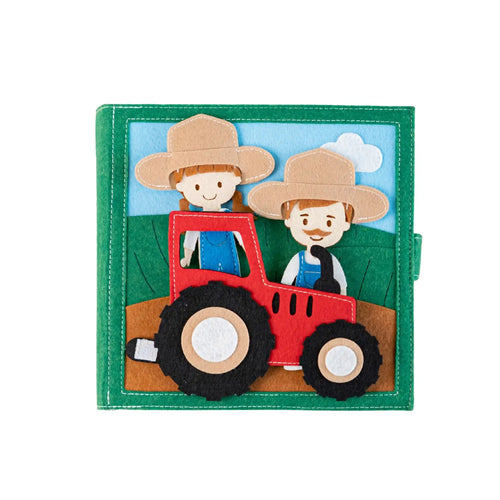
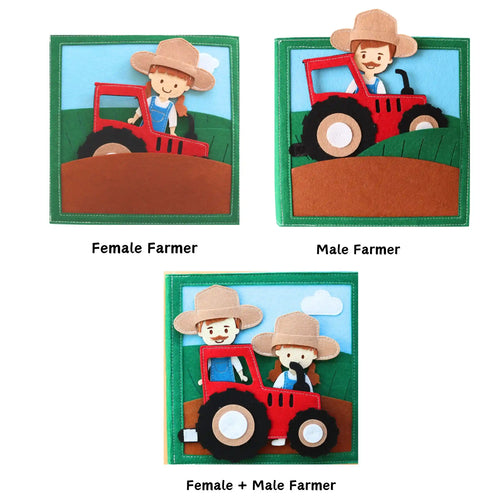
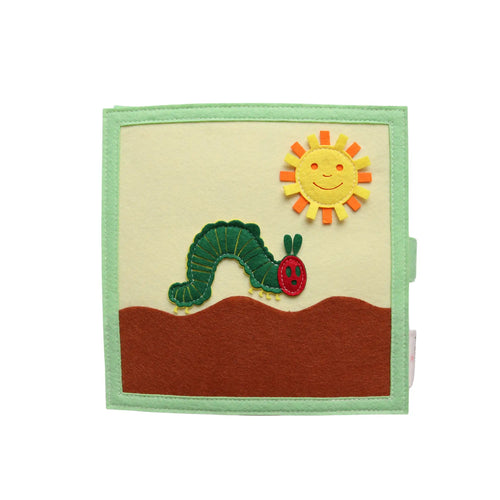
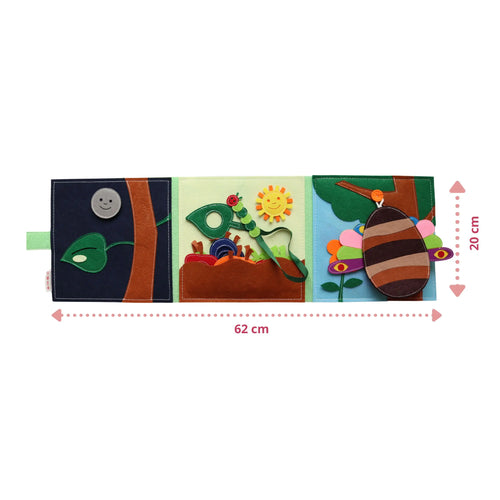
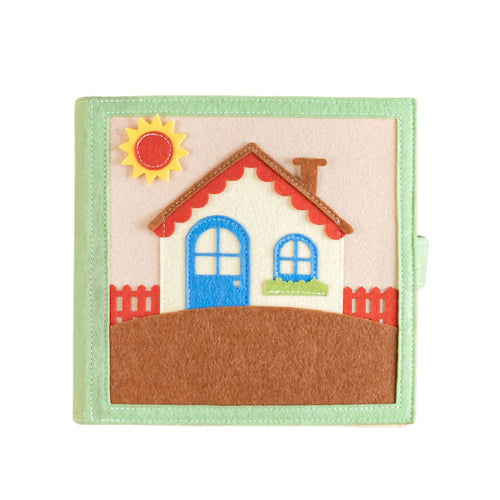
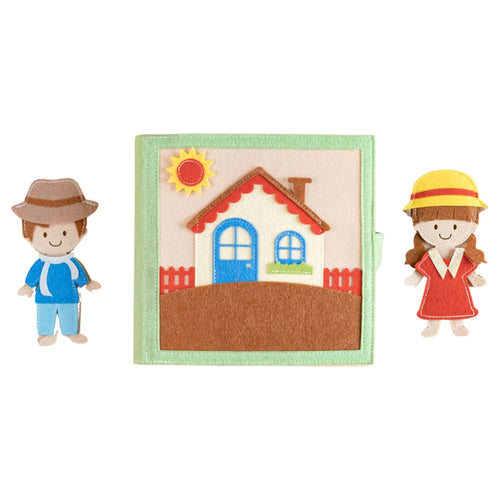
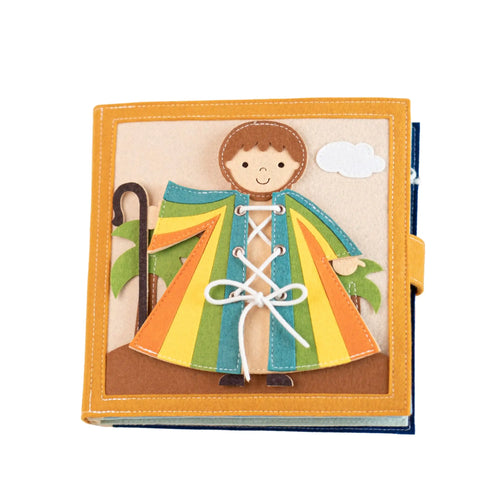
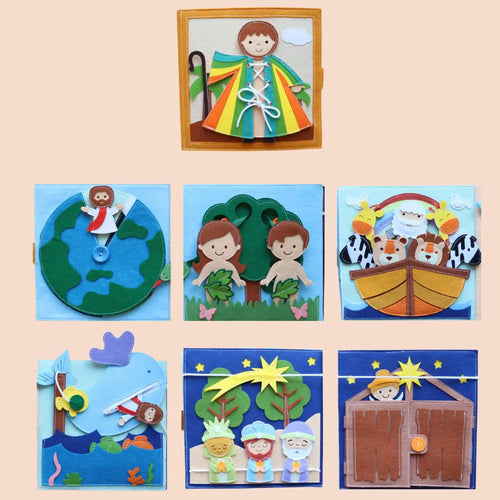
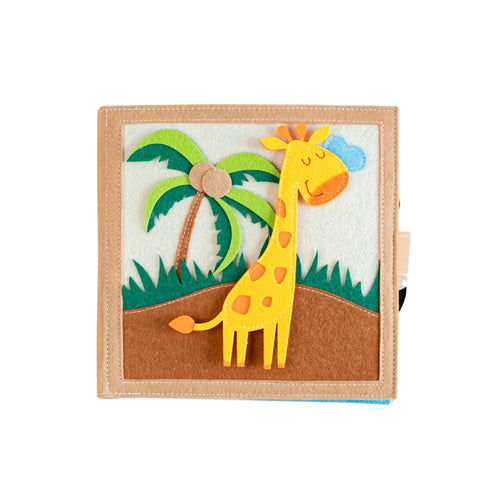
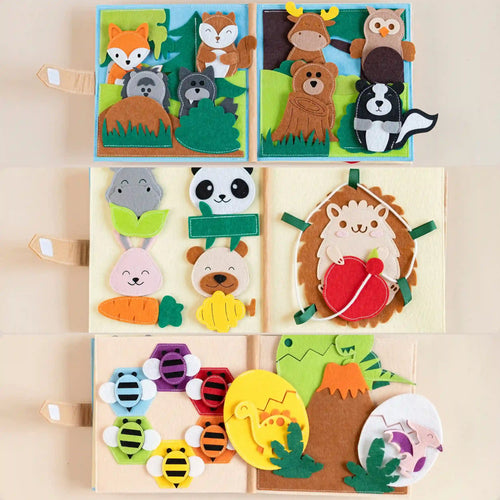
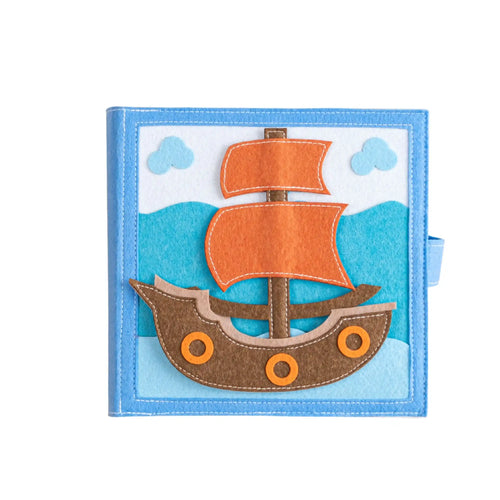
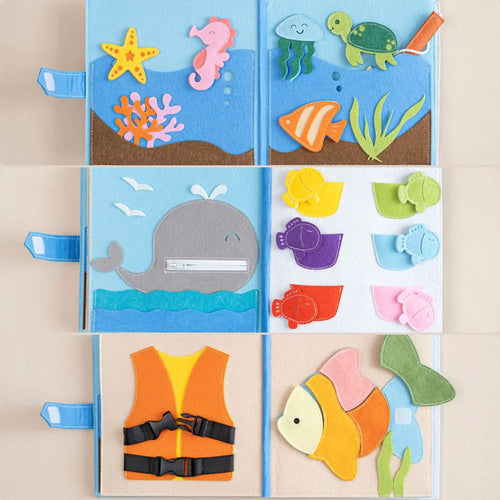
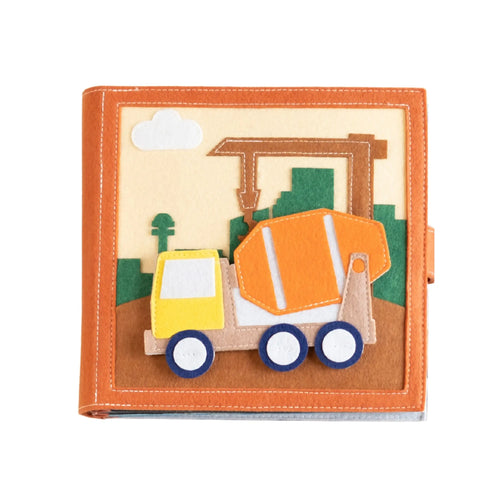
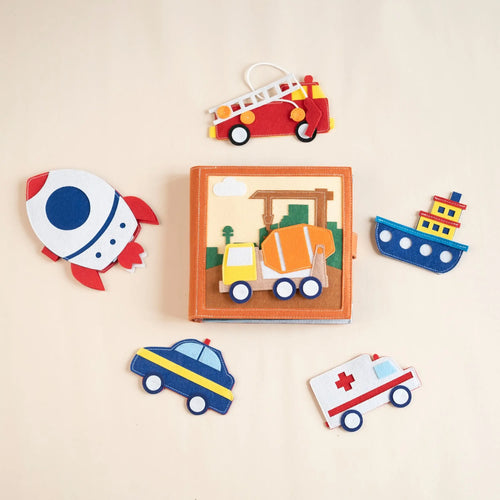
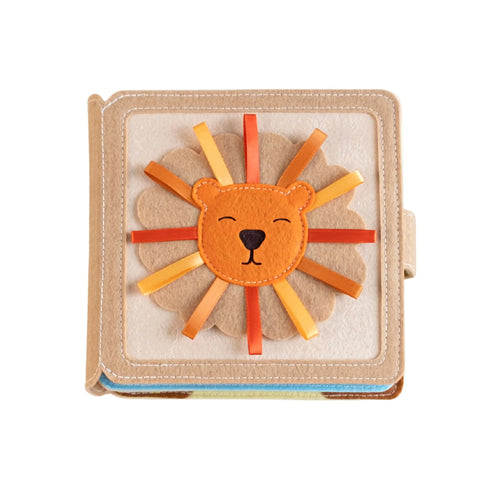
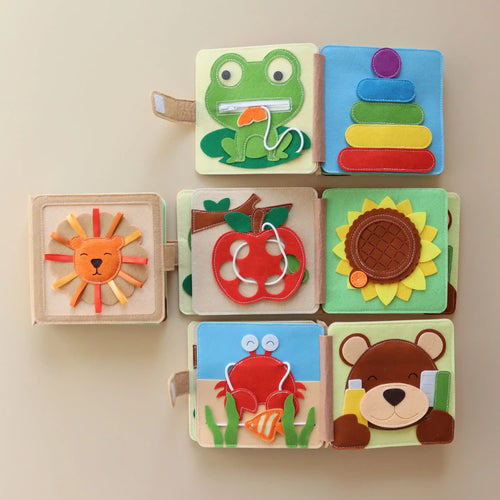
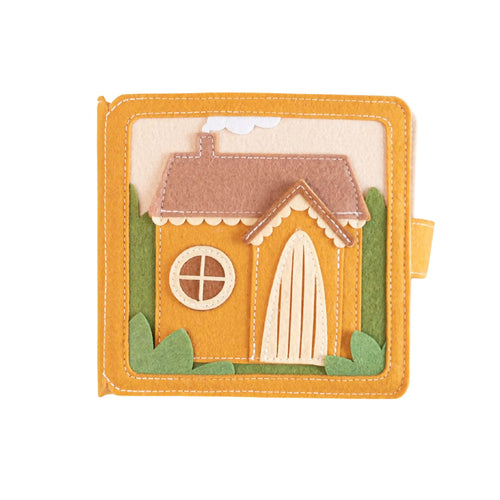
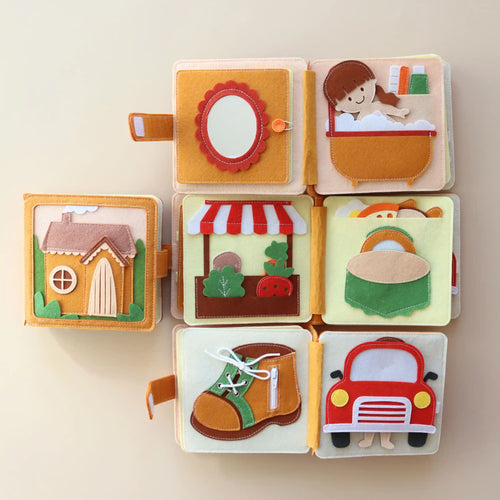
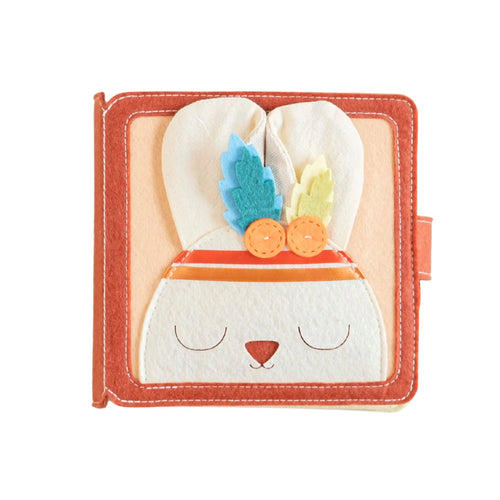
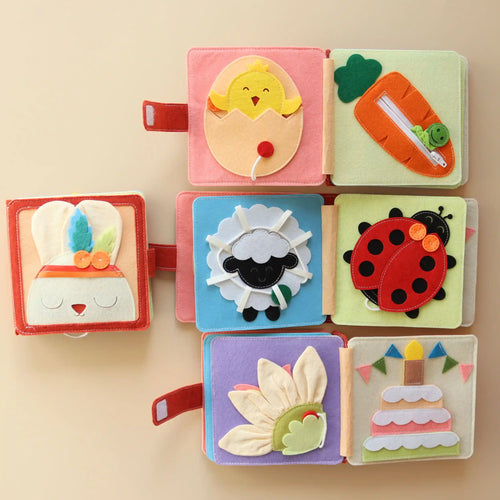
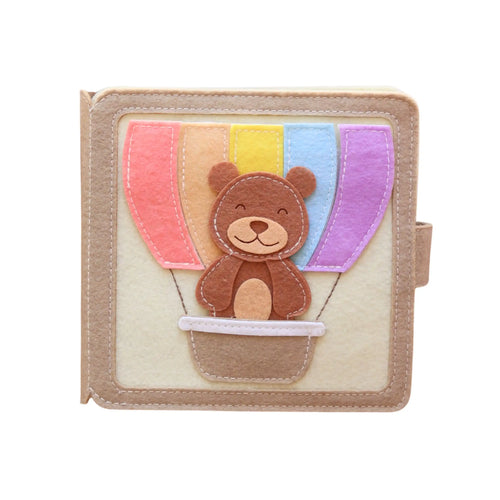
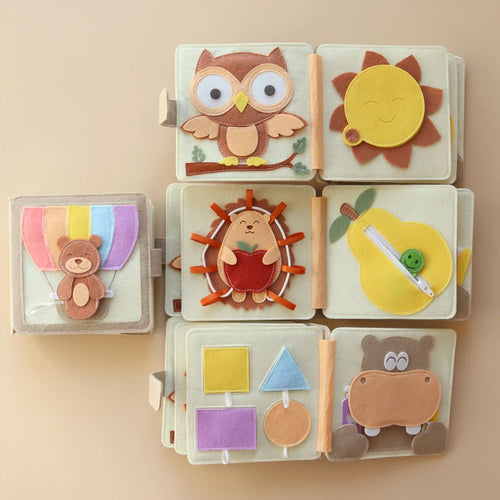
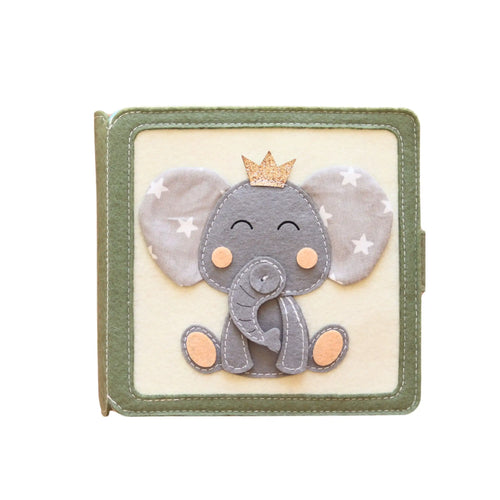
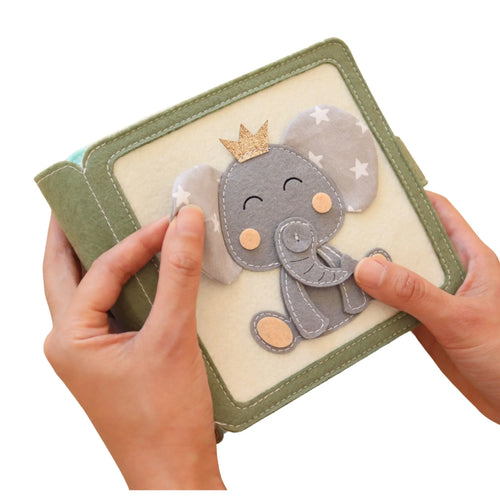
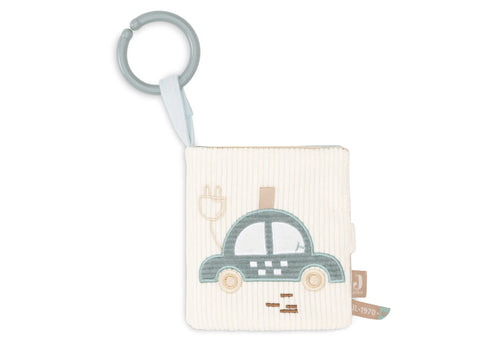
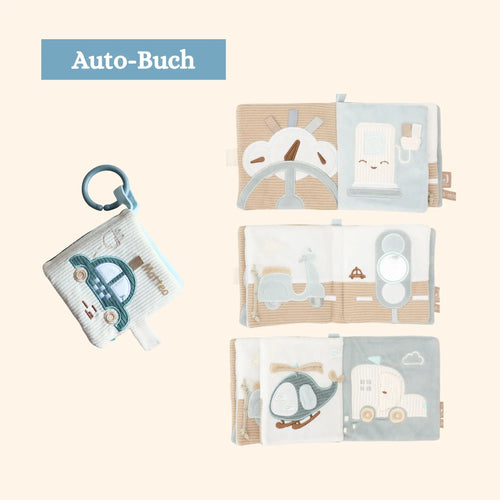
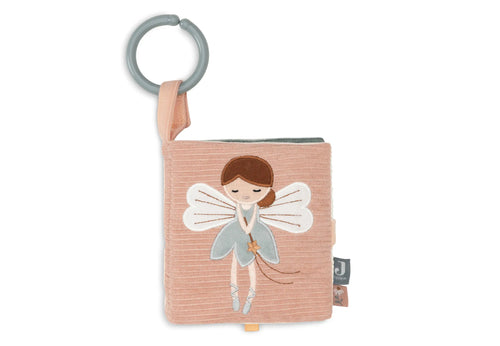
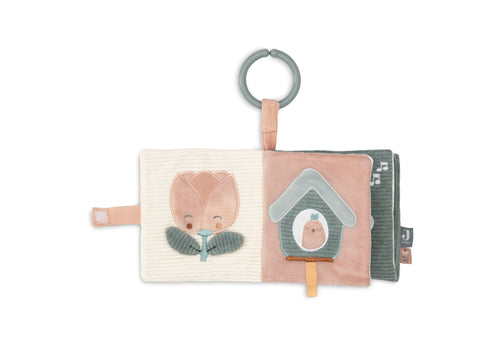
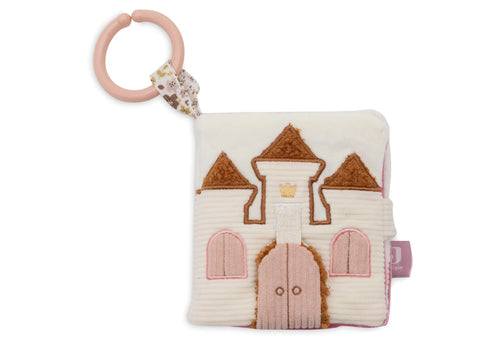
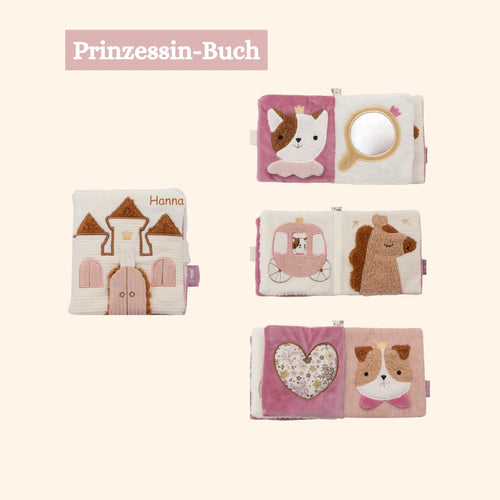
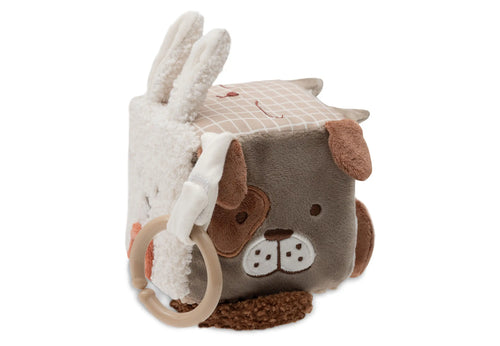
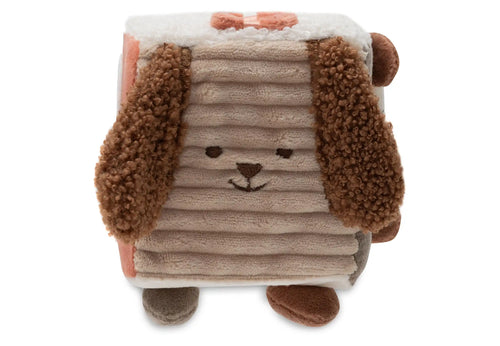
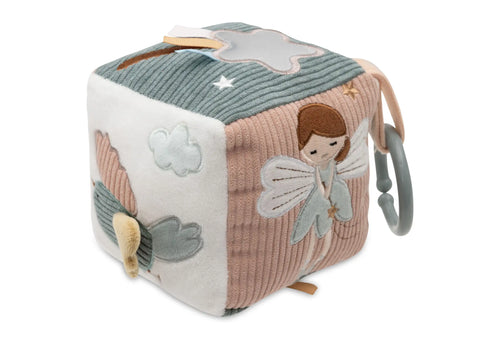
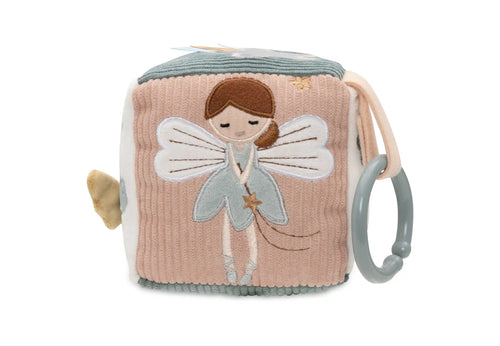
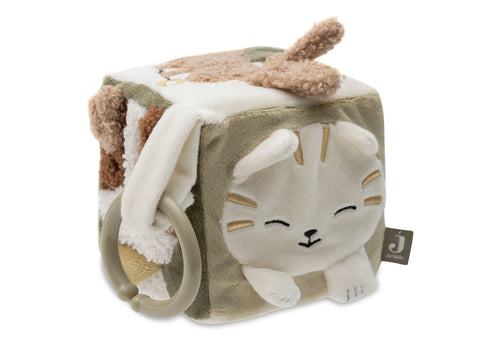
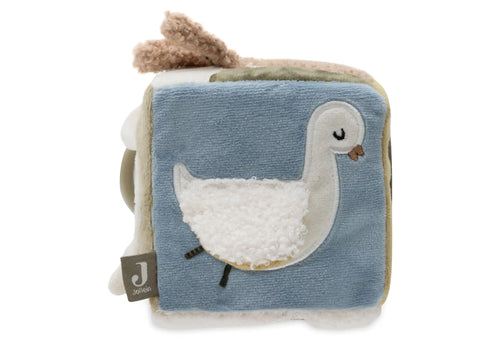
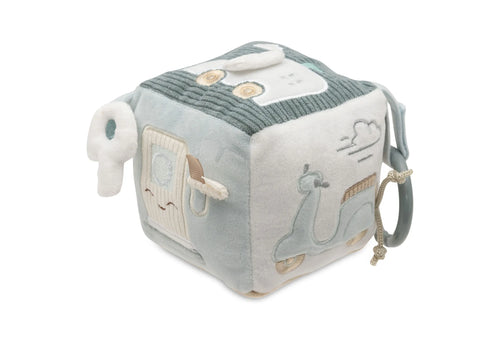
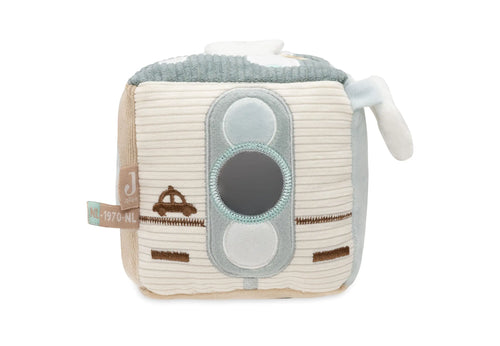
Fabric toys are often particularly suitable because they are light, pleasant, and versatile. Soft activity books or Mini Quiet Books can offer babies their first visual and tactile stimuli without overwhelming them. They can be looked at with parents, later explored by touch themselves, and often used quietly on the go. This makes them not only beautiful but also practical for everyday use.
Rattles made of suitable, baby-safe materials can also be useful if they are light enough and fit well into small hands. Fabric pendants, crinkle elements, or soft mirrors are also popular - as long as they are of high quality and suitable for this age.
Toys that are intended for older babies but bought early are often less helpful. Complex shape sorters, loud electronics, or rigid elements with many functions usually do not yet fit developmentally. They then quickly seem more like decoration for adults than real baby toys.
Why quiet play is often the better choice
Many families deliberately choose toys that do not require screens, noise, or constant overstimulation. Especially during infancy, this is not a nostalgic idea, but often a very wise decision.
Quiet play helps babies concentrate on one sensory impression at a time. They can look, feel, grasp, and pause. These small pauses are important because babies need to process impressions. A quiet, handmade toy with a clear function supports exactly that.
In addition, there is the emotional aspect. When adults and babies discover a soft book together, turn a page, or stroke different fabrics, intimacy is created. Learning toys from 3 months are then not just an activity, but a quiet moment together. Often, this is their greatest value.
What parents and gift-givers should look for when buying
Not every toy sold as "early learning" is automatically a good choice. A critical eye is worthwhile, especially when the baby is still very young.
Safety is the first priority. Materials should be suitable for babies, seams neatly finished, and small parts avoided. For fabric toys, it's also practical if they are easy to clean. In everyday life, almost everything ends up in the mouth sooner or later.
The weight is equally relevant. A baby from three months can only hold light things well or feel them against themselves without being overwhelmed. Products that are too heavy or bulky make exploration more difficult.
Also pay attention to a clear design. A beautiful learning toy does not have to be garish. Soft colors, recognizable contrasts, and a few consciously used activities often appear higher quality and are easier for babies to grasp.
Those who want to give a gift do particularly well with durable products. Toys that are not only exciting for two weeks but can grow with the child appear more thoughtful and valuable. Handmade activity books, in particular, have an advantage here: they often accompany children through several developmental phases.
A common misconception: more functions do not mean more development
Many purchasing decisions are made out of a desire to give the child "something good." This is understandable. However, more functions do not automatically lead to more developmental value.
A baby doesn't need a sensory show. It needs opportunities to focus its attention, repeat movements, and experience material differences. A carefully designed, sensorily appealing fabric toy can therefore be more valuable than a product with ten buttons.
This does not mean that every simple toy is automatically good. Quality, workmanship, and age-appropriateness remain crucial. But the best benchmark is often not the number of extras, but the question: Can my baby truly explore it in peace?
How to use learning toys from 3 months in everyday life
The right toy usually unfolds its value not through continuous play, but through short, recurring moments. A few minutes after changing diapers, some quiet activity on the playmat, or a gentle impulse on the go are often completely sufficient.
Place the toy so that your baby can see it well and reach it with their first movements. Also hold it in your hand yourself occasionally, calmly describe what is happening, and then leave room for their own reactions. Babies don't need constant animation. They need a counterpart who accompanies them attentively but not intrusively.
Products that work at home and on the go are particularly practical. A soft activity book fits into the diaper bag, makes no noise in the café, and still offers enough stimulation for small discoveries. Precisely this quiet utility is a real luxury for many families today.
When a Quiet Book can be a good idea
Not every baby is immediately interested in every type of toy. But especially soft, handmade Quiet Books or Mini Quiet Books can be integrated very nicely into shared playtime from about three months. Initially, babies mainly look, feel individual elements, or react to different textures. Later, these become more targeted grasping and exploratory movements.
The special advantage lies in the combination of tranquility, haptics, and structure. Instead of many loose parts, there is a clear framework. This appears neat, high-quality, and is as pleasant for adults as it is for the child. At Habi Kids, this very idea is central: lovingly designed, screen-free toys that support development and at the same time harmoniously fit into family life.
So, when choosing learning toys for babies from 3 months, you don't have to look for the loudest or most spectacular product. Often, the best toy is one that lies softly in small hands, quietly arouses curiosity, and is picked up again and again over a long period. Precisely such things are not only useful – they often become the toys you remember with warmth later.