

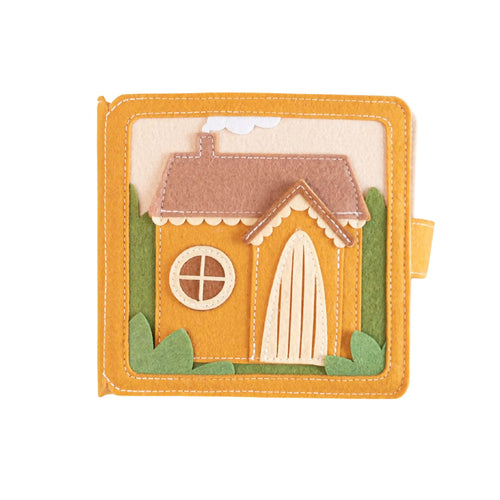
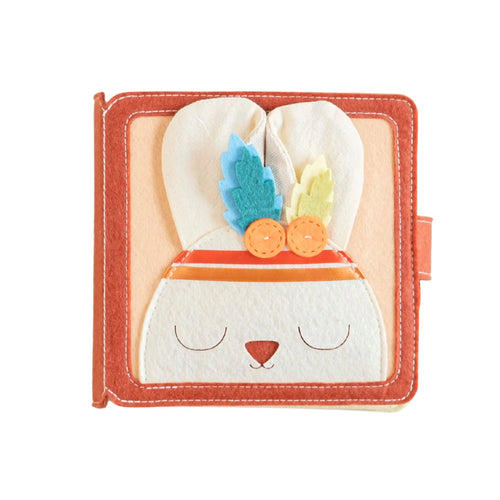



Choosing the Right Montessori Book for Your Toddler
Share
Anyone who has ever tried to keep a curious toddler meaningfully occupied in a restaurant, while traveling, or during a quiet afternoon knows the problem: many things only captivate briefly or quickly become too loud, too colorful, or too passive. This is precisely where a Montessori book for toddlers can truly enrich their experience – if it suits their age, is well-made, and doesn't overwhelm the child, but rather invites them to become actively involved.
What makes a Montessori book for toddlers special
A good Montessori book for toddlers is not a classic read-aloud book. It's an activity book that keeps hands busy, focuses attention, and offers the child small, tangible tasks. Buttoning, pulling, matching, opening, closing, or sorting – these are all activities that may seem insignificant to adults but are crucial developmental work for toddlers.
The underlying Montessori principle is simple and powerful: children learn best when they are actively involved. Instead of flashing lights or pre-programmed entertainment, the focus is on self-discovery. The child sets the pace. They repeat, experiment, make mistakes, and find solutions. This is especially valuable in toddlerhood because learning at this age is still closely linked to movement, touch, and repetition.
In addition, there's a point often underestimated in everyday family life: peace and quiet. A carefully designed activity book can intensely occupy a child without overstimulating them. For many parents, this is precisely the big difference between mere distraction and truly meaningful occupation.
Why a Montessori book for toddlers often captivates longer than many toys
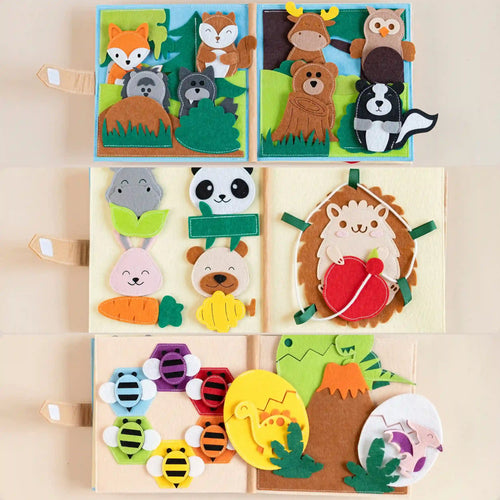
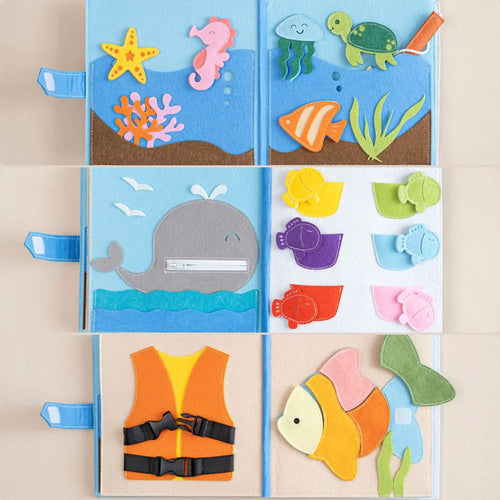
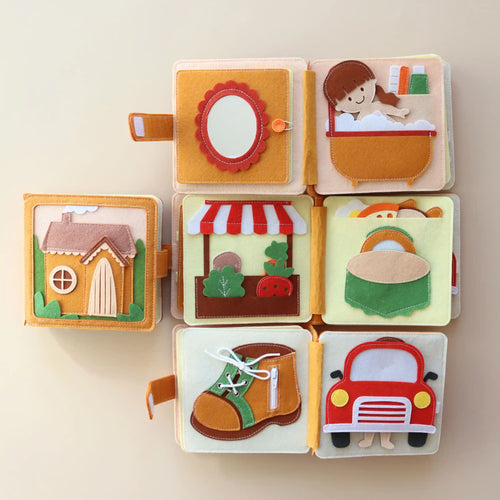
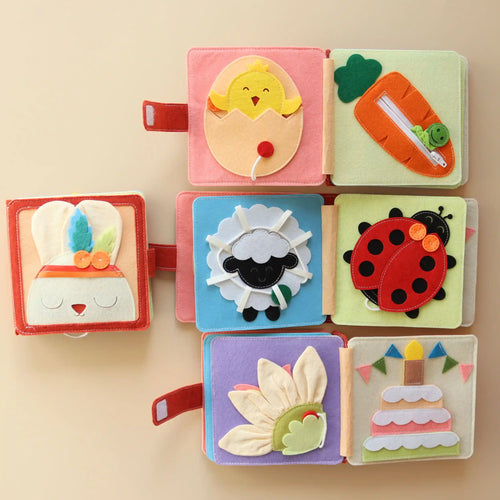
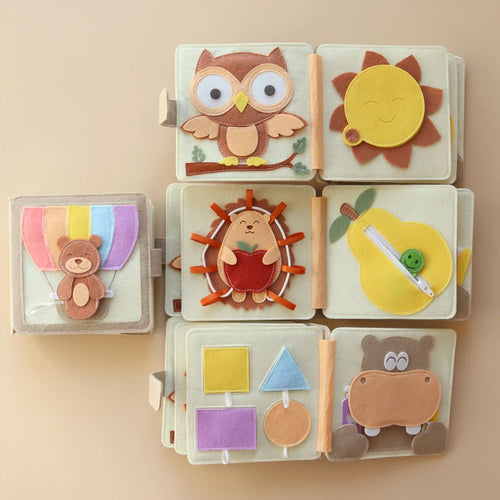
Many toys seem exciting at first glance but quickly lose their appeal. A Montessori-inspired book often has more staying power because it fulfills more than just one function. One page trains the pincer grip, another promotes early matching, and yet another visualizes daily routines, such as getting dressed, closing, or recognizing colors.
This versatility is particularly helpful when a child is transitioning between developmental stages. What still requires support today will be mastered independently with growing confidence in a few weeks. The book grows with the child to a certain extent – not indefinitely, but significantly longer than many toys with only one effect.
At the same time: not every book suits every child. Some toddlers love fasteners and small finger tasks, others react more strongly to colors, shapes, or familiar everyday situations. A well-thought-out book therefore offers not as much as possible, but the right stimuli in a harmonious amount.
What parents should look for when buying
The most important question is not: How much is in it? But rather: What can my child currently do with it? A toddler needs tasks that challenge but do not frustrate. Too many details, too small elements, or too complex sequences often mean that the book looks nice but is hardly used.
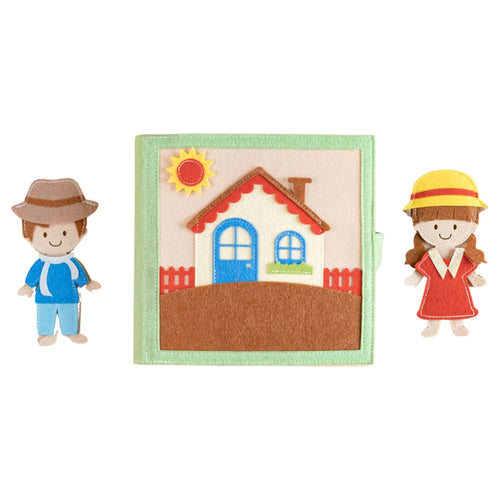
For younger toddlers, clear pages with a clearly recognizable task usually work better than overloaded scenes. Large felt pieces, simple assignments, and initial hand movements provide a sense of achievement. Older toddlers can be introduced to multi-step activities, such as placing colors correctly, sorting shapes, or imitating small everyday movements.
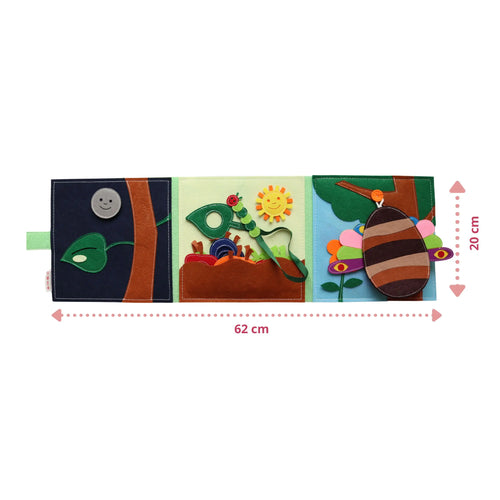
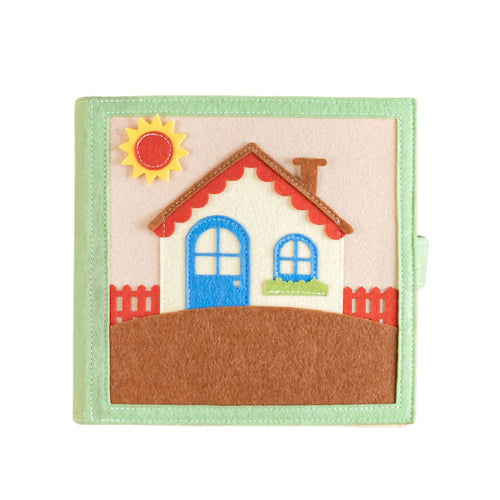
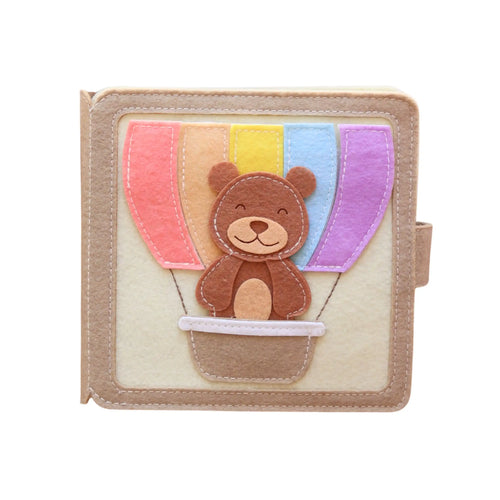
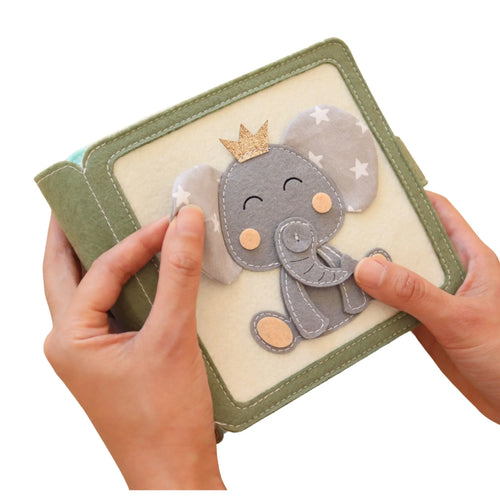
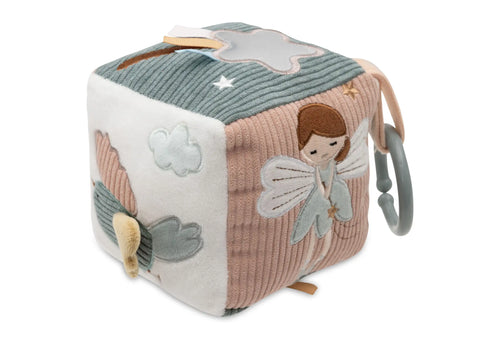
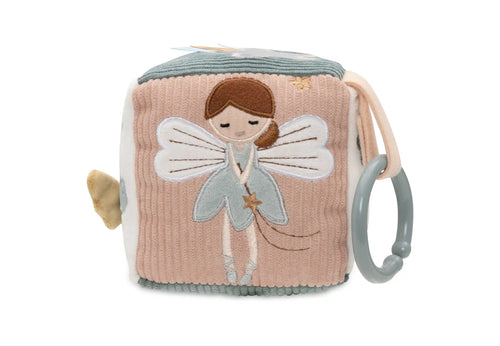
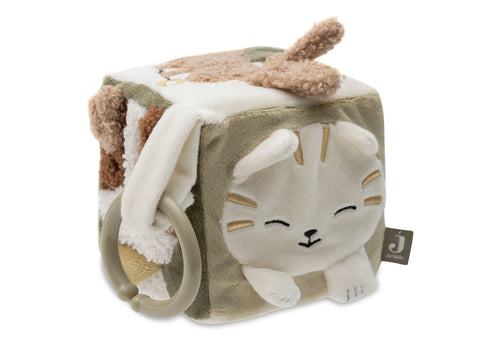
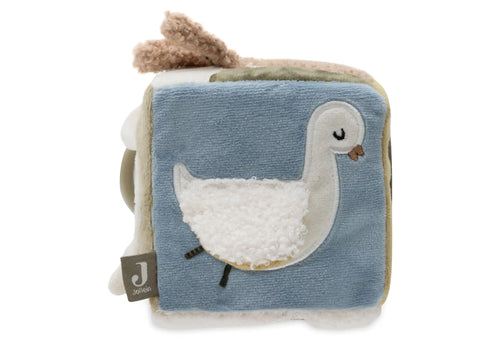
Equally crucial is the craftsmanship. A Montessori book for toddlers will be pulled, bent, carried, and opened repeatedly. Materials should be soft but durable. Seams must be cleanly finished, elements well-attached, and the format child-friendly to hold in small hands. Especially for books used on the go, quality quickly pays off.
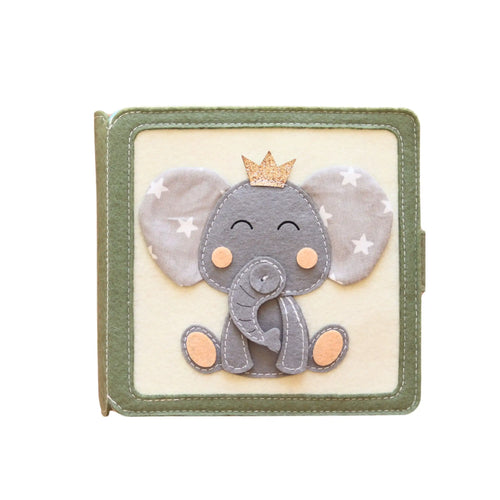
Haptics also play a greater role than one might initially think. Felt, fabric, and grippy surfaces invite touching and support sensory learning. For toddlers, this is not a side effect, but part of the actual play.
What skills a Montessori book for toddlers can promote
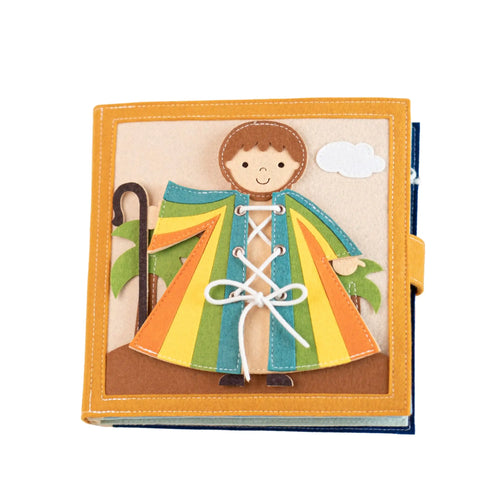
Parents often look for toys that look nice and also have a purpose. With a good activity book, this benefit is usually very directly visible. Fine motor skills especially benefit. When small hands grasp tabs, attach pieces, or operate simple fasteners, they train movements that will later be important for painting, getting dressed, or eating with cutlery.
In addition, there is concentration. A child who calmly repeats a task not only builds skill but also endurance. This is particularly valuable in an environment often characterized by rapid stimuli. A quiet book without sounds or flashing functions creates a different framework – one in which attention can grow.
Early logical thinking is also addressed. What fits where? Which shape belongs in which place? What happens if I open this flap? Such small questions are the beginning of problem-solving in everyday life. They seem unspectacular but are of great importance.
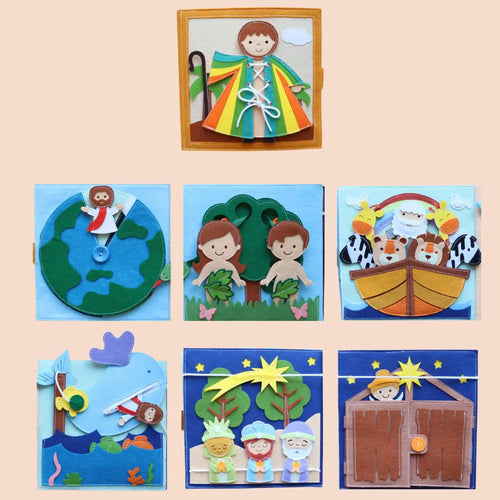
Depending on its design, a Montessori book for toddlers can also support language and everyday understanding. Pages about animals, colors, numbers, clothes, or routines provide parents with many natural conversation opportunities. The beauty of it: learning doesn't happen like instruction, but embedded in shared time.
For what situations is such a book particularly suitable?
In everyday life, it quickly becomes clear whether a toy is really practical. A Montessori-inspired book has clear advantages here because it is quiet, compact, and versatile. It fits well into moments when children should be occupied without playing with many loose parts.
On the go, this is particularly pleasant. In the car, on the plane, in the waiting room, or when eating out, a familiar book with several small tasks helps. It also has its place at home – for example, in the morning when siblings are still asleep, in the afternoon for a quiet play phase, or as a regular activity alternating with free play.
Of course, it doesn't replace role-playing, the urge to move, or shared time outdoors. But that's precisely its strength: it doesn't try to be everything. It's a conscious, quiet offer for specific moments.
Not every Montessori book is automatically good
The term Montessori is widely used today. Therefore, it's worth taking a closer look. A book isn't high quality just because it has muted colors or is made of fabric. What matters is whether the activities are meaningfully structured and correspond to a child's developmental stage.
If a book only looks decorative but hardly allows for real action, its educational value is limited. Too many effects, restless designs, or purely random tasks often do not align with what parents expect from Montessori-inspired activities. Less is often more here.
Another point is the balance between guidance and openness. Some tasks should be clearly understandable so that the child can get started. At the same time, it's nice if there's room for self-discovery. Good books create precisely this balance.
Why craftsmanship and design make a difference
With products for small children, quality isn't just seen – it's felt. A handmade book often seems more thoughtfully designed, harmonious, and durable than mass-produced goods with interchangeable details. This applies not only to the appearance but also to everyday usability.
If colors are chosen calmly, shapes remain clearly recognizable, and pages are logically structured, it's easier for the child to concentrate on the task. A lovingly crafted book also conveys value. This may sound like a detail for adults, but it makes a real difference in family life. Things that are beautiful, sturdy, and pleasant to hold are often used more consciously and kept longer.
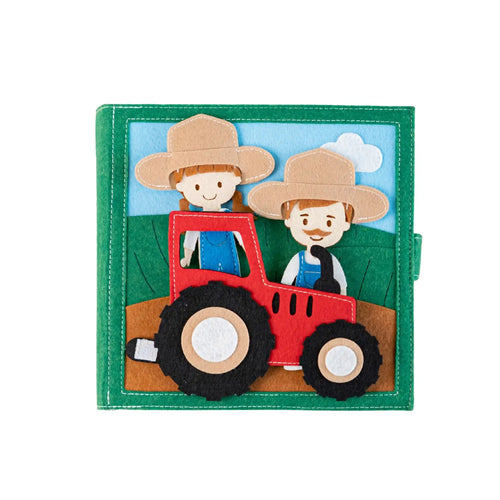
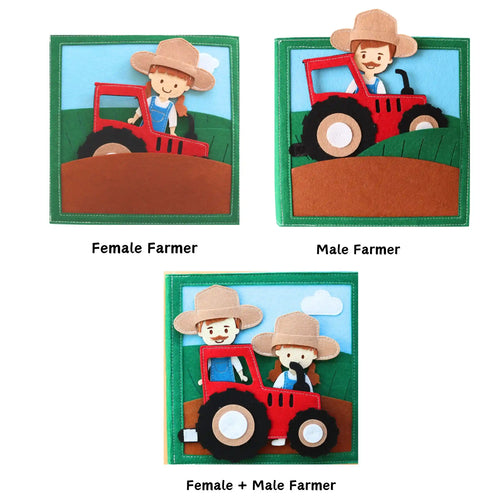
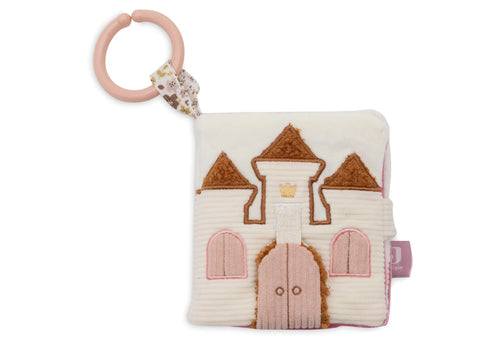
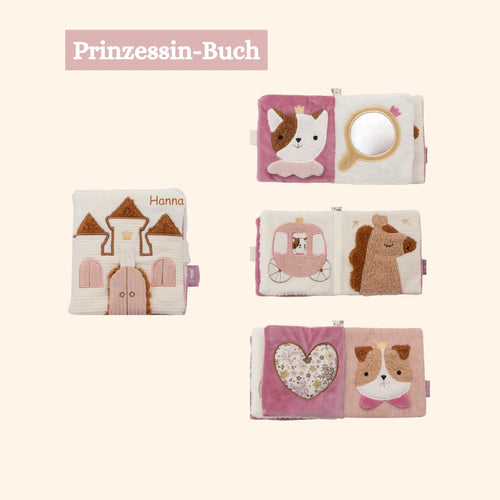
Especially as a gift, this is relevant. For birthdays, Christmas, or special first milestones, many families look for something that won't end up in a corner after a short time. A high-quality quiet book or Montessori-inspired activity book combines utility, emotion, and everyday suitability in a way that rarely seems arbitrary. Brands like Habi Kids thus meet a desire of many parents and grandparents: to give something beautiful that also has a real place in family life.
How to find the right book for your child
It's best to think less in categories and more in developmental steps. Observe what your child enjoys doing right now. Are they constantly opening and closing bags or drawers? Are they sorting things by color? Are they practicing handling clothes independently? Then a book that addresses exactly that is worthwhile.
If you are unsure, choose a model with clear, simple activities and good craftsmanship rather than an overcrowded book with as many themes as possible. A child does not need ten stimuli at once to play meaningfully. Often, one well-made task that they can repeatedly try out is enough.
And another reassuring thought for parents: there is no perfect book. Children develop differently, and preferences can change quickly. What matters is whether a book fits your daily life, is pleasant to use, and offers your child genuine, quiet occupation.
Sometimes, the best toy is not the loudest or most spectacular, but the one that little hands always like to return to.