

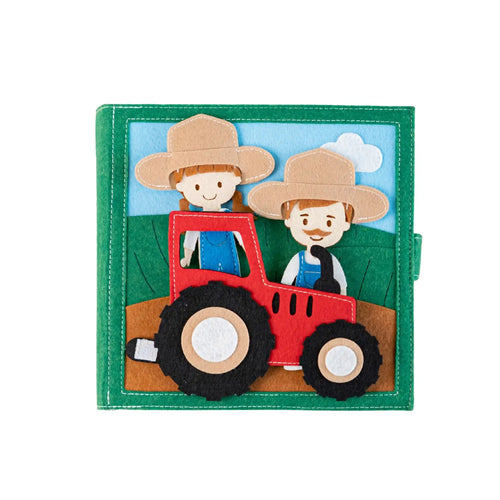
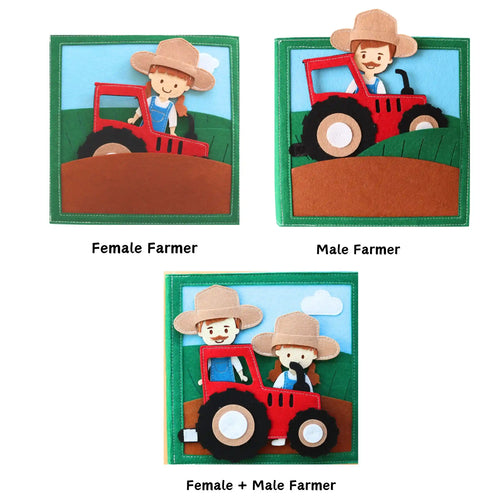
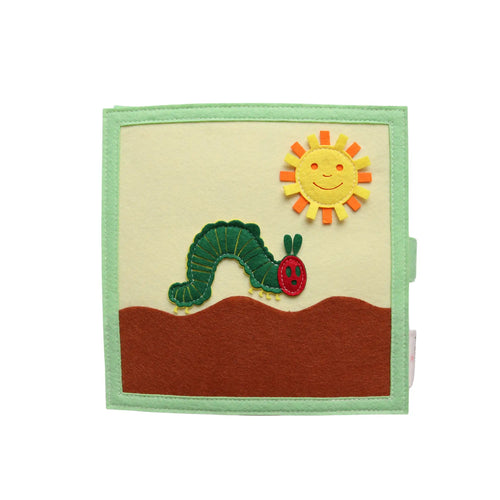
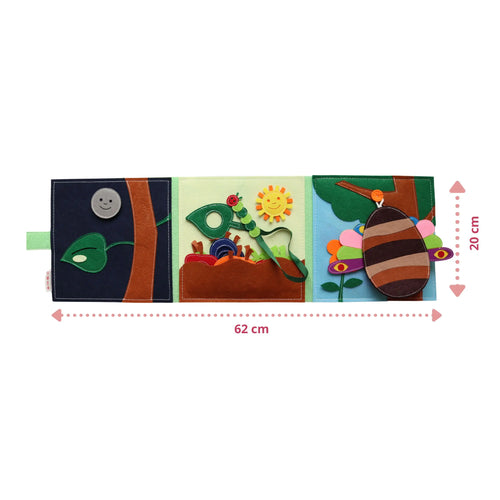
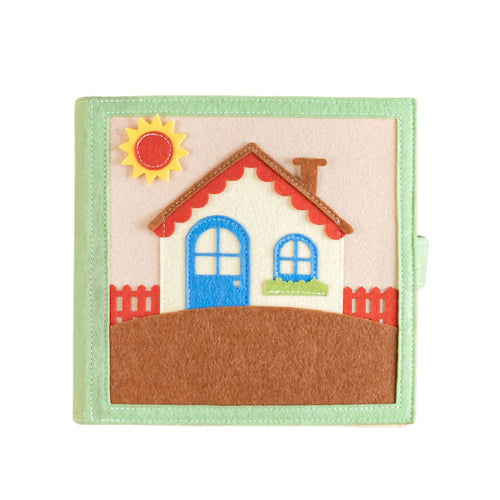
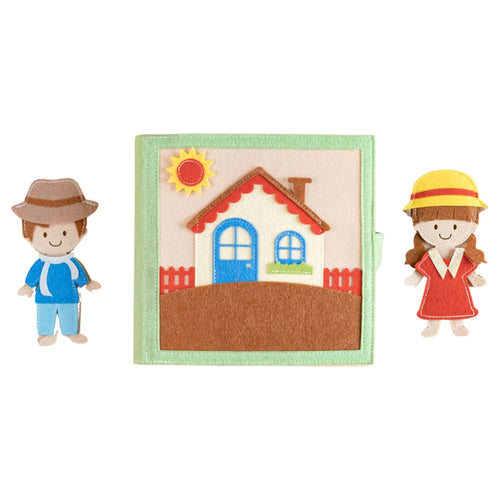
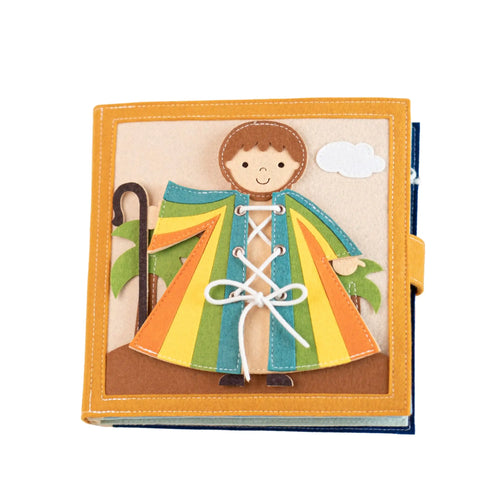
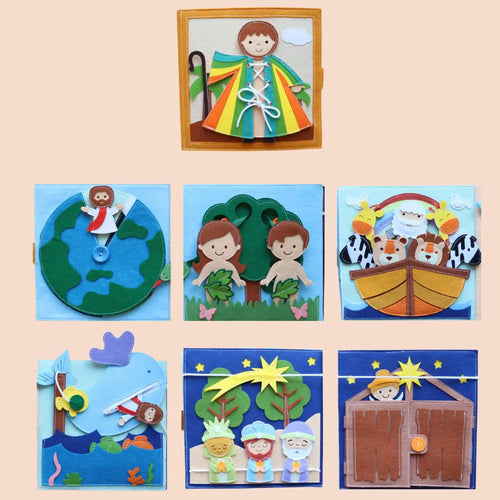
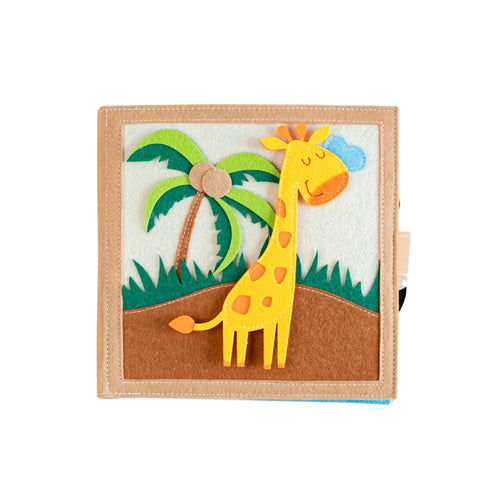
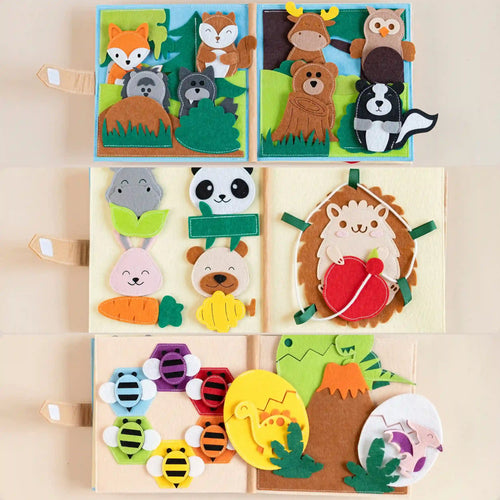
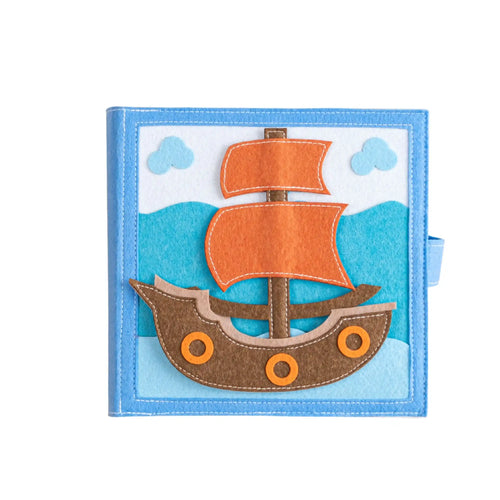
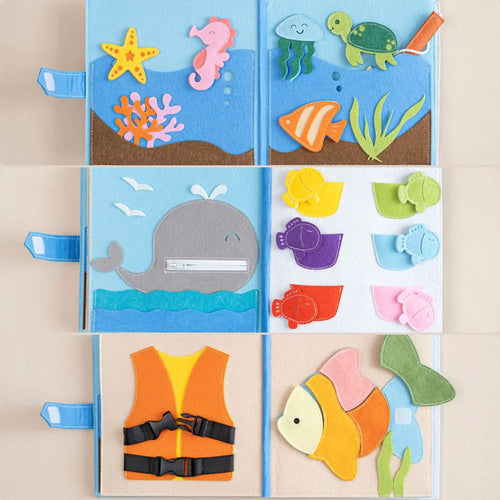
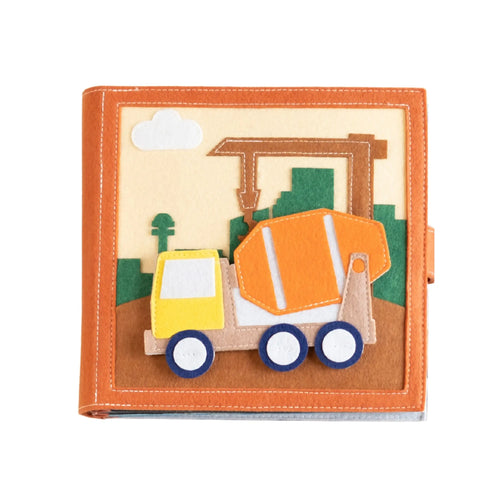
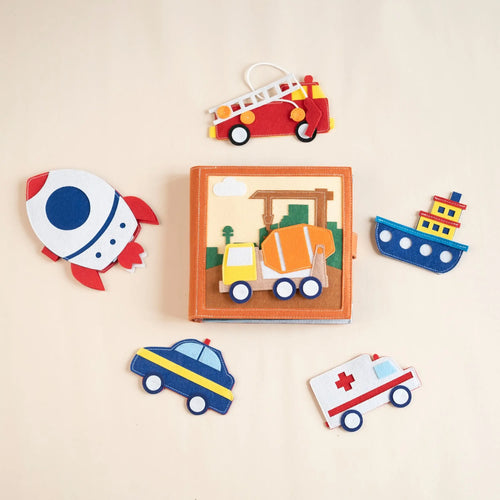
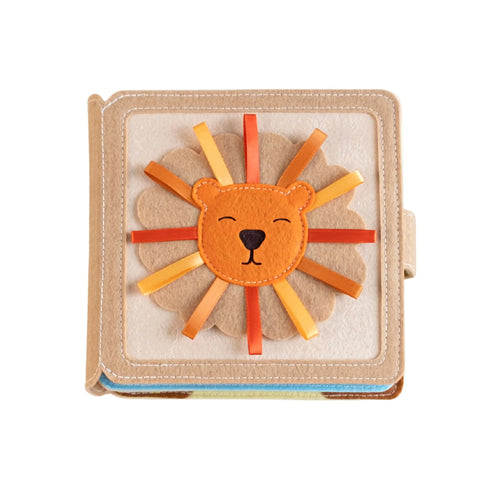
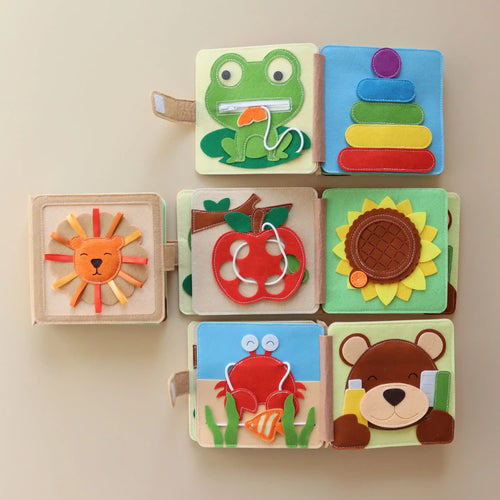
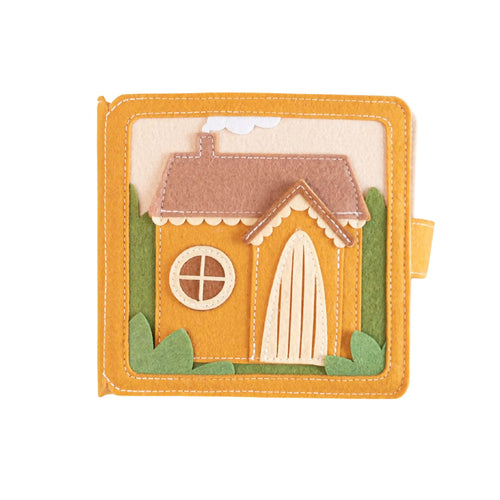
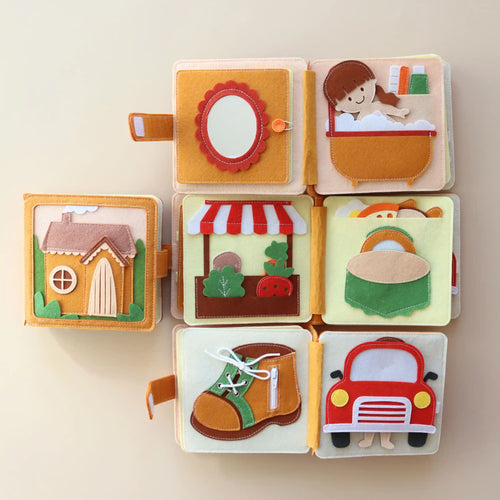
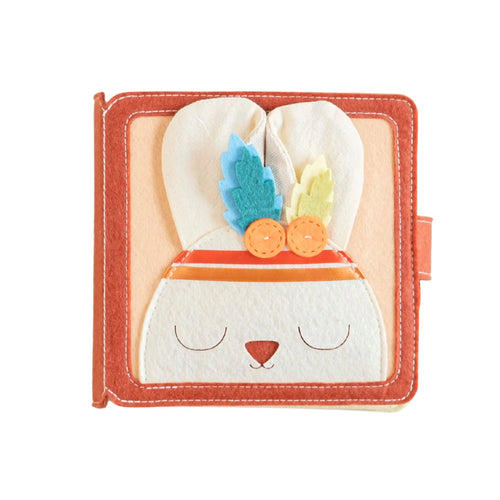
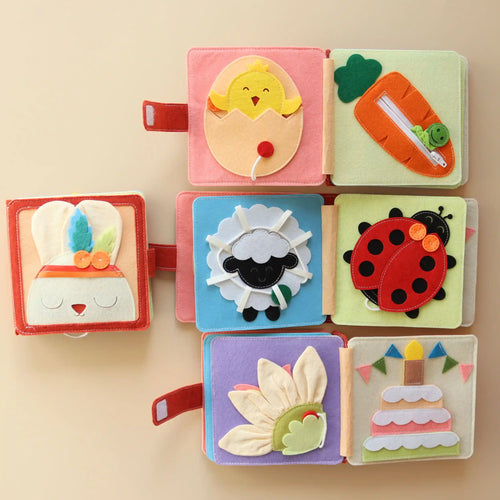
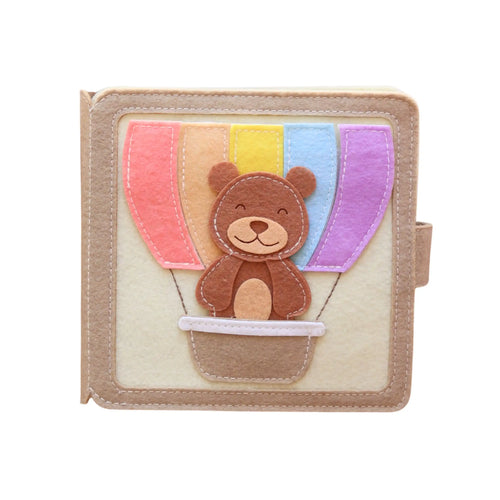
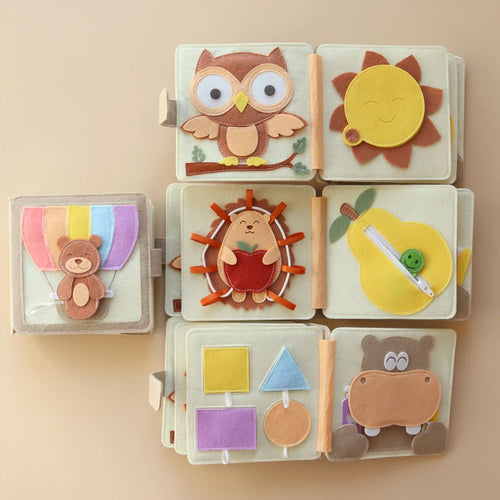
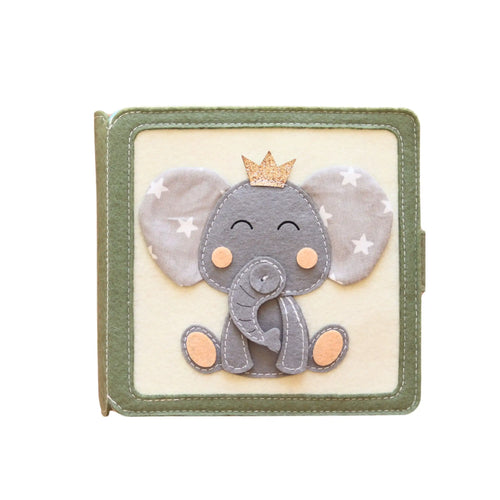
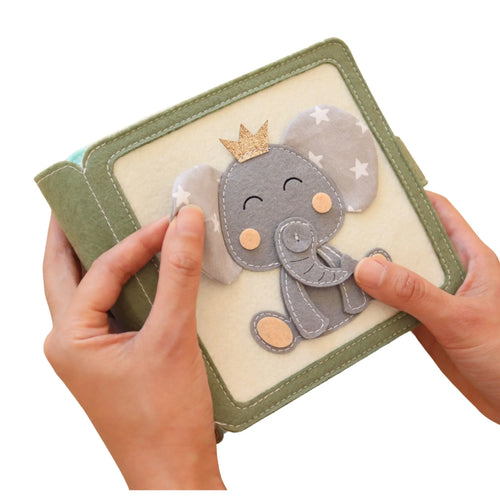

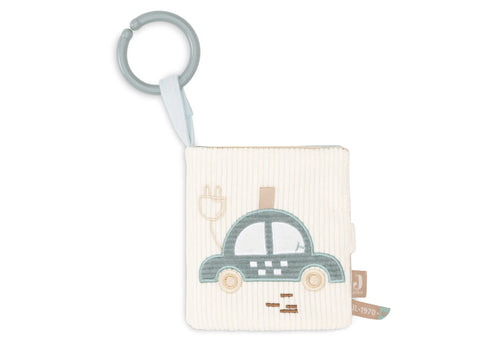
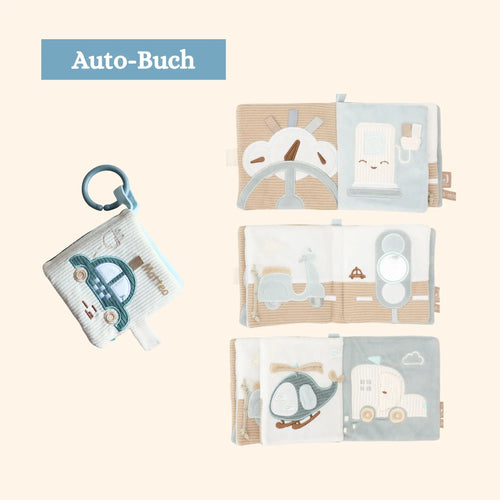
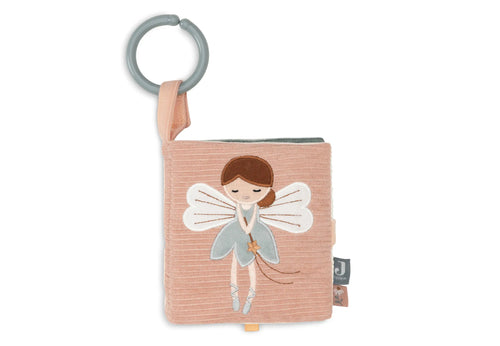
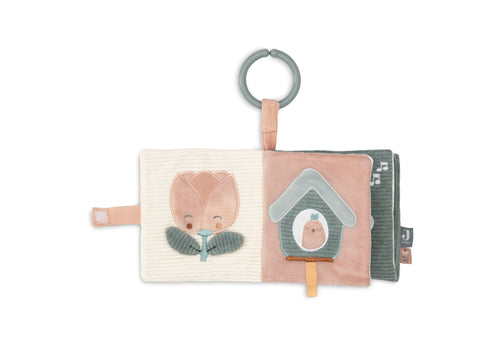

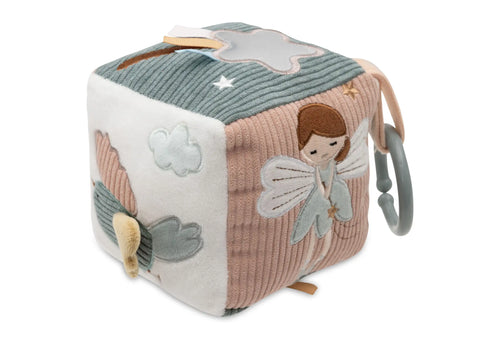
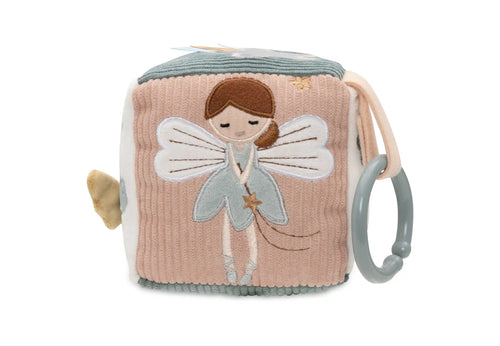
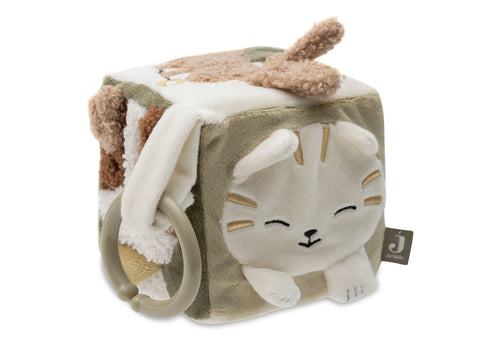
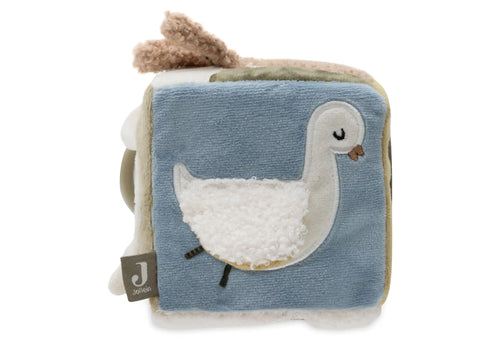
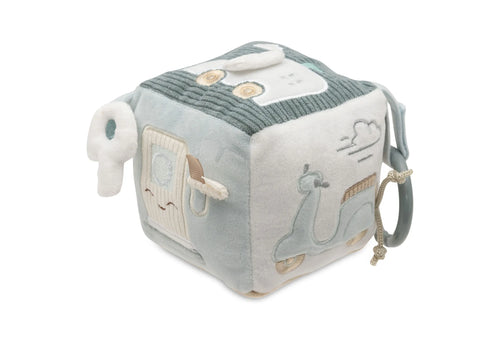
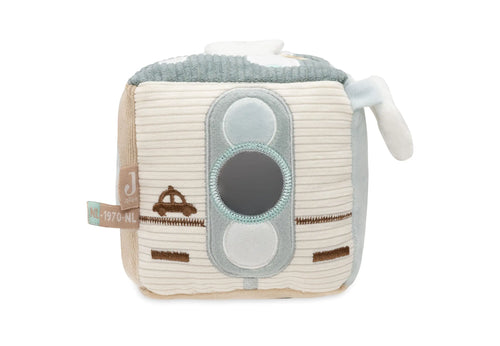

Discover a busy book for baby yourself
Share
You often notice very quickly when a baby wants more than just to look and cuddle. Little hands grab at labels, feel fabrics, pull at tabs, and observe with serious concentration what happens. It is precisely in this phase that an activity book can guide a baby in a way that is calm, sensory, and at the same time surprisingly educational.
A good activity book is not a noisy toy or a short-term distraction. It invites the baby to examine, feel, and gradually understand connections with their own hands. From the outside, this often seems quite simple. For a child, however, it is real work - and that is precisely its value.
What makes an activity book for babies so special
For babies, it is not about solving tasks correctly at first. It is about experience. A soft fabric feels different from felt, a flap moves differently from a ribbon, and a small sewn-in shape reacts differently to pulling or pressing. These differences are not a side effect, but the core of the play.
An activity book creates a clear, safe framework for this. Each page offers a small impulse without overwhelming the child with stimuli. Unlike flashing or jingling toys, it does not demand a quick reaction. The baby is allowed to discover, repeat, and pause at their own pace.
Especially for parents, this is often a great advantage. Quiet play does not mean less learning - often quite the opposite. When a child is not guided by light, music, or sounds, their attention is more focused on touch, movement, and cause and effect. This promotes concentration at a very early age.
Activity book for babies to discover themselves - what skills grow from it
Many parents are looking for a meaningful activity that can do more than just bridge a few minutes. A lovingly designed fabric or felt book supports several areas of development without looking like training.
First, there are fine motor skills. When a baby grabs a tab, lifts a fabric circle, or traces an edge with their fingers, they train their grip, coordination, and finger strength. These seemingly small movements later form the basis for many everyday steps.
Then there is sensory perception. Babies learn through their bodies. Different materials, shapes, and surfaces help them classify stimuli and become more familiar with their environment. This is especially valuable in the first months of life and early toddlerhood, because learning still happens very much through feeling and repetition.
Early cognitive development also plays a role. When a figure disappears under a flap and reappears, when an element can be pulled or turned, or when something only works with a certain hand movement, the child experiences their first logical connections. They do not yet understand everything consciously in words, but they store patterns.
And then there is something often underestimated: perseverance. A good activity book does not invite frantic switching, but concentrated dwelling. For many families, this is precisely a gift - especially when out and about, in a restaurant, while traveling, or during quiet moments at home.
How parents recognize a good activity book
Not every soft baby toy is automatically suitable for genuine, independent discovery. What matters is how thoughtfully the book is designed.
For babies, the pages should be clear. Too many elements at once quickly create a chaotic impression. Less is often more here, because individual stimuli can be perceived more clearly. A page with an easy-to-grasp shape, a simple flap, or a material contrast is usually more useful for a young baby than an overloaded motif with many small details.
Equally important are the material and workmanship. Seams must be clean and stable, parts securely fastened, and fabrics pleasant and suitable for small hands. High-quality craftsmanship is evident precisely in these points. It not only looks beautiful but also withstands repeated grasping, pulling, and crumpling.
A practical format that the baby can easily hold in front of them - on a playmat, in a stroller, or on their lap - is also important. A book should be soft and flexible, but still have enough shape so that the pages do not constantly collapse.
Which busy book is best for babies?
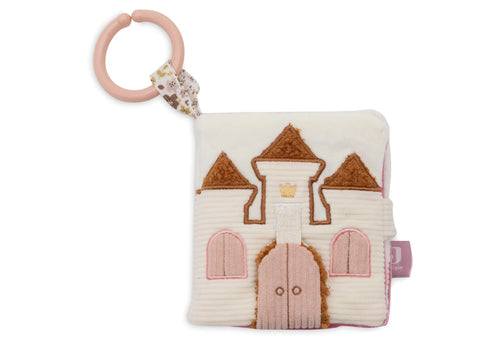
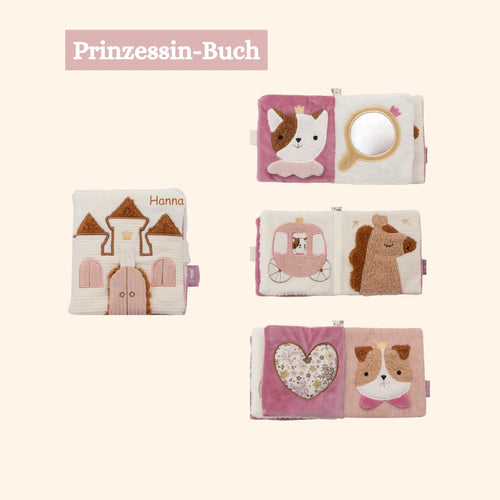
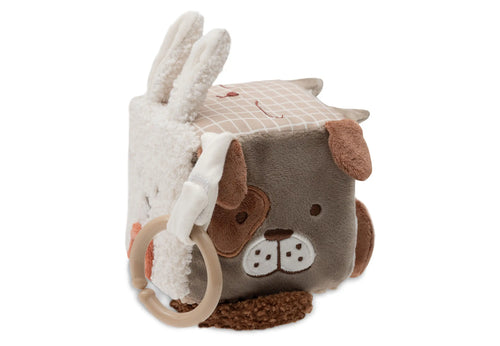
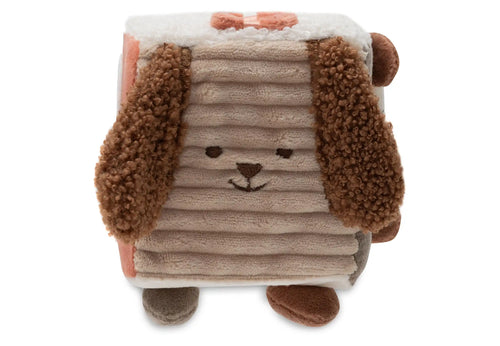
For babies and younger toddlers, a busy book should be soft, simple, and easy to grasp. The best first activities are not complicated puzzles, but gentle sensory pages, movable pieces, and small actions the child can repeat safely. Our baby activity books are designed for this early stage, with calm hands-on play for babies and toddlers from around 3 to 18 months.
If you want something smaller for everyday use or travel, mini quiet books for babies are a strong choice. They work well in the stroller, on the train, in the car, or during short waiting times. For older toddlers who need more complex tasks, move toward a busy book for toddlers with more detailed fine motor activities.
From what age an activity book makes sense
The short answer is: it depends on the design. Not every book suits every stage of development.
For very young babies from about 3 months, strong contrasts, gentle texture differences, and few, clearly placed elements are particularly useful. At this age, there is a lot of looking, touching, and accidental movement. The book should therefore invite initial touching without requiring complicated hand movements.
At around 6 to 12 months, active curiosity grows significantly. Babies grasp more purposefully, turn things over, pull at details, and try out movement sequences repeatedly. Now, small interactive elements become particularly exciting. The child begins to consciously figure out what triggers an action.
Later, as they transition into toddlerhood, activity books can become more complex. Matching, simple fasteners, animals, shapes, or everyday themes can be added. The charm of a good book lies precisely in the fact that it can grow with the child - provided the content is age-appropriate.
Why self-discovery is so valuable
It is tempting to immediately show a baby how something works. Adults want to help, stimulate, and create successful experiences. But especially with quiet play, restraint is worthwhile.
When a baby discovers for themselves how a flap opens or how an element feels, they experience self-efficacy. They realize: I can move something. I can trigger something. This feeling is enormously valuable for development because it combines curiosity and self-confidence.
Of course, this does not mean that adults should completely stay out of it. The best accompaniment is often a calm presence. Observe, name, share in the joy - but do not anticipate every action. Some children need a little more time, others start experimenting immediately. Both are normal.
That is why an activity book does not always have to be spectacular. Its value often only becomes apparent in everyday life: in those quiet minutes when a baby remains focused on something and you feel that something is really happening.
Using an activity book for baby self-discovery in everyday life
The most beautiful effect of a good activity book is that it easily fits into family life. It does not require assembly, makes no noise, and works in many situations where quiet engagement is desired.
At home, it is suitable for small, conscious playtimes on the floor, in a playpen, or next to mom, dad, or grandparents on the sofa. When out and about, it often becomes even clearer how helpful such a book can be. In the car, on a plane, in a waiting room, or while eating out, a handy, quiet activity is worth gold for many parents.
However, one should not expect miracles. Sometimes a baby only occupies themselves with it for a short time, sometimes surprisingly long. That depends on the daily mood, age, and environment. An activity book is not a guarantee for endless peace, but a very well-thought-out offer for meaningful, low-stimulus play.
Also a special gift idea
When looking for a gift for a baby, most people want to choose something that looks nice and will actually be used. That is why high-quality activity books are so popular. They feel personal, seem valuable, and have a clear benefit beyond the first moment.
It is especially nice that they not only please the parents but actually give something to the child. A handmade activity book combines aesthetics with development, calm with play, and quality with everyday usability. This makes it a gift idea that will not quickly disappear into the toy box.
At Habi Kids, this very idea is central: lovingly designed quiet books that engage children in an age-appropriate way and give families a quiet, high-quality play experience.
In the end, what matters is not how loud or technical a toy is, but whether it gives a child space to truly learn. A good activity book provides exactly this space - soft, quiet, and full of small discoveries that often have a longer-lasting effect than any quick gimmick.