




Busy Book for Toddlers: What to Look For
Share
If you are looking for a busy book for toddlers, you are probably not just looking for another toy. You want something that keeps little hands busy, supports learning, and actually works in everyday situations: at home, in a restaurant, while traveling, or during a few quiet minutes when everyone needs a calmer moment.
That is the difference between a simple pastime and a well-designed activity book. A good busy book combines quiet play with age-appropriate learning. It invites toddlers to touch, open, sort, button, match, and discover without loud sounds, flashing lights, or too much stimulation.
Is a Busy Book Good for Toddlers?
Yes, a busy book can be especially useful for toddlers because it gives them hands-on activities without screens, noise, or overstimulation. Toddlers learn through repetition. They want to open the same flap, fasten the same piece, or match the same shape again and again. That repetition is not boring for them. It is how they practice and understand the world.
A well-designed busy book turns these small actions into quiet practice for fine motor skills, concentration, hand-eye coordination, and independent play. It can be especially helpful in moments when a child should be engaged but calm, such as during travel, restaurant visits, waiting times, or quiet play at home.
Buying a Busy Book for Toddlers: What Makes a Good One?
At first glance, many busy books look similar. In everyday use, however, the differences become clear quickly. The most important question is whether the book fits your child’s age, stage of development, and real daily routine.
A high-quality busy book lets toddlers become actively involved. It does not simply entertain them. It encourages them to practice movements, recognize patterns, solve small tasks, and try things independently. This is what makes a busy book valuable for many families: the play feels simple and natural, but it supports real development.
The right level of difficulty matters. If a book is too simple, a toddler may lose interest quickly. If it is too complex, it can become frustrating. The best busy books sit in the middle: they offer enough challenge to stay interesting, but the tasks are still clear, inviting, and achievable.
Soft materials and strong workmanship matter
A busy book for toddlers needs to handle real use. Children pull at tabs, open and close Velcro, bend pages, grip small pieces, and test materials very directly. That is why materials and workmanship are not small details.
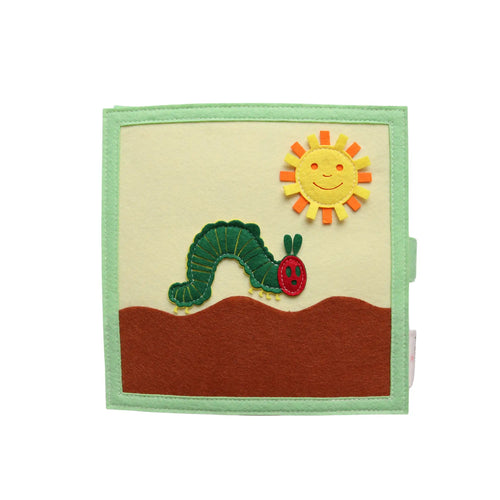
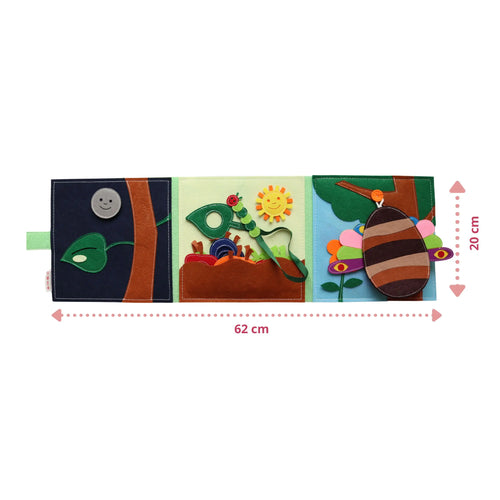
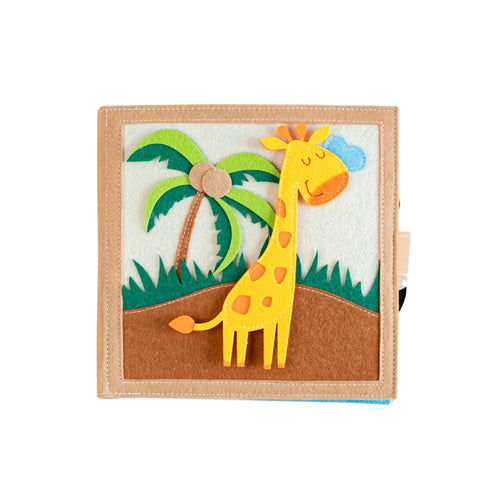
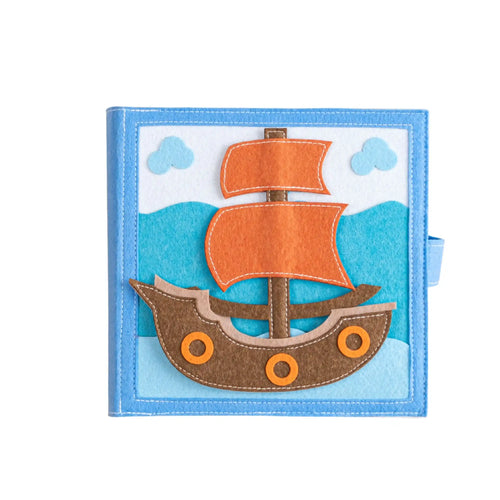
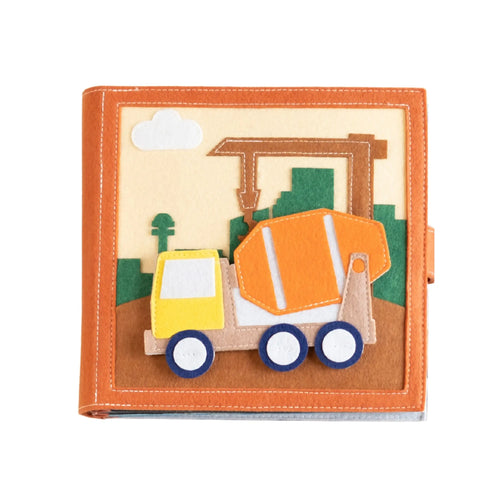
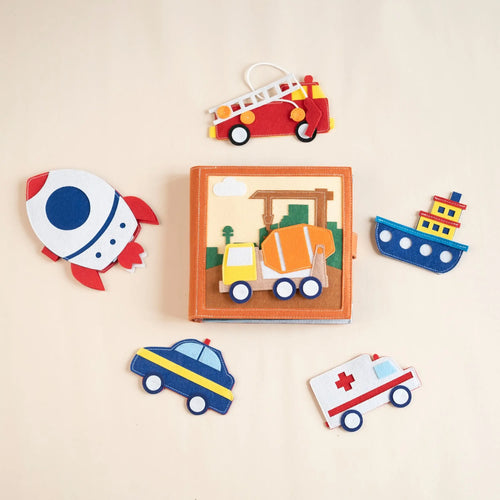
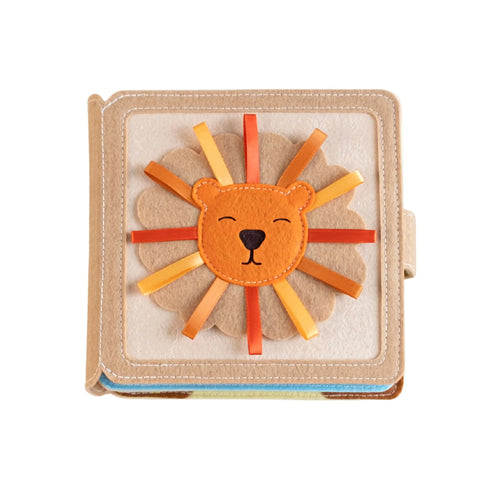
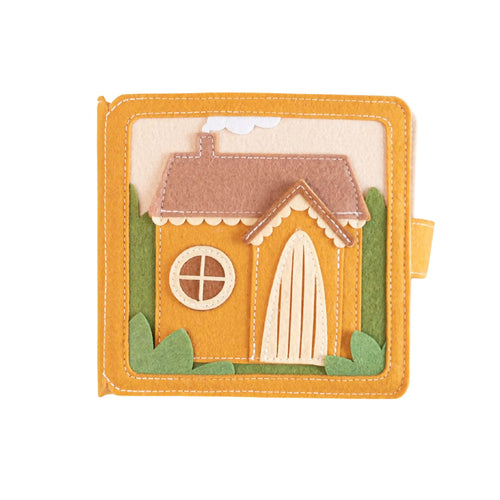
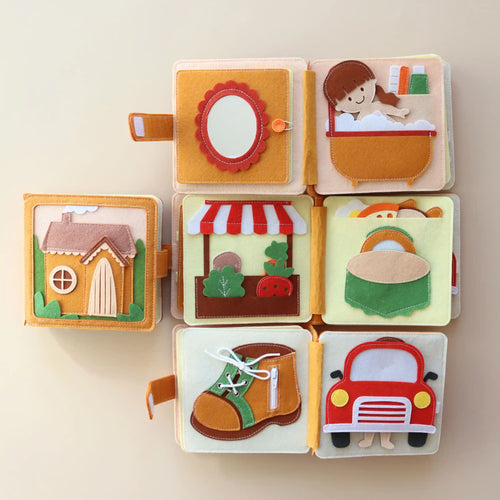
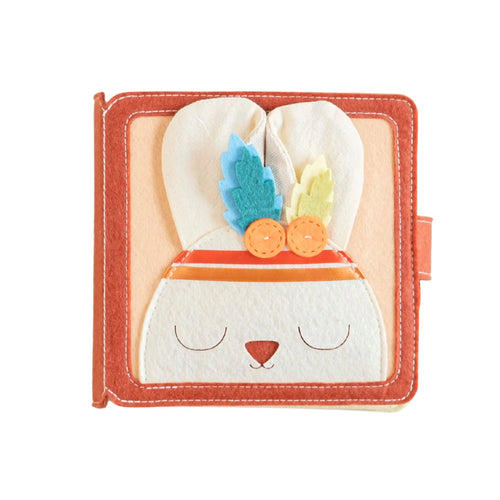
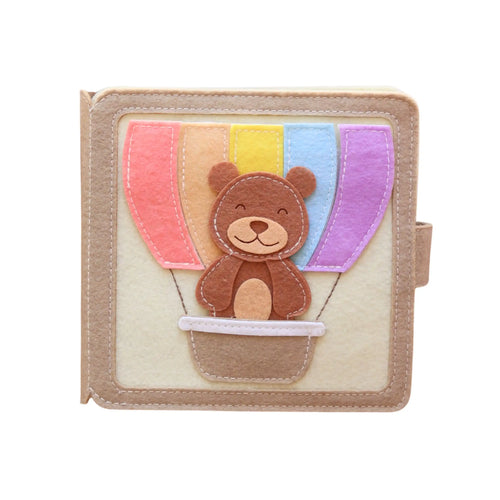
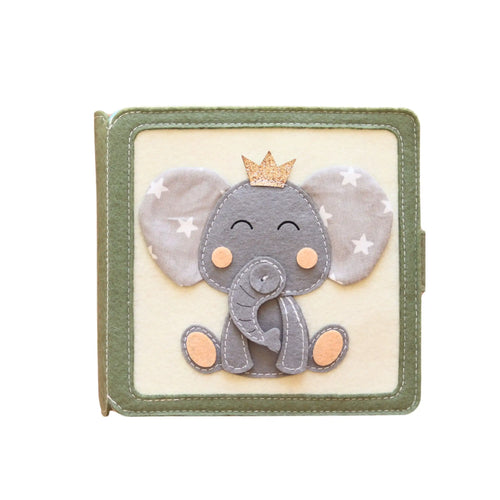
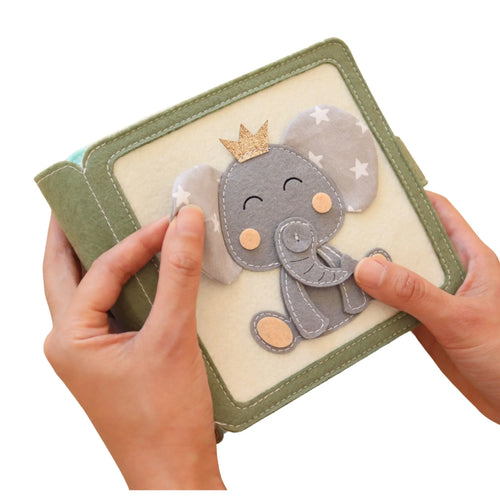
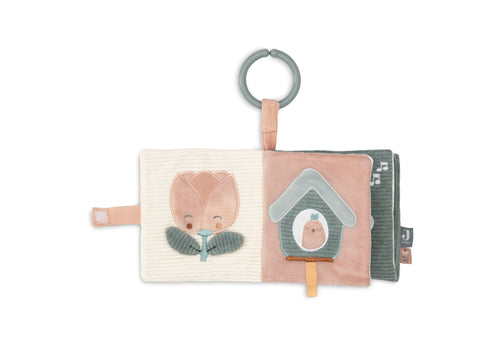
Soft fabrics are ideal for little hands. Felt is often used because it is light, easy to grip, and pleasant to touch. Pages should feel stable, seams should be neatly finished, and small parts should be securely attached. A good busy book should still feel inviting after many rounds of play.
This is especially important if the busy book is meant as a gift. A lovingly made soft activity book feels more personal and valuable than a mass-produced toy that only looks exciting at first glance. The best children’s gifts are the ones that are actually used again and again.
The right age makes the biggest difference
Not every busy book is right for every child. Babies and younger toddlers usually benefit from simple sensory experiences and first grasping activities. Different textures, soft contrasts, movable elements, and easy-to-understand tasks are often enough at this stage.
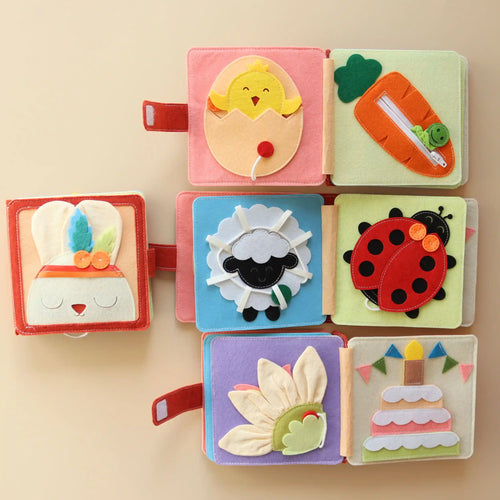
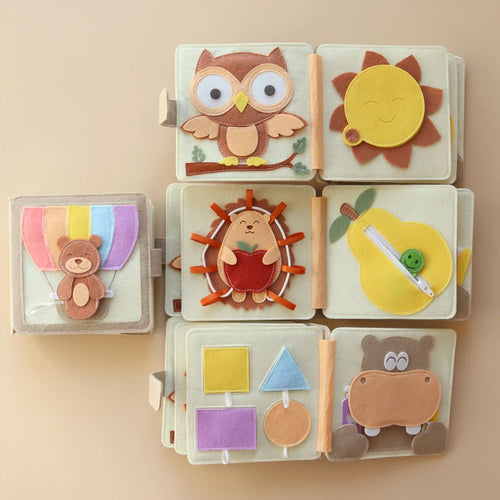
From around one to two years old, many children become more interested in opening, closing, matching, and moving pieces from one place to another. They love repetition. A zipper, a flap, or a matching activity may be repeated many times in a row, and that is exactly where the learning happens.
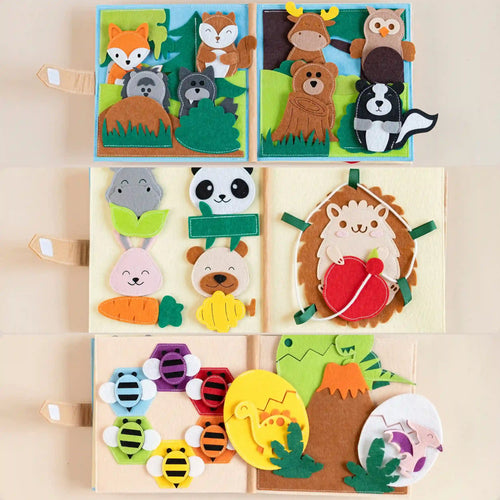
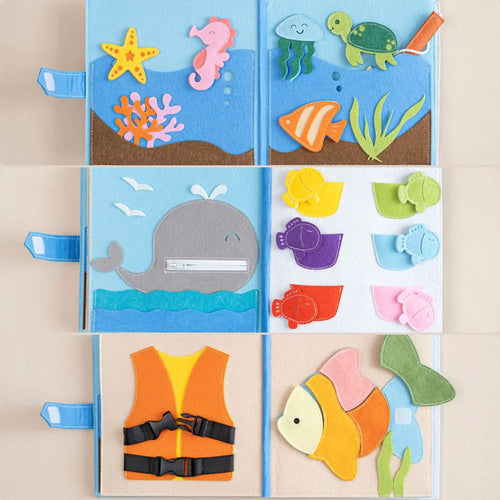
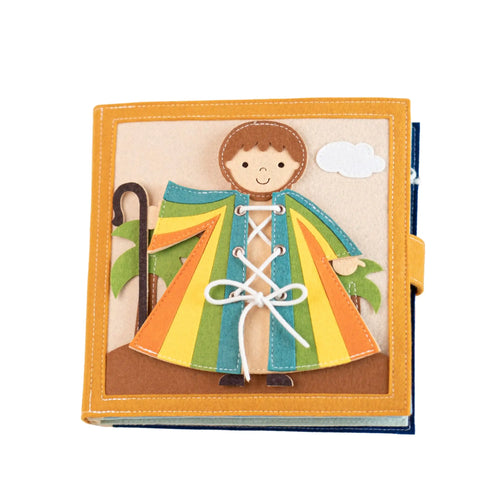
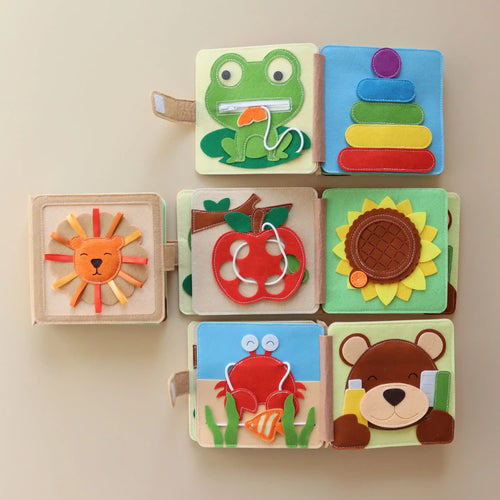
Older toddlers and preschoolers can enjoy more complex pages with colors, shapes, numbers, daily routines, animals, or fine motor tasks such as buttoning, tying, and placing pieces in the right spot. A busy book can grow with a child when the activities are varied but still easy to understand.
What Skills Does a Busy Book Support?
A busy book is often described as a quiet activity toy, but its value goes beyond keeping a child occupied. A good activity book supports several developmental areas at the same time.
Fine motor skills are usually the first thing parents notice. When toddlers pull, grasp, open, close, sort, or place small pieces, they practice finger strength, hand-eye coordination, and controlled movement. These skills are useful later for everyday tasks like dressing, drawing, feeding themselves, and early writing movements.
A busy book can also support concentration. A calm, well-structured activity encourages toddlers to stay with one task for longer. There are no fast rewards, flashing lights, or sudden sounds. Instead, the child focuses on one small action at a time.
Cognitive skills are also part of the play. Children recognize colors, match shapes, understand sequences, sort objects, and discover that their own actions create a result. This builds confidence and a sense of independence.
For many families, there is another practical benefit: busy books create quiet, focused play moments. That helps children settle, and it gives parents a gentle alternative to screens in everyday situations.
Busy Book, Quiet Book, or Baby Activity Book: What Is the Difference?
The terms busy book, quiet book, and baby activity book are often used in similar ways. In practice, they describe soft or interactive books that give children hands-on activities instead of passive entertainment.
A busy book usually focuses on keeping little hands engaged with practical tasks such as matching, sorting, opening, closing, or moving pieces. A quiet book highlights calm, screen-free play and is often used for travel, waiting times, restaurants, or quiet moments at home. A baby activity book is usually simpler and designed for younger children with softer sensory elements and first grasping activities.
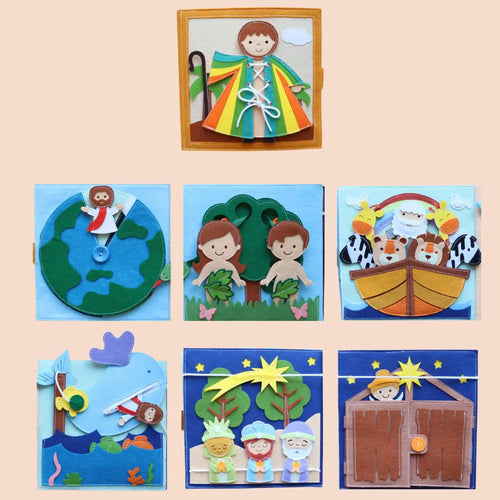
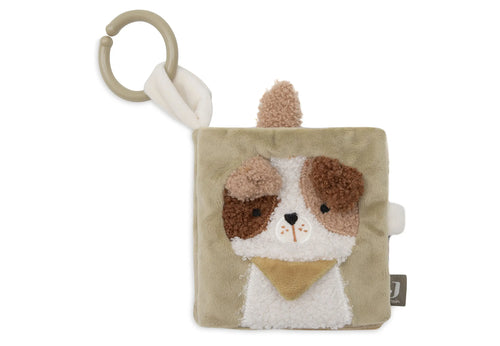
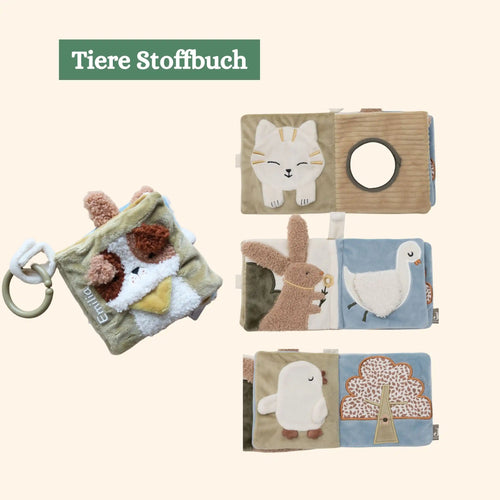
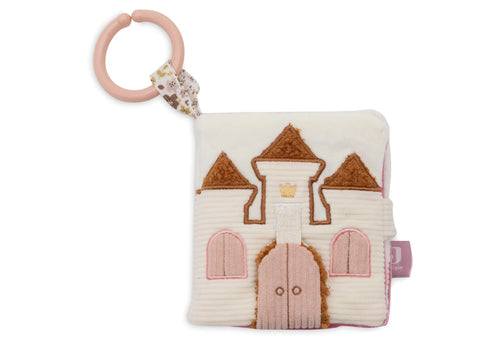
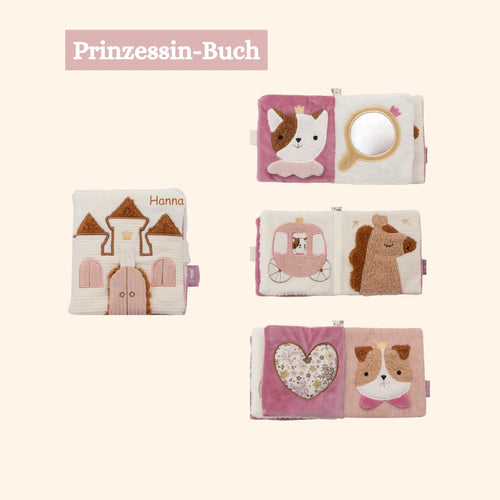
At Habi Kids, these ideas come together in soft, Montessori-inspired activity books. You can choose busy books for babies and younger toddlers, busy books for toddlers and children, or mini quiet books for travel and small hands.
What Should You Look For When Buying a Busy Book Online?
When you buy a busy book online, you cannot touch the product before ordering. That makes clear product information especially important. Photos are helpful, but they are not enough on their own.
Look for a clear age recommendation and a description of what the child can actually do with the book. A good product page should explain the activities, the materials, and the type of skills the book supports. It should be easy to understand whether the book is better for a baby, a younger toddler, or an older child.
Also consider whether the busy book offers long-term play value. Some books look full at first, but the activities repeat quickly or become too easy after a short time. A thoughtful model offers enough variety without feeling chaotic.
Customer reviews can also be useful. Pay attention to comments about durability, daily use, travel, and whether the child stayed interested over time. Phrases like “used every day,” “great for restaurants,” “perfect for travel,” or “still loved after months” are often more helpful than star ratings alone.
Personalization makes it a stronger gift
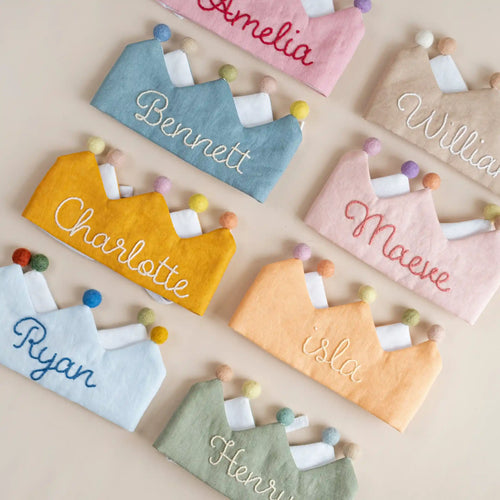
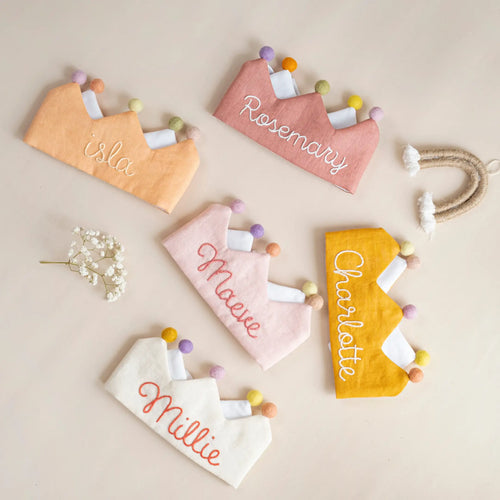
If the busy book is meant as a gift for a first birthday, Christmas, a christening, or a special family occasion, personalization can make it feel more meaningful. A child’s name can turn a useful activity book into a keepsake.
Personalized children’s products are often kept longer and remembered more emotionally. For grandparents, godparents, relatives, and close family friends, this can make the gift feel more thoughtful and personal.
Still, function should come first. A beautiful personalised book is only truly valuable if the child enjoys using it. The best choice is a busy book that combines a personal touch with strong materials, age-appropriate activities, and real everyday usefulness.
When Is a Busy Book Especially Useful?
Many parents only realize how practical a busy book is once it becomes part of everyday life. It is light, quiet, and easy to bring along. That makes it useful in many situations where children need something engaging but not overstimulating.
A busy book is especially helpful when traveling. In the car, on the plane, or on the train, a familiar soft activity book can be easier than carrying many small loose toys. Toddlers can focus on one page at a time, and parents do not have to collect pieces from everywhere.
It can also be useful in restaurants, waiting rooms, appointments, or family visits. A quiet book gives the child something to do without covering the table with toys or relying on a phone or tablet.
At home, a busy book can support calmer transitions: after a nap, before leaving the house, before bedtime, or when a parent needs a few minutes to finish something. It does not replace shared play, but it can be a meaningful addition to the day.
Families who want less screen time often appreciate this most. A busy book offers occupation without turning up the stimulation.
When Is a Busy Book Not the Best Choice?
As useful as busy books can be, they are not the right solution for every child in every moment. Very active toddlers also need time to move, climb, run, jump, and explore with their whole body. A busy book is not a replacement for physical play. It is a calm counterpoint to it.
The level of difficulty also matters. If a child gets frustrated easily, it is better to start with simple pages and familiar actions. Too many small parts, complicated fasteners, or unclear tasks can make the book feel overwhelming instead of fun.
Price alone is not a perfect quality signal either. Not every cheaper model is bad, and not every expensive one is automatically good. The price should make sense for the materials, workmanship, thoughtful design, and expected durability.
How to Recognize Real Quality
Real quality is rarely found in big promises. You notice it when the whole book feels thoughtful. The colors are friendly rather than overwhelming. The pages are clearly structured. The activities make sense for the child’s age. The materials feel soft, stable, and pleasant in the hand.
Busy books that combine careful craftsmanship with developmental understanding are especially valuable. When design, function, and everyday practicality come together, the result is not just a pretty toy. It becomes something children return to again and again.
That is why buying a busy book for toddlers should not only be about choosing the trendiest product. It should be about finding something that gives a child meaningful, calm, hands-on play in small everyday moments.
A well-made busy book can become a loyal companion for months, sometimes even years. If you pay attention to age, materials, workmanship, play depth, and a calm design, you will not just find another gift. You will find something that supports quiet play, learning, and family life in a simple but powerful way.
If you want to explore soft, handmade activity books for babies and toddlers, take a look at our quiet books for kids and our mini quiet books for travel.